

The Creature From Jekyll Island | G. Edward Griffin
The War Machine
A Second Look at the Federal Reserve by G. Edward Griffin
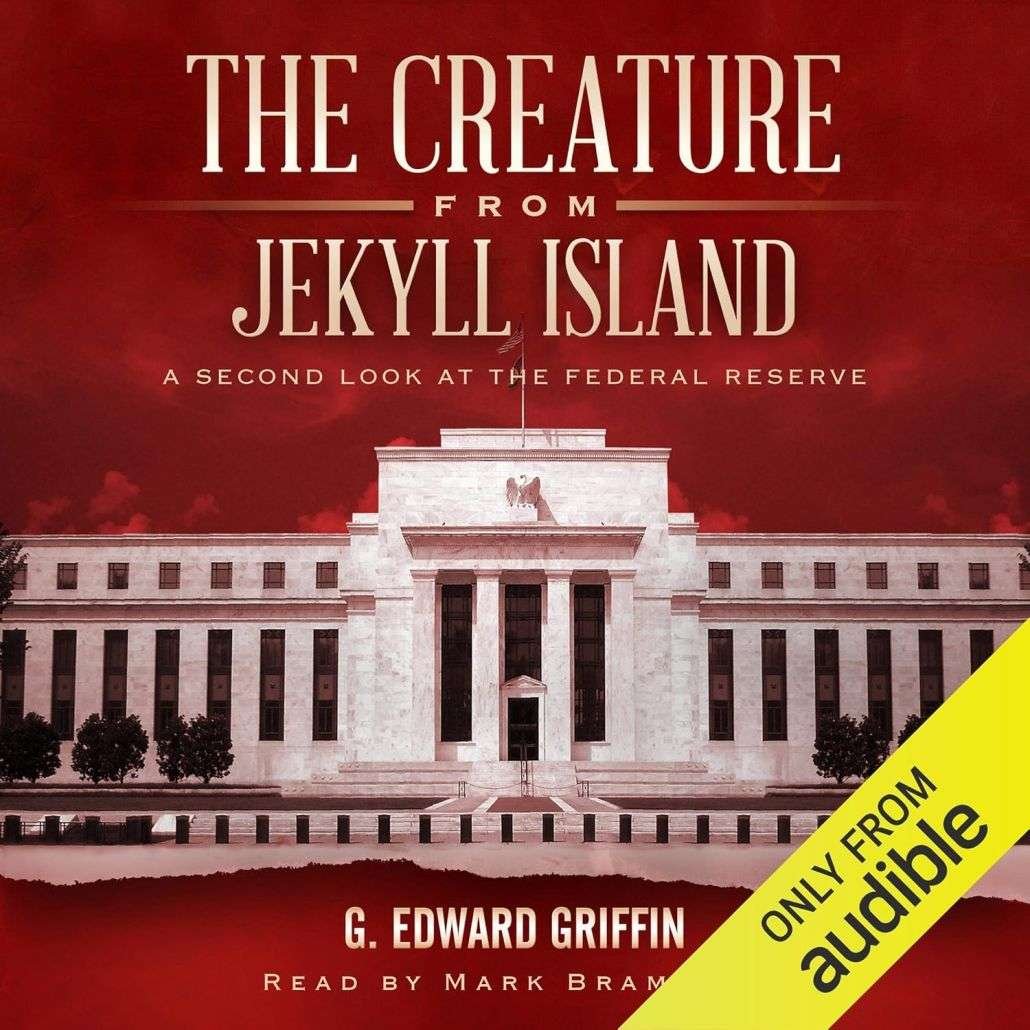
“The Creature from Jekyll Island” by G. Edward Griffin is a book that delves into the history and implications of the Federal Reserve, fiat money, and the fractional-reserve banking system.
Griffin argues that the Federal Reserve, created in secret on Jekyll Island in 1910, is not only incapable of achieving its stated objectives but also creates economic instability and encourages war. He discusses the influence of powerful families and groups, such as the Rockefeller, Rothschild, and Morgan families, in the financing and orchestration of historical events. The book provides a detailed history lesson on the creation of the Federal Reserve and its impact on global economics and politics, spanning nearly 600 pages. Griffin’s work is known for its alternative take on economic and political history, making it a thought-provoking and controversial read. The book offers a critical perspective on the Federal Reserve System and its implications for the economy and society.
Lecture
G. Edward Griffin‘s lecture titled The Creature from Jekyll Island: A Second Look at the Federal Reserve was delivered on November 10, 1993. This lecture elaborates on the themes presented in his book of the same name, which critiques the Federal Reserve System and discusses its origins, particularly focusing on a secret meeting held in 1910 on Jekyll Island, Georgia, where influential bankers conspired to create a central banking system that serves their interests.

In his lecture, Griffin argues that the Federal Reserve operates as a banking cartel, manipulating the economy for the benefit of a select few while causing economic instability, including inflation and depressions. The presentation is designed to engage audiences by framing complex financial concepts in an accessible manner, often likening the narrative to a detective story that uncovers hidden truths about monetary policy and its implications for society.
Conspiracy. Banking. Manipulation. Awakening.
G. Edward Griffin‘s work, particularly The Creature from Jekyll Island, serves as a profound eye-opener for many who may not have previously considered the complexities and conspiracies surrounding the Federal Reserve System.
Here are some key points on how his ideas resonate with the public:
Revelation of Hidden Mechanisms
Understanding Conspiracy: Griffin argues that many people find it hard to believe in conspiracies among powerful elites. However, he posits that such alliances are consistent with human nature, where individuals act in self-interest to gain wealth and power. This perspective encourages readers to reconsider their skepticism about conspiratorial narratives in politics and finance.
Historical Context: The book details the secretive meeting on Jekyll Island in 1910, where influential bankers allegedly conspired to create the Federal Reserve. This historical account challenges the perception that financial systems operate transparently and for the public good, revealing a darker side of economic history that many find shocking.
Critique of Economic Systems
Fiat Money and Economic Instability: Griffin critiques the concept of fiat money and fractional-reserve banking, arguing that these systems lead to economic instability, inflation, and cycles of boom and bust. His assertions about the negative consequences of these practices resonate with many who have experienced economic hardship or uncertainty.
Manipulation by Elites: The idea that a small group of bankers can manipulate the economy for their benefit is a compelling narrative. Griffin’s research about how these elites orchestrate financial crises and wars for profit serve as a wake-up call for many who view themselves as victims of systemic injustices.
Accessibility of Ideas
Simplified Explanations: Griffin’s writing style is noted for being accessible, making complex economic concepts understandable to a general audience. This approach allows readers without a background in economics to grasp his critiques and engage with his arguments more readily.
Emotional Resonance: By framing the Federal Reserve as a “fraudulent heart” that pumps “poisonous blood” into the economy, Griffin employs vivid metaphors that resonate emotionally with readers. This narrative technique helps to convey urgency and importance, prompting individuals to reconsider their views on financial institutions.
Griffin’s work opens eyes to the realities behind the Federal Reserve System, challenging conventional beliefs about economics and governance. His arguments encourage readers to question established narratives and consider the implications of elite control over financial systems, making his work particularly impactful for those feeling disconnected from mainstream economic discourse.
The Creature from Jekyll Island – G. Edward Griffin
Source: The Creature From Jekyll Island (by G. Edward Griffin)









Leave a Comment
Want to join the discussion?Feel free to contribute!