
Hollow Earth – Olaf Jansen’s Voyage to the Inner World | BackToConstitution
Hidden Realms
Olaf Jansen‘s account of an inner world raises enduring questions about hidden realms, restricted frontiers, and whether reality extends beyond officially accepted boundaries and narratives.
Hollow Earth – Olaf Jansen‘s Voyage to the Inner World is a six-part reading, presentation, and analysis by the BitChute channel BackToConstitution, focusing on Olaf Jansen‘s account of a voyage into the inner Earth. This series is driven by the intrigue of what is written: the details of Jansen’s journey, the claims about an opening at the North Pole, and the descriptions of a hidden world with oceans larger than those on the surface. The series invites readers to sit with the narrative itself and consider its possibilities without rushing to dismissal or acceptance.
The Smoky God, or A Voyage Journey to the Inner Earth is a book presented as a true account written by Willis George Emerson in 1908, which describes the adventures of Olaf Jansen, a Norwegian sailor who sailed with his father through an entrance to the Earth’s interior at the North Pole.

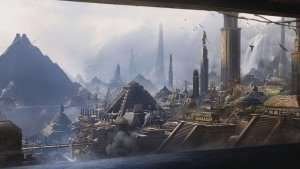
For two years Jansen lived with the inhabitants of an underground network of colonies who, Emerson writes, were 12 feet tall and whose world was lit by a “smoky” central sun. Their capital city was said to be the original Garden of Eden. Later works by other authors, such as Agartha – Secrets of the Subterranean Cities, have identified the civilization Jansen encountered with Agartha (a mythical subterranean city), although Emerson did not use the name.
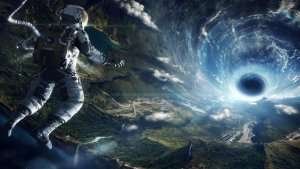
The story of Olaf Jansen, a Norwegian sailor from the 19th century, occupies a curious place between legend, testimony, and possibility. According to his account, he and his father navigated through an opening near the North Pole and entered an inner world—an expansive realm said to contain vast oceans, unfamiliar lands, and a civilisation unlike our own. Rather than dismissing such claims outright, it is worth examining why they persist, what they suggest, and how they intersect with broader patterns of information control and narrative shaping.
The Enduring Pull of Hidden Worlds
Across cultures and eras, there are recurring accounts of concealed realms—subterranean worlds, lost continents, or parallel domains that exist just beyond ordinary perception. Jansen’s narrative aligns with this tradition, but stands out for its level of detail and conviction.
Whether literal, symbolic, or something in between, such accounts tap into a deep human intuition: that reality may be layered, and that access to certain layers is restricted.
Polar Regions and Restricted Access
The Arctic and Antarctic have long been associated with mystery. While official explanations for limited access—extreme conditions, safety concerns, and logistical challenges—are valid, they do not fully dispel public curiosity.
Restricted spaces often generate questions:
- Are these limitations purely practical, or do they also serve to manage what is observed and reported?
- Why do these regions attract sustained scientific, military, and political interest?
- Could there be phenomena—natural or otherwise—not widely disclosed?
These questions remain open, and their persistence suggests that the poles function not only as physical frontiers but also as psychological ones.
Antarctica and Strategic Interest
Antarctica, in particular, remains a focal point of attention. International treaties govern its use, and scientific research dominates its official purpose. Yet, the level of coordinated interest from multiple nations suggests that its importance extends beyond simple exploration.
Whether that importance is environmental, strategic, or something less openly discussed is not definitively known. The lack of transparency in certain areas leaves room for interpretation—and, inevitably, speculation.
A Question Worth Holding
Rather than asking whether Olaf Jansen‘s journey is entirely factual or entirely fictional, a more useful approach may be to consider it as part of a wider pattern: recurring accounts that point toward hidden structures, restricted knowledge, and layered realities.
It is possible that such stories are distortions. It is equally possible they are fragments of something not yet fully understood.
In that sense, the value of the narrative lies not only in its claims, but in the questions it continues to raise—about access, perception, and the boundaries of what is considered known.
Sources and links
Recommended Literature on The Smoky God and Hollow Earth Theories
- The Smoky God, or A Voyage to the Inner World – Willis George Emerson. CreateSpace Independent Publishing Platform, 2015.
- Hollow Earth: The Long and Curious History of Imagining Strange Lands, Fantastical Creatures, Advanced Civilizations, and Marvelous Machines Below the Earth’s Surface– David Standish. Yale University Press, 2006.
- The Hollow Earth – Raymond Bernard. Dover Publications, 1969.
- Lost Continents & the Hollow Earth: I Remember Lemuria & The Shaver Mystery – David Hatcher Childress. Adventures Unlimited Press, 1999.
- The Hollow Earth Enigma – Alec Maclellan. Souvenir Press, 2008.
- Secret Journey to Planet Serpo: A True Story of Interplanetary Travel – Len Kasten. New Page Books, 2013.
- Inside the Earth: The Second Tunnel – Radu Cinamar. Sky Books, 2017.
- Atlantis and the Kingdom of the Neanderthals: 100,000 Years of Lost History – Colin Wilson. Inner Traditions, 2006.
- The Land of No Horizon: A History of Hollow Earth Theory – Kevin D. Hoover. CreateSpace Independent Publishing Platform, 2016.
Source: Hollow Earth Olaf Jansen’s Voyage to the Inner World Part One



















Leave a Comment
Want to join the discussion?Feel free to contribute!