
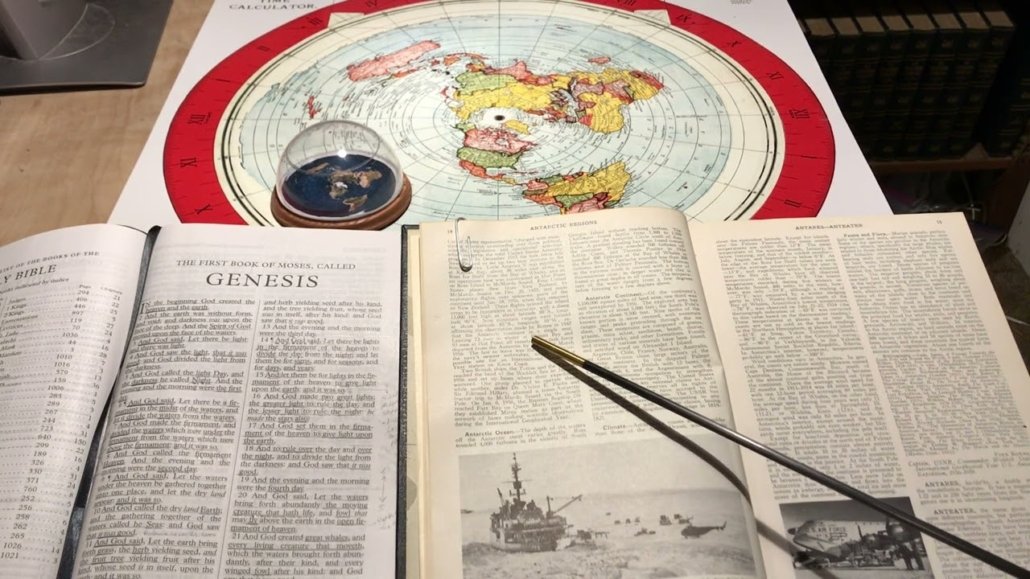
1958 Encyclopedia Says 13,000 Feet Dome In Antarctica | Quick Guide
Encyclopedia Americana 1958 Vol 2 Page 14 | FE Proofs
Encyclopedia Americana, Volume 2, 1959 | Guy Boulianne
1958 Encyclopedia admits they found the Dome | Chuck Middleton
How odd…
Vanishing Dome
The Vanishing Antarctic Dome: How the Story Machine Locked Down the Ice
Every now and then, the story machine slips. A line gets printed that was never meant to survive the edit cycle. The 1958 Americana Encyclopedia did exactly that when it described a 13,000‑foot (2.5 miles) “dome” deep in Antarctica, at roughly 80° south, 90° east.
Then, just as the Antarctic Treaty came into force and the southern ice was wrapped in legal barbed wire, that description quietly disappeared.

To anyone still clinging to official narratives, it’s a curiosity. To those who see the hidden hand steering world events, it looks like exactly what it is: an inconvenient disclosure, hastily erased, then ring‑fenced so no independent verification can ever take place.
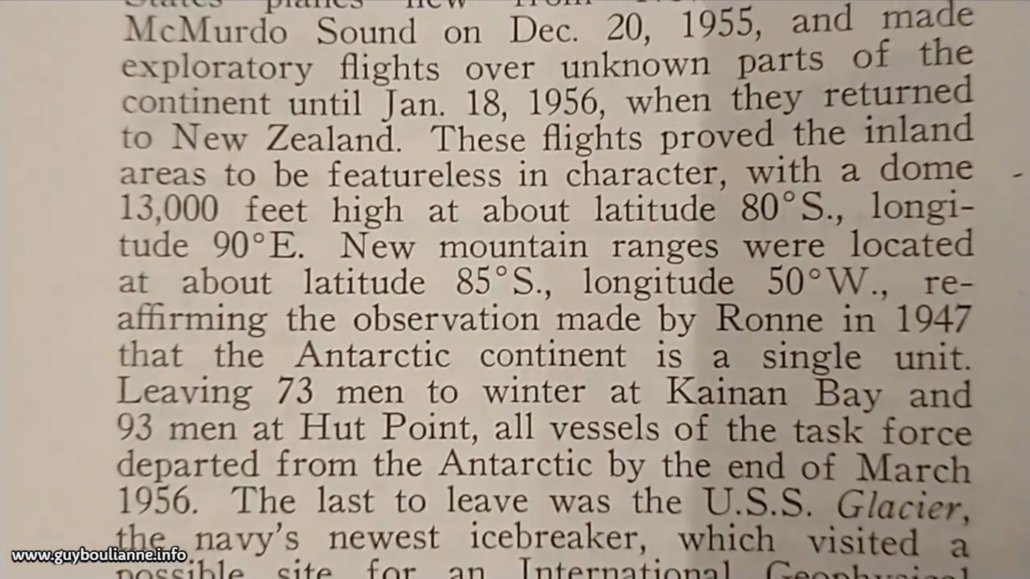
The Encyclopaedia That Said Too Much
The 1958 entry reads like bland geography until you slow down:
- Four United States aircraft fly from New Zealand to McMurdo Sound in December 1955.
- They conduct “exploratory flights over unknown parts of the continent” until January 1956.
- These flights “prove” the inland areas to be “featureless in character, with a dome 13,000 feet high at about latitude 80°S., longitude 90°E.”
- New mountain ranges are located around 85°S, 50°W.
- This “reaffirms” earlier observations that Antarctica is a “single unit.”
Buried in that neutral prose is a bombshell: a pronounced dome, 13,000 feet high, in what is otherwise presented as a dead, featureless interior.
Today, glaciologists blandly refer to “domes” as high points on the ice sheet. Dome Argus (Dome A) – now measured at roughly 4,100 metres (around 13,400 feet) – fits the basic elevation profile. But in the 1950s, with far cruder data, to publish such a claim in a mainstream encyclopedia is remarkable. Even more remarkable is what came next: later editions have quietly stripped or softened this wording.
The timing is everything.
The Antarctic Treaty
Locking the Door Just After the Slip
The Antarctic Treaty was signed in 1959 and entered into force in 1961. On paper it sounds benign: peaceful purposes only, no nuclear tests, freedom of scientific investigation.
For the illusion system, it was perfect.
The Treaty applies to everything south of 60° south. That line is not decoration; it is a jurisdictional cordon. From that point on, access, activity and information are mediated through Treaty parties and their bureaucracies.
On the surface:
- Military activity is banned.
- Scientific cooperation is encouraged.
- Environmental protection is emphasised.
In practice, the mechanism of control is simple and devastatingly effective: permits.
Permits as Psychological and Practical Barriers
The Treaty system is implemented through national laws: the UK Antarctic Act, the US Antarctic Conservation Act, Australian and New Zealand equivalents, and so on. These all share the same core principle:
- You may not enter the Antarctic region under that state’s jurisdiction without a permit.
No permit, no legal access. If you try, you can be fined, prosecuted, or have your vessel seized once you return to any compliant port. Insurance will not cover you. Rescue services will be withheld or used as a pretext for intervention.
This is how the story machine prefers to operate:
Not with a dramatic “enter and be destroyed” warning.
But with paperwork, cost, legal risk and logistical strangulation.
Tourists are funnelled into a few tightly controlled coastal zones on the Antarctic Peninsula. They see penguins, icebergs and curated landscapes. They do not see the high interior plateau. They do not go anywhere near 80° south, 90° east.
Private expeditions that try to break that mould quickly discover the real function of the permit regime: it is not to manage “curiosity”; it is to throttle it.
The Disappearance of the Dome
So we have three key moves:
- A mainstream encyclopaedia records a 13,000‑foot dome deep in the interior.
- Within a few years, a worldwide treaty framework is created that places the entire region under tight, state‑mediated access.
- Subsequent reference works and popular materials quietly downplay or omit that stark original description.
If this were a one‑off, you could call it an editorial tidy‑up. Within the wider pattern of psychological warfare and social engineering, it looks exactly like controlled disclosure followed by deliberate erasure.
The story machine’s standard sequence is well known:
- Allow a fragment of truth into the record.
- Surround it with neutral or boring framing so most readers skip past it.
- Once the infrastructure to police access and narrative is in place, quietly “correct”, rephrase or delete.
- Replace vivid, suggestive language with technical jargon that kills lay curiosity.
The 13,000‑foot dome moves from being a striking, almost architectural image to being submerged in specialist talk of “ice sheet topography”, “domes”, “saddles” and “mass balance”. The raw anomaly is laundered.
Social Engineering at the Edge of the World
From a propaganda and psychological warfare perspective, Antarctica is a dream tool:
- Almost nobody can go there.
- Those who do are dependent on state or state‑approved logistics.
- The data, imagery and stories that emerge are mediated through institutions deeply embedded in the same global system that manages everything from central banking to public health narratives.
The Antarctic Treaty system does not need to shoot down rogue explorers. It only has to:
- Control departure points in South America, Africa, Australia and New Zealand.
- Require permits, insurance and “environmental compliance”.
- Deny permits for anything that might genuinely pierce the illusion.
- Delegitimise anyone who tries to bypass the system as reckless, criminal or insane.
The result is a soft but absolute cordon around the very region where the old encyclopaedia once hinted at something that doesn’t quite fit the approved cosmology.
The Illusion System Protecting Itself
For readers who already understand that the world is run by a parasitic cabal, cloaked in masonic symbolism and hidden networks, the Antarctic pattern is familiar:
- A realm whose true structure must be concealed at all costs.
- A physical perimeter – the ice – that doubles as a psychological perimeter.
- An information regime that tells the public, “There is nothing to see there that we haven’t already measured for you.”
The 13,000‑foot dome in the 1958 Americana is a tiny fissure in that façade. On its own, it proves nothing. In context – its wording, its deletion, and the simultaneous erection of a legal‑bureaucratic wall around the entire continent – it becomes another data point in a long‑running campaign to prevent independent eyes from ever testing the official story.
The story machine’s primary objective is to maintain the illusion system. Antarctica is one of its most important theatres. And when an encyclopaedia accidentally pulls the curtain back, even for a moment, you can be sure the response will be swift, quiet and permanent.
The_Void







Leave a Comment
Want to join the discussion?Feel free to contribute!