
Rockefellers and 9/11 | Betsy Lee McGee
Silent Signals
How Predictive Programming Shapes Perception Before Events Unfold
In a landscape of contested narratives, predictive programming and coincidence theory reveal how distrust and pattern-seeking shape interpretations, while the underlying truth behind events remains unresolved.
In the architecture of psychological warfare, influence rarely arrives as a direct command. It seeps in—through symbols, repetition, and carefully framed narratives that shape perception long before conscious awareness catches up. Within this framework, the idea of “predictive programming,” a term popularised by Alan Watt, has become a focal point for those examining how culture, media, and power intersect.
Predictive programming, as described by its proponents, is the strategic seeding of future events into public consciousness through entertainment, news imagery, and symbolic cues. The premise is simple: if a population is exposed to an idea repeatedly—especially in fictional or abstract form—it becomes normalised. When a similar event later occurs in reality, it is more readily accepted, less resisted, and more easily absorbed into the existing mental landscape.
The underlying psychological principle is well established. A significant proportion of human cognition operates beneath conscious awareness. Behavioural science, advertising, and political messaging have long exploited this reality. Subtle cues, emotional priming, and repeated exposure shape attitudes and responses without the individual ever recognising the influence. What is felt becomes familiar; what is familiar becomes acceptable.
From this perspective, it is not unreasonable to scrutinise how major events are preceded by certain themes or imagery in media. The question, however, is whether this reflects deliberate orchestration or the human tendency to impose meaning after the fact. Pattern recognition is not a flaw—it is a survival mechanism.
Governments and powerful institutions have, on numerous documented occasions, misled the public, withheld information, or constructed narratives that later unravelled under scrutiny. This history creates fertile ground for suspicion. When official accounts are incomplete or deceptive, alternative explanations will always gain traction. In such an environment, dismissing all pattern recognition as mere coincidence theory can feel totally implausible.
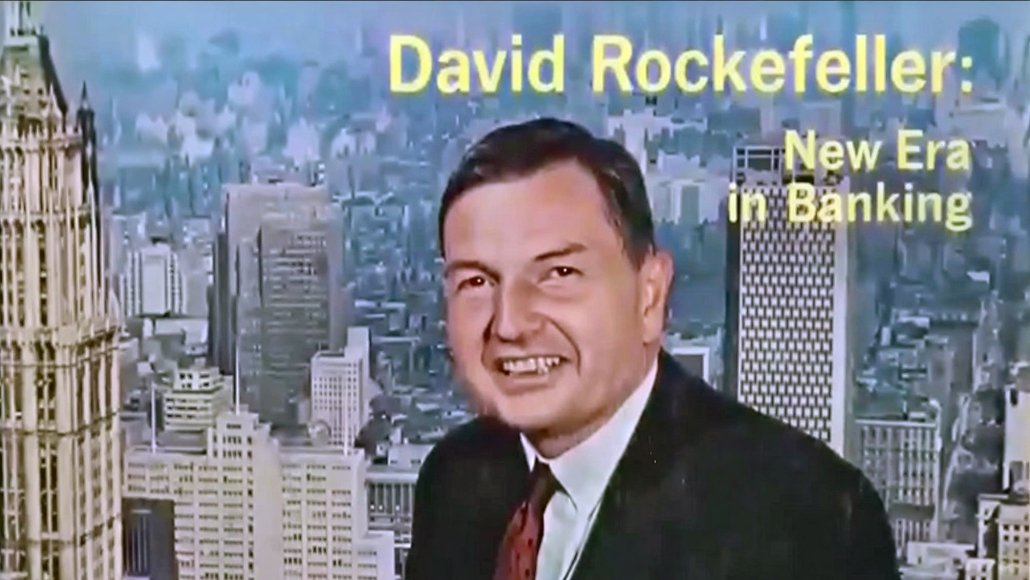
Take the recurring claims surrounding pre-9/11 imagery and elite foreknowledge. The 1967 magazine cover featuring David Rockefeller is often cited as an example of symbolic foreshadowing. Decades later, viewers interpret its elements through the lens of the attacks, identifying suggestive parallels. Similarly, Aaron Russo’s account of a conversation with Nicholas Rockefeller—referencing a catalysing “event” and subsequent military campaigns—has been widely circulated as insider testimony.
These interpretations and accounts exist within a space of ambiguity. They are compelling not because they are conclusively verified, but because they align with a broader suspicion: that power operates behind closed doors, and that public narratives are curated rather than transparent.
Blind acceptance of official narratives ignores the documented reality of deception. Conversely, treating every symbolic overlap or anecdote as evidence of coordinated design risks collapsing analysis into assumption. What remains undeniable is that influence—whether through statecraft, media, or culture creation—often operates below the threshold of conscious awareness. It shapes how events are framed, how threats are perceived, and how populations respond. Whether one attributes this to deliberate predictive programming or to the complex interplay of narrative, psychology, and hindsight, the effect is similar: perception is guided, and meaning is constructed.
For those examining these questions, the most effective stance is neither passive acceptance nor uncritical belief, but sustained scrutiny. Power does not need to be omnipotent to be influential, and influence does not need to be centrally orchestrated to be effective. The real battleground is not simply what happens, but how it is understood—and who benefits from that understanding.
Source: Rockefellers and 9/11 | Betsy McGee










Leave a Comment
Want to join the discussion?Feel free to contribute!