
Who is This Now? (a Paul is Dead Documentary) | Mitch Fillion
Who Is This Now?
Who is This Now? (a Paul Is Dead Documentary) – 2023 | Mitch Fillion
One Man’s Odyssey Through the Beatles’ Psychological Theatre
A young man dissects Beatles albums, photos, and interviews, stepping into the “Paul is dead” myth as a rehearsal in manufactured doubt, psychological conditioning, and mass‑suggestion.
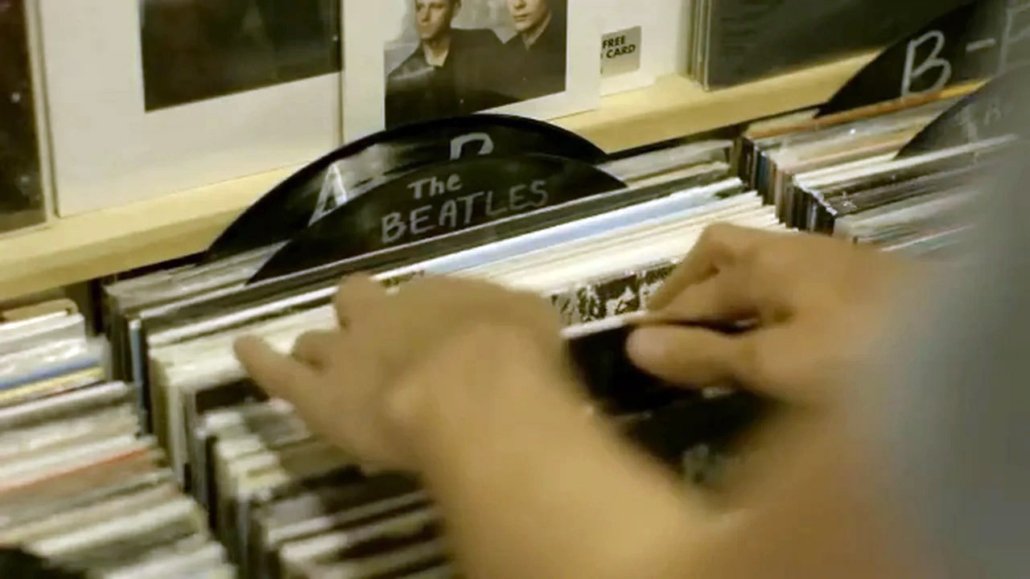
Mitch Fillion‘s 2016 short documentary Who Is This Now? (A Paul Is Dead Documentary) is one of many investigations into the “Paul is dead” rumour, yet it stands apart because it does not try to shut the myth down; it lets it breathe, twist, and seduce. The film follows a young researcher falling into the rabbit hole of clues – album covers, reversed lyrics, studio interviews, and photographic anomalies – all pointing to the idea that Paul McCartney died in a car crash on 11 September 1966 and was replaced by a stand‑in.
Read through the lens of generational social engineering, the story looks less like a random student joke and more like a psychological operation that may have been quietly incubated, amplified, or at least exploited by structures already specialising in mass manipulation: the British state apparatus and organisations such as the Tavistock Institute.

The rumour as a stress‑test of belief
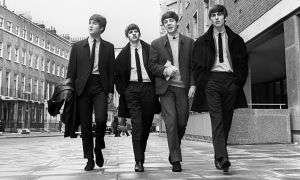
From this viewpoint, the “Paul is dead” episode can be seen as a low‑key psyop, testing how readily a mass audience will re‑interpret a beloved cultural symbol as a coded confession. The rumour reached its peak in late 1969, a moment when the Beatles‘ hold over youth culture was absolute: their music soundtracked the Vietnam era, the “Summer of Love,” and the rapid reshaping of generational identity.
If the public could be led to believe that one of their icons had been quietly rewritten and replaced, yet still continue to buy records, attend concerts, and defend a competing narrative, it would reveal something crucial about the pliability of attachment and loyalty. In this context, the rumour reads less like idle gossip and more like a field experiment in narrative substitution, probing how fast a myth can attach itself to a living figure and how much dissonance an audience will tolerate before it revolts – or simply adapts.
State psyops and the Tavistock angle
The Tavistock Institute, long associated with studies of mass behaviour, propaganda, and emotional manipulation, has for decades been viewed as a nucleus for soft‑power experimentation. Its work in mapping crowd psychology, media effects, and symbolic environments makes it a plausible candidate for having an interest in pop‑cultural experiments that could test the emotional limits of mass audiences.
From that perspective, the Beatles were an almost perfect vehicle. Their image – promoted as “peace and love” – ran alongside a broader cultural shift that also served to soften the political edge of the late‑1960s, redirecting rebellion into aesthetics, drugs, and lifestyle rather than sustained structural challenge. The “Paul is dead” rumour, if it was nudged or amplified by state‑linked actors, would have provided a way to observe how quickly a fan‑base could be turned into a self‑interpreting conspiracy‑culture, chasing clues, decoding symbols, and policing its own interpretations.
The rumour’s structure – a death kept secret, a replacement put in place, and a vast cover‑up managed by the music industry and media – mirrors the very narrative architecture now used in political disinformation: the faithful versus the lying establishment, the “awakened” versus the “sleepers.” If the British state or its psychological‑research wings were watching, they would have seen a powerful demonstration of how easily a symbolic crisis could be projected onto a trusted icon and then turned into a semi‑autonomous belief system.
Fillion as a guide through the engineered labyrinth
Mitch Fillion‘s documentary does not claim to know who started the rumour; instead, it acts as a guided tour through the mind‑space it occupied. He treats the “clues” not as childish nonsense, but as elements of a larger psychological construction: flipped‑back lyrics that seem to say “Paul is dead,” photos that resemble funeral scenes, and interviews that feel just slightly off‑register.
By refusing to mock the process, Fillion lets the viewer feel the seductive pull of the narrative. The film tacitly acknowledges what psyops design want you to experience: the intoxicating sense that you are “seeing through” a façade, that you are the one person who has decoded the hidden message. This is not a bug of the operation; it is a feature. In this light, Who Is This Now? becomes a kind of meta‑commentary: a younger, independent investigator replaying, in smaller form, the same selective perception and pattern‑hunting that the original rumour encouraged.
The Beatles as a social‑engineering platform
Seen with 2020 hindsight, the Beatles look less like a band and more like a cultural infrastructure project. Their music, image, and public persona were used to shape the emotional landscape of an entire generation, normalising new modes of dress, speech, affect, and consciousness while softening the edges of political radicalism.
Within that frame, the “Paul is dead” episode starts to resemble a stress‑test of generational conditioning. If the public could be led to believe that one of its most beloved sons had been secretly removed and replaced, and still continue to sing along, buy merchandise, and defend the myth, then the underlying architecture of belief was already operating at a high level of plasticity. The illusion system was not just preserved; it was re‑inforced through the very act of doubting.
Fillion’s documentary, along with similar investigations, suggests that the Beatles‘ legend is not a simple archive of songs and tours, but a living psychodrama in which each generation revisits the question of authenticity, manipulation, and substitution.
The myth that refuses to die
Materially, of course, Paul McCartney survived the ’60s, recorded through the ’70s and ’80s, and continues to tour and release music today. Yet the “Paul is dead” rumour persists, recast in new forms, re‑infused with new layers of symbolism, and treated as a kind of proto‑simulation of the idea that public figures are replaceable avatars.
Read as a psyop, its longevity is not a failure but a sign of success. A myth that can survive shifting cultural moods, and multiple waves of fact‑checking is a myth that has already embedded itself in the psychological architecture of loyalty and doubt.
For readers attuned to the idea of hidden hands steering world events, Who Is This Now? becomes a parable about how entertainment can be weaponised. If the Beatles‘ myth machine could be used as a stage for a low‑level psyop on the emotional and interpretive habits of millions around the world, what other cultural icons have been quietly rehearsed in the theatre of public life, not as art, but as operational experiments in mass conditioning?
Source: Who Is This Now? (A Paul Is Dead Documentary)










Leave a Comment
Want to join the discussion?Feel free to contribute!