
Beyond the Ice Wall of Antarctica | Eredin
Antarctic Secrets
Beyond the Ice Wall of Antarctica – 17 Feb 2024 | Eredin
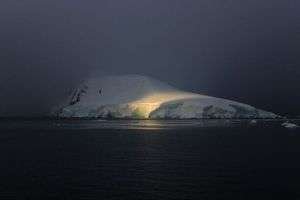
Antarctica, the southernmost continent on Earth, is a place of mystery and wonder. Its vast ice sheets, towering glaciers, and frozen landscapes have captivated explorers and adventurers for centuries. But what lies beyond the ice wall that encircles the continent?
There are limits to what lies beyond the ice wall. The Antarctic Treaty, which was signed in 1959, designates Antarctica as a scientific preserve and prohibits military activity, mining, and other forms of exploitation. The treaty also limits the number of people who can visit Antarctica and requires that all visitors follow strict environmental guidelines to minimise their impact on the fragile ecosystem.
The ice wall of Antarctica is a formidable barrier that has fascinated explorers and scientists for centuries. While there are limits to what lies beyond the ice wall, there is still much to discover and explore in this remote and mysterious part of the world. As we continue to learn more about Antarctica, we can gain a better understanding of our planet and our place in the universe.

Timestamps
Timestamps
00:00 Introduction
01:19 Captain Cook
03:56 James Clark Ross
05:55 Admiral Byrd
13:40 The Antarctic Treaty
20:50 Biblical Cosmology
34:08 Operation Fishbowl
36:46 Biblical Cosmology
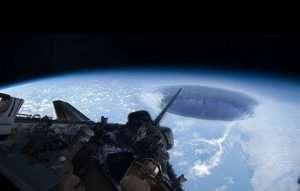
47:15 Antarctic Hole
51:02 Conclusion
Sources and links
Antarcitica
Antarctica is Earth’s southernmost and least-populated continent. Situated almost entirely south of the Antarctic Circle and surrounded by the Southern Ocean (also known as the Antarctic Ocean), it contains the geographic South Pole. Antarctica is, on average, the coldest, driest, and windiest of the continents, and it has the highest average elevation. It is mainly a polar desert, with annual precipitation of over 200 mm (8 in) along the coast and far less inland. Native species of animals include mites, nematodes, penguins, seals and tardigrades. Where vegetation occurs, it is mostly in the form of lichen or moss.
Source: https://en.wikipedia.org/wiki/Antarctica
Admiral Richard E. Byrd
Richard Evelyn Byrd Jr. (October 25, 1888 – March 11, 1957), an American naval officer, was a pioneering American aviator, polar explorer, and organizer of polar logistics. Aircraft flights in which he served as a navigator and expedition leader crossed the Atlantic Ocean, a segment of the Arctic Ocean, and a segment of the Antarctic Plateau. He is also known for discovering Mount Sidley, the largest dormant volcano in Antarctica.
Source: https://en.wikipedia.org/wiki/Richard_E._Byrd
Sir James Clark Ross
Sir James Clark Ross (15 April 1800 – 3 April 1862) was a British Royal Navy officer and polar explorer known for his explorations of the Arctic, participating in two expeditions led by his uncle John Ross, and four led by William Edward Parry, and, in particular, for his own Antarctic expedition from 1839 to 1843.
Source: https://en.wikipedia.org/wiki/James_Clark_Ross
Captain James Cook
Captain James Cook (1728 – 14 February 1779) was a British explorer, cartographer and naval officer famous for his three voyages between 1768 and 1779 in the Pacific Ocean and to New Zealand and Australia in particular. He made detailed maps of Newfoundland prior to making three voyages to the Pacific, during which he achieved the first recorded European contact with the eastern coastline of Australia and the Hawaiian Islands and the first recorded circumnavigation of New Zealand.
Source: https://en.wikipedia.org/wiki/James_Cook
Operation HIGHJUMP
Operation HIGHJUMP, officially titled The United States Navy Antarctic Developments Program, 1946–1947, (also called Task Force 68), was a United States Navy (USN) operation to establish the Antarctic research base Little America IV. The operation was organized by Rear Admiral Richard E. Byrd, Jr., USN (Ret), Officer in Charge, Task Force 68, and led by Rear Admiral Ethan Erik Larson, USN, Commanding Officer, Task Force 68. Operation HIGHJUMP commenced 26 August 1946 and ended in late February 1947. Task Force 68 included 4,700 men, 70 ships, and 33 aircraft.
Source: https://en.wikipedia.org/wiki/Operation_Highjump
Operation Fishbowl
The Operation Fishbowl nuclear tests were originally to be completed during the first half of 1962 with three tests named Bluegill, Starfish and Urraca. The first test attempt was delayed until June. Planning for Operation Fishbowl, as well as many other nuclear tests in the region, began rapidly in response to the sudden Soviet announcement on August 30, 1961, that they were ending a three-year moratorium on nuclear testing. The rapid planning of very complex operations necessitated many changes as the project progressed.
Source: https://en.wikipedia.org/wiki/Operation_Fishbowl
Source: Beyond the Ice Wall of Antarctica – YouTube


Leave a Comment
Want to join the discussion?Feel free to contribute!