

So About Aleister Crowley | Habbening
Aleister Crowley
Occult Power, Secret Societies and the Construction of a Monster
Crowley’s legacy merges occult ritual, secret societies, intelligence intrigue and psychological manipulation, revealing how cruelty can be recast as liberation through carefully engineered mythology.
Aleister Crowley remains one of the most successfully weaponised figures in modern cultural history. To some, he was a prophet of spiritual liberation; to others, “the wickedest man in the world”. Between those extremes was a deeply intelligent, theatrical and often destructive man who understood the power of ritual, secrecy, scandal and public perception.
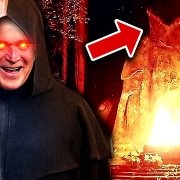
Drawn from a number of documentaries, So About Aleister Crowley, from Habbening Net News, examines Crowley’s life, magical beliefs, ritual practices and cultural influence. It also raises a more uncomfortable question: was Crowley merely an eccentric occultist, or did his connections to secret societies, propaganda networks and intelligence circles give him a wider significance?
The evidence does not justify turning every association into proof of a grand conspiracy. But neither should Crowley’s darker conduct, institutional connections or influence techniques be softened into a harmless philosophy of personal freedom.
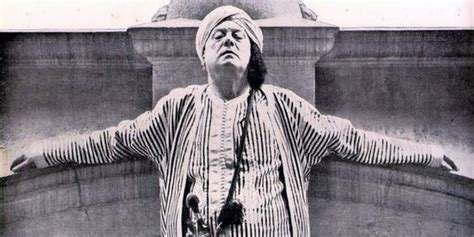
The Making of a Villain
Born in 1875 into a strict Plymouth Brethren family, Crowley rebelled against the religious world of his childhood. He rejected conventional Christianity, immersed himself in ceremonial magic and eventually formulated Thelema, a spiritual system associated with the phrase “Do what thou wilt shall be the whole of the Law”.
Modern occult culture often presents this as a simple appeal to freedom: reject repression, follow your instincts and live authentically. Crowley’s actual system was more demanding and more hierarchical. “True Will” referred to a supposed higher purpose, reached through discipline, initiation and magical practice. It did not simply mean doing whatever one happened to desire.
Crowley also cultivated the image of a dangerous outsider. He called himself “the Beast 666”, adopted provocative language and surrounded himself with symbols designed to shock respectable society. The press seized upon the material. His sexual life, drug use, occult practices and rejection of Christian morality made him an ideal target for sensational journalism.
The phrase “the wickedest man in the world” condensed a complicated life into a single emotionally powerful label. It sold newspapers, reinforced public fears and gave conventional society a recognisable enemy. Yet tabloid exaggeration should not be confused with exoneration. Crowley’s reputation was amplified by the press, but it was not invented from nothing.
The Sanitised Crowley
The modern rehabilitation of Crowley can be just as misleading as the original demonisation. Admirers sometimes portray him as a benign humanist, sexual liberator or misunderstood advocate of personal sovereignty. In that version, his most attractive slogans survive while his abuses, cruelties and failures are treated as irrelevant background.
Crowley’s life included heavy drug use, financial irresponsibility, abandonment of family responsibilities, manipulative relationships and a willingness to use people as instruments of his spiritual and personal ambitions. His writings reveal a fascination with domination, ordeal and the deliberate violation of conventional moral boundaries.
At the Abbey of Thelema in Cefalù, Sicily, he attempted to establish a ritual community based on his teachings. The Abbey became associated with drug use, sexual ritual, strict discipline and allegations of coercive treatment. The death of Raoul Loveday after falling ill there contributed to the ensuing scandal, and Crowley was expelled from Italy in 1923.
Not every sensational allegation made against him can be accepted as fact. Crowley’s enemies embellished his conduct, while Crowley himself frequently exaggerated his importance. But rejecting unreliable stories does not require presenting him as harmless. His own writings and the testimony of people around him provide ample evidence of callousness, exploitation and psychological cruelty.
Freemasonry and Initiation
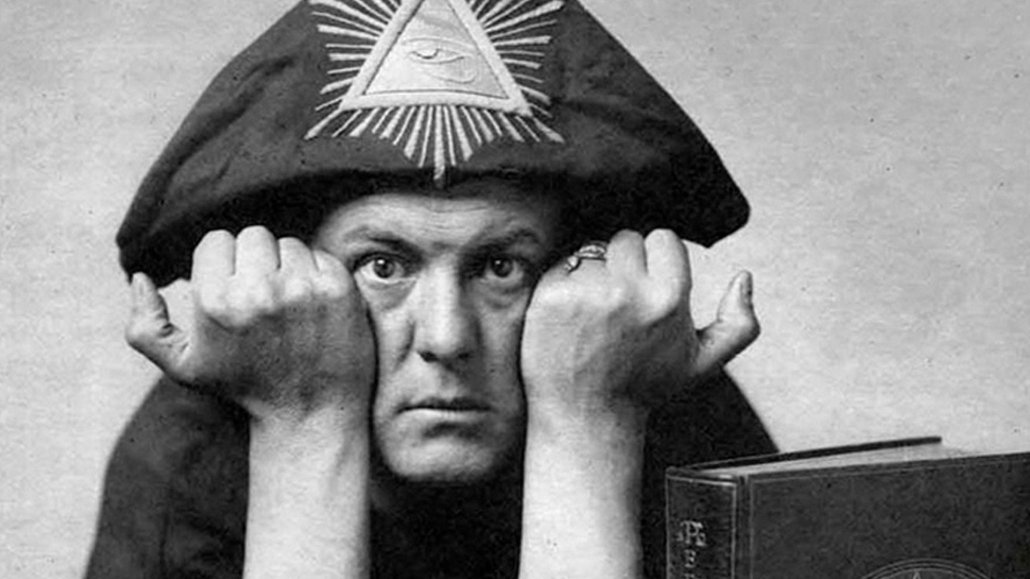
Crowley’s relationship with Freemasonry forms part of the wider story of his search for status, authority and access to restricted knowledge. He joined Cannongate Kilwinning Lodge No. 2 in Edinburgh in 1900, although the legitimacy of some of his Masonic initiations and degrees was disputed. His status was not universally recognised within regular Freemasonry.
That distinction matters. Freemasonry was not identical to the occult organisations with which Crowley later became associated. Nor does Masonic membership, by itself, prove participation in a hidden political command structure. Nevertheless, the language of Freemasonry—degrees, passwords, ritual, hierarchy and fraternal identity—helped shape Crowley’s understanding of how authority could be created and maintained.
For Crowley, initiation was more than ceremony. It divided insiders from outsiders, created a sense of privileged knowledge and made spiritual advancement dependent upon a structured relationship with teachers and superiors. These conditions encourage loyalty and discipline, but they can also leave followers vulnerable to charismatic figures who claim exceptional insight.
Crowley understood the psychological value of secrecy. Information withheld from outsiders becomes more alluring, while restricted teachings make members feel selected and important. A private ritual can therefore function as both religious practice and social technology.
The Golden Dawn and Occult Networks
Crowley joined the Hermetic Order of the Golden Dawn in 1898. There he studied ceremonial magic, qabalah, astrology, tarot and ritual symbolism. The order’s system of graded instruction offered him a framework for developing his own authority, while its internal disputes exposed the rivalries and personal ambitions that often accompany secretive organisations.
His conflict with senior members became notorious. Crowley’s willingness to assert himself, challenge established figures and use ritual claims as a basis for authority helped intensify the division. The episode also demonstrated a recurring feature of his career: he was not content merely to join an esoteric movement. He sought to reshape it around himself.
Crowley later helped develop the A∴A∴, a system of magical training organised through grades and spiritual exercises. He also became associated with the Ordo Templi Orientis, eventually claiming leadership of its British branch. Under his influence, the O.T.O. increasingly adopted Thelemic teachings and placed greater emphasis on sexual magic.
These organisations were generally small, divided. Their importance lies not in evidence of omnipotent control, but in the techniques they employed: secrecy, initiation, symbolic authority, restricted education and personal allegiance.
The Abbey as Social Experiment
The Abbey of Thelema represented Crowley’s attempt to turn occult doctrine into a complete social environment. The commune was intended to function as a living laboratory for ritual, meditation, sexual magic and Thelemic discipline.
Such experiments can become dangerous when one person controls the rules, interprets the doctrine and determines whether dissent represents insight or failure. Crowley’s authority within the Abbey was reinforced by his identity as prophet, teacher and “Beast”. The boundaries between spiritual instruction, personal desire and institutional power became difficult to separate.
The Abbey’s notoriety helped cement Crowley’s public image. Reports of ritual and sexual practices were transformed into proof of a vast moral threat. Yet behind the sensational headlines was a more ordinary and troubling question: what happens when a charismatic leader is permitted to define morality for a closed community?
That question is more significant than whether every lurid account was accurate. It directs attention towards dependency, coercion and the use of spiritual language to justify personal power.
Crowley and Intelligence Activity
Crowley’s apparent connection with British intelligence adds another layer to the story. During the First World War, while living in the United States, he operated in circles where propaganda, espionage and political agitation overlapped. He contributed to The Fatherland, a publication associated with pro-German advocacy.
Crowley later claimed that his public pro-German posture was a cover designed to benefit British interests. According to his account, he exaggerated his support for Germany in order to gather information, expose networks and make German propaganda appear absurd. Some researchers have regarded parts of this story as credible, although the precise nature of his role remains uncertain.
The available evidence does not conclusively establish whether Crowley was a formal intelligence agent, an informal source, a useful contact or an opportunist who later enlarged his importance. The conclusion is that he had credible links to intelligence activity, but that the scale and official status of those links remain disputed.
His talents would have had obvious utility in that environment. Crowley understood disguise, coded identities, symbolic theatre and controlled outrage. He knew how to adopt a role so extreme that people could not easily determine where performance ended and genuine belief began.
An intelligence operation does not necessarily require a central figure controlling every consequence. Sometimes a public character is useful because he attracts attention, provokes opponents, enters unusual circles or contaminates a movement through association. Crowley’s gift for theatrical provocation made him potentially valuable as a propagandist, intermediary or source, regardless of whether he was ever a formally recruited operative.
Ritual as Psychological Technology
Crowley’s magical practices can also be examined as forms of psychological conditioning. Repetition, sensory stimulation, isolation, exhaustion, confession, sexual intimacy and fear can all alter perception and strengthen group identity. Within a controlled ritual setting, participants may experience heightened emotion as evidence of spiritual truth.
This does not mean that every magical ceremony was an intelligence exercise or that all occult practice is inherently coercive. It means that ritual has social and psychological effects in addition to its stated religious meaning.
Crowley’s systems combined secrecy with authority. Followers were encouraged to believe that ordinary morality could be transcended by those possessing sufficient knowledge or spiritual development. Such a doctrine can be used to excuse conduct that would otherwise be recognised as abusive.
The central concern is therefore not simply whether Crowley believed in magic. It is how claims of exceptional knowledge can be used to legitimise obedience, conceal harm and make criticism appear proof of spiritual inferiority.
The Afterlife of the Crowley Brand
Crowley died in 1947, but his image became more influential after his death. Musicians, artists, writers and countercultural movements borrowed his symbols, language and posture of rebellion. His appearance on the cover of the Beatles’ Sgt. Pepper’s Lonely Hearts Club Band and Jimmy Page’s interest in his work helped carry the Crowley image into popular culture.
Most people familiar with Crowley do not know his writings in detail. They recognise a brand: occult master, sexual rebel, secret initiate and enemy of conventional religion. This brand can be used by admirers seeking a symbol of liberation or by critics looking for evidence of cultural corruption.
Both responses risk replacing history with mythology. Crowley did have cultural influence, but influence does not establish command. Shared imagery, fascination and association are not proof that he directed artists, political movements or historical events.
His continuing appeal comes from the narrative package he represents: forbidden knowledge, hidden hierarchies, ritual power, elite transgression and rebellion against moral authority. These themes are emotionally powerful because they make complicated cultural changes appear intentional and controlled.
The Story Machine
Crowley’s legacy demonstrates how reputations are manufactured in opposite directions. First, newspapers turned him into a monster who embodied social decay. Later admirers removed the most troubling aspects of his conduct and transformed him into a convenient philosopher of freedom.
The process is familiar. An uncomfortable figure is reduced to a symbol, inconvenient evidence becomes “context”, victims disappear from the story and a memorable slogan replaces historical examination. The public is left arguing over the image rather than investigating the mechanisms that created it.
Crowley was not a harmless humanist, but neither is there sound evidence that he was an all-powerful occult mastermind steering history from the shadows. He was a highly intelligent, self-dramatising and frequently destructive man who understood how secrecy, ritual, scandal and publicity could generate authority.
His links to Freemasonry, the Golden Dawn, the A∴A∴ and the O.T.O. placed him within networks built around initiation and restricted knowledge. His apparent intelligence connections suggest that his skills in performance and influence may also have possessed political utility. But the historical record supports a careful analysis of networks and methods—not an invitation to treat every secret society as one unified power.
The real lesson is more unsettling than a simple conspiracy story. Crowley shows how a human being can become an instrument of competing narratives: a monster for the press, a prophet for followers, an asset for intelligence interests and a cultural icon for later generations.
The question is not merely whether Crowley was wicked. It is who benefited from making him appear either more monstrous or more benign than the evidence permits.








Leave a Comment
Want to join the discussion?Feel free to contribute!