
Waco: The Rules of Engagement | William Gazecki
Hidden War
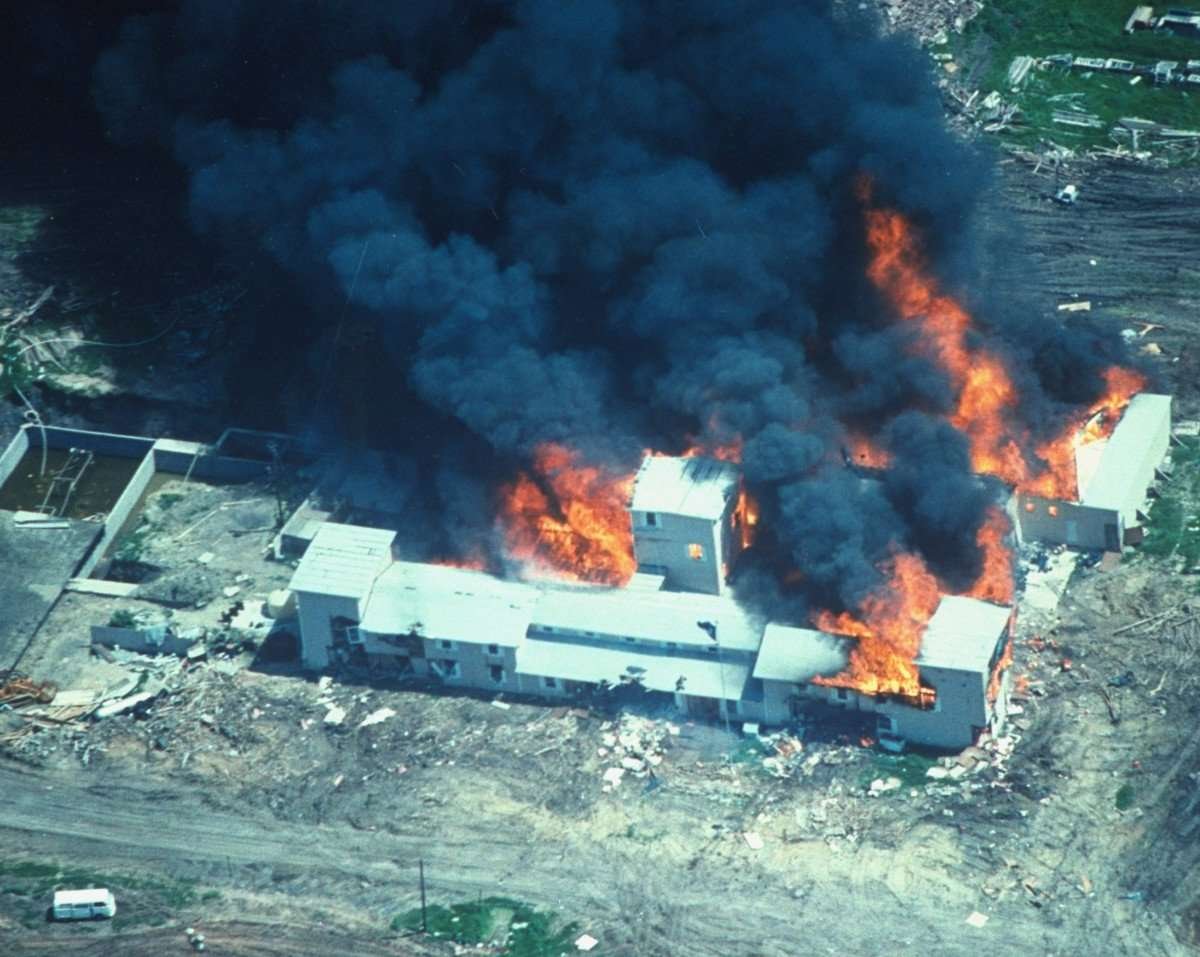
Waco: The Rules of Engagement is a 1997 documentary directed by William Gazecki about the 1993 “Waco Siege”, a 51-day standoff beginning with the February 28 Bureau of Alcohol, Tobacco and Firearms assault on the Branch Davidian church and home outside of Waco, Texas and ending with the April 19th Federal Bureau of Investigations assault on the building which killed most of the inhabitants.
Waco: The Rules of Engagement
A Dark Lesson in Psychological Warfare and the Illusion of Authority
Waco: The Rules of Engagement reveals how psychological warfare and propaganda masked a brutal government siege, exposing the hidden forces shaping obedience through fear and control.
In 1997, director William Gazecki released Waco: The Rules of Engagement, a documentary peeling back the veneer on one of the most chilling episodes of modern American history—the 1993 Waco Siege. This 51-day standoff between the Branch Davidians, a religious sect led by David Koresh, and federal agencies such as the Bureau of Alcohol, Tobacco, and Firearms (ATF) and the Federal Bureau of Investigation (FBI) offers a stark case study in psychological warfare, propaganda, and the manipulation of narrative to serve entrenched power structures.

The siege began on 28 February 1993, when ATF agents launched an aggressive assault on the Branch Davidian compound outside Waco, Texas. The initial raid quickly spiralled into a protracted confrontation, culminating in a full-scale FBI assault on 19 April. The final blaze, which razed the compound to the ground, resulted in the deaths of nearly all inside, including men, women, and children.
Psychological Domination
Behind the public façade of law enforcement’s “law and order” mission, what unfolded was a masterclass in social engineering. The government’s assault did not merely seek to enforce the law—it was an act of psychological domination designed to shatter resistance by terror, confusion, and overwhelming force. Surveillance, deception, and relentless pressure created an environment where compliance was the only perceived option. Yet the deeper truth is far more sinister: the siege was a demonstration of the State’s willingness to annihilate dissent, even when that dissent is contained within its own borders.
As those who pull the strings from behind the curtain well understand, the greatest threat to parasitic psychopathy’s dominion is collective memory. The story machine—the media, the official narrative, the public relations apparatus—rushes to sanitise and simplify such events, recasting them as necessary responses to dangerous extremists. This crafted illusion absolves those in power and suppresses critical scrutiny of the methods employed. Waco: The Rules of Engagement exposes this fiction, allowing us a glimpse behind the smoke and mirrors to the truth beneath: a government unafraid to turn its agencies into instruments of psychological terror, reinforcing the paradigm of obedience through the spectacle of overwhelming violence.
For readers familiar with the hidden hands that steer world events and manipulate political puppetry, the Waco Siege is a stark reminder of the extent to which social control is maintained. Those in power exploit fear—fear of the “other,” fear of disorder, fear of the unknown—to justify operations that break not just bodies, but spirits. The true combatant in Waco was not only the Branch Davidians, but the very concept of resistance itself, framed as heresy against the State’s claim to absolute authority.
Remembering Waco is not an act of simply recounting history—it is an act of defiance against the story machine. It is a refusal to forget the cost of compliance, the price paid when the machinery of propaganda eclipses human truth. It is a call to remain vigilant, to see through the illusions spun by those who fear awakening most of all. Because with memory comes power—and with power, the possibility of change.
Waco: The Rules of Engagement serves as a crucial testament not only to a tragic event but to the patterns of psychological warfare and social engineering that underpin much of what passes for governance in our modern world. To know Waco is to understand the stakes in the ongoing battle for collective consciousness.
Source: Waco: The Rules of Engagement











Leave a Comment
Want to join the discussion?Feel free to contribute!