

Chris Kendall – Hollywood, Mind Control & Media Fakery | Our Interesting Times
Hoax Busting
Chris Kendall – Hollywood, Mind Control, Media Fakery and more – 21 Feb 2016 | Our Interesting Times
Hollywood, media and state power converge to shape belief, managing perception through spectacle, secrecy and repeated narratives that keep the public within acceptable limits.
Chris Kendall joins Tim Kelly on the Our Interesting Times podcast to discuss his work and research. Chris hosts Hoax Busters Call and is the co-host of the Afternoon Commute podcast.
The conversation covers many topics including the illusion of the rule of law, government secrecy, corruption, false flag terrorism, the alleged lunar missions, and Atomic fakery.
This episode of Our Interesting Times brings Chris Kendall of Hoax Busters Call into conversation with host Tim Kelly for a wide-ranging examination of narrative control, state power and the cultural machinery that shapes public belief.
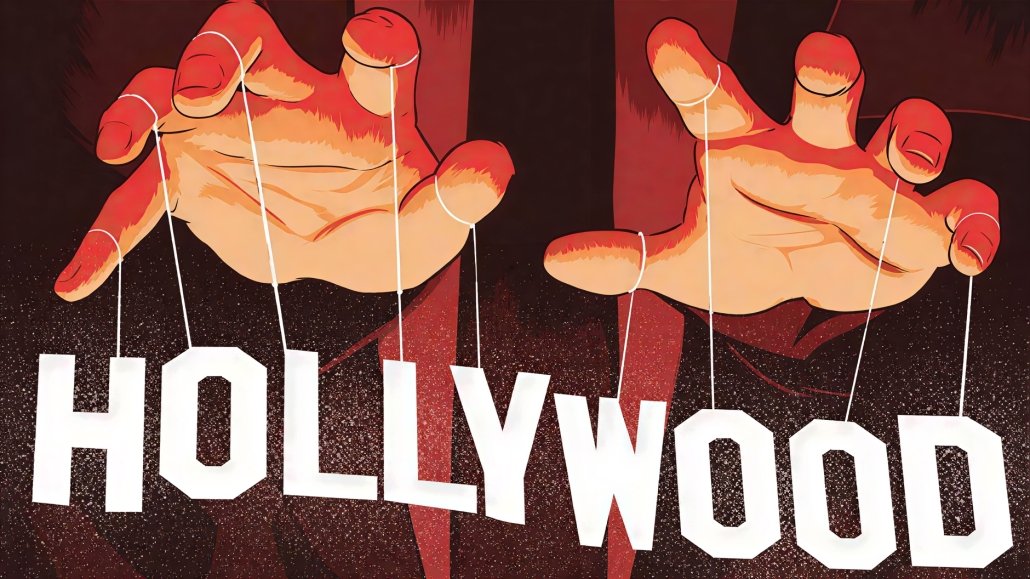
Hollywood as a Strategic Asset
Kendall’s central concern is not merely that films contain political messaging, but that the motion-picture industry has long operated in close proximity to the institutions of state power. Cinema, television and now digital entertainment do more than distract: they establish emotional reference points, define acceptable assumptions and make particular forms of authority appear natural.
When military agencies, intelligence-linked institutions and government departments assist productions, that assistance is rarely without conditions. Access to equipment, locations, technical advice and official approval can depend on script changes that protect institutional reputations or advance preferred storylines. The result is a form of soft power in which propaganda arrives not as an overt instruction, but as entertainment.
A heroic intelligence officer, a necessary military intervention or an ever-present external threat can be absorbed by an audience almost without conscious scrutiny. Repetition turns suggestion into common sense.
The Architecture of Belief
The discussion considers psychological warfare as a continuing process rather than a wartime speciality. Its purpose is to influence perception: what people consider possible, respectable, dangerous or beyond question.
Within this framework, the news cycle, popular culture, education, advertising and political spectacle operate as mutually reinforcing channels. Each may appear separate, yet they often produce a remarkably coherent picture of reality. Official narratives are framed as neutral facts; dissent is marginalised through ridicule, omission or association with the most easily dismissed voices.
The “rule of law” becomes especially important in this construction. Kendall and Kelly examine the gap between the public image of legal equality and the practical reality of secrecy, selective enforcement and institutional immunity. A population encouraged to believe that formal procedures automatically guarantee justice may struggle to recognise power operating outside, above or through those procedures.
Secrecy, Spectacle and Managed Crisis
The conversation also ranges across corruption, false-flag terrorism, supposed lunar missions and the presentation of atomic science. Whatever position a listener takes on particular claims, the broader issue is worth confronting: major public events are not received directly. They are encountered through selected footage, authorised experts, official statements and media interpretation.
Perception is mediated, and institutions with immense resources have strong incentives to manage that mediation. The first version of an event often becomes the permanent version, particularly when urgency, fear and moral outrage discourage careful examination.
Managed crisis is one of the most effective tools in the psychological arsenal. It narrows attention, accelerates consent and creates demand for measures that might otherwise meet resistance. The public is not simply told what to think; it is placed in emotional conditions in which certain conclusions feel unavoidable.
Maintaining the Illusion System
For readers familiar with the hidden structures behind public politics, the value of this interview lies in its focus on method. The visible theatre of elections, scandals and policy disputes can obscure the deeper work of maintaining legitimacy for the wider system.
The story machine does not need universal belief. It needs enough people to accept the broad boundaries of permitted reality: that official institutions are fundamentally trustworthy, that approved experts define the limits of reason, and that alternatives can safely be ignored.
Hollywood plays a vital role because stories reach places that arguments do not. A film can implant associations between security and obedience, danger and foreignness, technological power and progress, or dissent and instability. By the time similar themes appear in news coverage or political speeches, the emotional groundwork may already have been laid.
Kendall’s appearance on Our Interesting Times is a useful reminder that propaganda is not confined to posters, press releases or wartime broadcasts. It is woven into the stories a society tells itself about power, history, danger and salvation. Examining those stories is not an exercise in cynicism. It is a necessary step towards recognising how consent is manufactured — and how the boundaries of public thought are maintained.
Source: Podomatic | Chris Kendall of Hoax Buster’s Call









Leave a Comment
Want to join the discussion?Feel free to contribute!