
Inside the Elite: Unveiling the Control Systems of British Elite Families | WakingWorld
Bloodline Gangsters
Episode #47 – Inside the Elite:
Unveiling the Control Systems of British Elite Families – 28 Aug 2024 | WakingWorld
In this episode of the WakingWorld podcast, Toby delves into a revealing discussion with an anonymous ex-member of a prominent British elite family.
This insider provides an in-depth look into the intricate control systems operated by powerful families linked to the British Royal Family, the Rothschilds, and the Mountbattens. Explore how these elite families exert influence and maintain control over world affairs. From hidden agendas to the mechanics of power, this episode offers a rare glimpse into the shadowy world of elite power dynamics.
“Feuding factions within the same control system, everything is infiltrated by these fucks.”
Jesuit Order
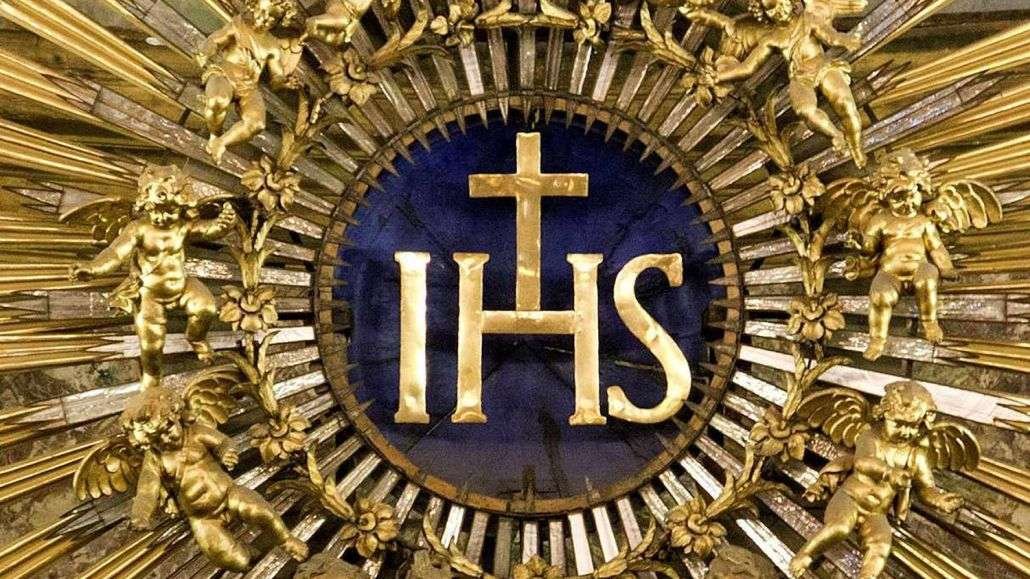
The Jesuit Order, or Society of Jesus, is a Catholic religious order purportedly founded in 1540 by Ignatius of Loyola. Known for its educational and missionary work, the Jesuits have played a significant role in the history of the Catholic Church. Their emblem, featuring the Christogram IHS, represents Jesus Christ and emphasises their commitment to spreading the Gospel.

The Symbol IHS
The IHS symbol is derived from the first three letters of “Jesus” in Greek (ΙΗΣΟΥΣ) and has been used in Christian iconography since the 7th century, well before the Jesuits were established. It is often depicted with a cross, rays of light, and the black sun.
The Black Sun and Saturn
The Black Sun symbol has various interpretations and is often associated with esoteric and occult traditions. It gained notoriety in the 20th century, particularly among neo-Nazi groups, but its origins can be traced back to medieval Germanic symbols. The Black Sun is sometimes linked to themes of darkness and hidden knowledge.
The association of the Black Sun with Saturn is part of a broader narrative in esoteric traditions, where Saturn represents time, structure, and control. In some interpretations, Saturn is seen as a deity associated with harvest and cycles, and these themes are often woven into various occult practices and symbols. The connection between Saturn worship and Satanism stems from various symbolic interpretations, particularly in modern discussions that suggest “Satan” is merely another name for “Saturn.”
Power and Control
The Jesuit Order has often been the subject of scrutiny suggesting that they wield significant power and control over world systems. Many researchers suggest significant influence of the Jesuits in political, economic, and social spheres, often depicting them as puppeteers behind world events.
While the Jesuits have historically been influential in education and missionary work, their actual power is debated. They have faced suppression and expulsion from various countries throughout history, which contradicts the notion of an omnipotent control system.

The Jesuits at 10 Downing Street
The Jesuit emblem is featured prominently in the window above the door at 10 Downing Street, the official residence of the Prime Minister of the United Kingdom.
- Location: The emblem is located in the glass above the entrance of 10 Downing Street, which has been the residence of British Prime Ministers since the 18th century.
- Historical Context: The presence of the Jesuit emblem at such a prominent governmental site has led to various interpretations and discussions regarding its implications, particularly in relation to the influence of the Jesuit Order in political and social spheres.
- Hidden Power: Some interpretations suggest that the emblem signifies a deeper connection between the Jesuits and the British government signalling that the Jesuits exert significant control over world affairs.
The emblem serves as a reminder of the historical presence and influence of the Jesuit Order in various aspects of society, including education, politics, and religious life.
The Jesuit Oath
The Jesuit Oath, often referred to as the “Oath of Extreme Induction,” is a controversial document attributed to the Society of Jesus. It is said to be taken by Jesuit priests upon their induction into higher ranks within the order. However, the authenticity of this oath has been heavily debated, with many historians considering it a forgery.
The Oath of Extreme Induction is described as follows:
- Setting: The novice kneels on a red cross before the Superior of the Order, with two flags present: the Papal flag and a black flag featuring a dagger and a skull, inscribed with the phrase “IUSTUM, NECAR, REGES, IMPIOS,” which translates to “It is just to exterminate or annihilate impious or heretical kings, governments, or rulers.”
- Ceremony: The Superior hands the novice a small black crucifix and a dagger. The novice presses the dagger to his heart while the Superior addresses him, instructing him on the need for deception and secrecy in his mission.
- Oath Content: The novice is then asked to repeat a series of commitments that include a pledge of loyalty to the Pope and the Jesuit Order, along with a vow to act as a spy and to incite discord among different groups for the benefit of the Church.
- Final Commitment: The novice seals his oath by writing his name with the point of the dagger dipped in his own blood.
Text of the Jesuit Oath
The following is the text commonly attributed to the Jesuit Oath of Extreme Induction: Induction and Extreme Oath of the Jesuits.
When a Jesuit novice is about to be inducted into the higher levels of the Order, he kneels on a red cross before the Superior of the Order. Before him are two flags: the yellow and white flag of the papacy, and a black flag with a dagger and a skull and crossbones, inscribed with the words IUSTUM, NECAR, REGES, IMPIOS (It is just to exterminate or annihilate impious or heretical kings, governments, or rulers).
The Superior of the Order hands the novice a small black crucifix, which he presses to his heart, and presents to him a dagger. The novice grasps the bare blade and presses the point to his heart. The Superior then speaks to the novice:
Superior:
“You have been taught to insidiously plant the seeds of jealousy and hatred between communities, provinces, and states that were at peace, and incite them to deeds of blood, involving them in war with each other, and to create revolutions and civil wars in countries that were independent and prosperous, cultivating the arts and sciences and enjoying the blessings of peace. To take sides with the combatants and to act secretly in concert with your brother Jesuit, who may be engaged on the other side, but openly opposed to that with which you might be connected; only that the Church might be the gainer in the end, in the conditions fixed in the treaties for peace and that the end justifies the means.
You have received all your instructions heretofore as a novice, a neophyte, and have served as a coadjutor, confessor, and priest, but you have not been invested with all that is necessary to command in the Army of Loyola in the service of the Pope. You must serve the proper time as the instrument and executioner as directed by your superiors; for none can command here who has not consecrated his labors with the blood of the heretic; for ‘without the shedding of blood no man can be saved.’ Therefore, to fit yourself for your work, and make your own salvation sure, you will, in addition to your former oath of obedience to your Order and your allegiance to the Pope, repeat after me…”
Controversy and Historical Context
The Jesuits themselves have denied the existence of such an oath in their official practices. Their vows typically include commitments to poverty, chastity, and obedience, which are standard for many religious orders but do not include the extreme measures described in the alleged oath. While the text of the Jesuit Oath is often cited, its authenticity and relevance to the Society of Jesus remain subjects of significant debate and skepticism.
Historical Notable Jesuits
Here is a list of notable Jesuits, including both historical figures and contemporary members of the Society of Jesus:
- Ignatius of Loyola – Founder of the Society of Jesus and a key figure in the Catholic Reformation.
- Francis Xavier – One of the first Jesuits and a missionary who played a crucial role in spreading Christianity in Asia.
- Robert Bellarmine – A Doctor of the Church known for his theological writings and defense of the faith.
- José de Anchieta – A missionary in Brazil and co-founder of São Paulo.
- Jean de Brébeuf – A French missionary and martyr in Canada.
- Eusebio Kino – An explorer and missionary in the southwestern United States and northern Mexico.
- Peter Claver – Known for his work with African slaves in Colombia.
- Baltasar Gracián – A Spanish Jesuit writer and philosopher known for his works on baroque prose.
- Gerard Manley Hopkins – An English poet known for his innovative use of language and form.
- John Ogilvie – The only post-Reformation saint in Scotland, martyred for his faith.
Contemporary Notable Jesuits
- Pope Francis (Jorge Mario Bergoglio) – Elected as the first Jesuit pope in 2013, known for his focus on social justice and pastoral care.
- Adolfo Nicolás – The 30th Superior General of the Society of Jesus, who emphasised the Jesuits’ commitment to faith and justice.
- John Courtney Murray – An influential theologian who contributed to the development of the Church’s stance on religious freedom.
- Walter Ciszek – A Polish-American Jesuit who spent 23 years in Soviet prisons and is known for his writings on faith under persecution.
- Cyrus Habib – Former Lieutenant Governor of Washington and a Jesuit priest, known for his advocacy for social justice and education.
- Anthony de Mello – A Jesuit priest and psychotherapist known for his writings on spirituality and self-awareness.
- Francis Browne – An Irish Jesuit known for his photographic documentation of significant historical events.
- Jean Daniélou – A prominent theologian involved in the ressourcement movement in mid-20th century Catholic thought.
Sources and links
Institute for Advanced Jesuit Studies – Jesuit Sources – Boston College
Find Primary Sources – Jesuits and the Globe – Library Guides
The Society of Jesus – Jesuits
The End-Time Message – The Society of Jesus (Jesuits)
Jesuit | History, Definition, Order, Catholic, Slavery, & Facts | Britannica
The Jesuit logo on the glass above the door of 10 Downing Street
10 Downing Street | Official Residence of UK Prime Minister – Britannica
Source: Episode #47 – Inside the Elite–WakingWorld




















Leave a Comment
Want to join the discussion?Feel free to contribute!