
The Chicago World’s Fair: Debunking the Conspiracy Claims | InnerVerse
Tartaria and the 1893 World’s Fair – July 2026 | InnerVerse
Tartaria and the 1893 World’s Fair – July 2026 | InnerVerse
Tartaria and the 1893 World’s Fair – July 2026 | InnerVerse
The White City and the Machinery of Belief
Tartaria, the 1893 World’s Fair, and the Engineering of Alternate Realities
The 1893 Chicago World’s Fair fuels Tartaria claims, but archival photographs, records, and engineering accounts show the White City was built by thousands of workers using timber, plaster, and other materials brought in by rail.
The Chicago Fair remains one of the most visually striking events of the modern era—an ephemeral city of classical grandeur that seemed to appear almost overnight. For some, it stands as a triumph of industrial-age ambition. For others, it has become the foundation of an alternative narrative: that these monumental structures were not built, but inherited from a buried, advanced civilisation and repurposed under false pretences.
We examine both the claim and the context in which it thrives. By placing the White City within its documented historical record—while also analysing the fair itself as a vehicle of cultural messaging—we can begin to understand not only what was built, but how belief is shaped. At the convergence of spectacle, propaganda, and modern conspiracy culture lies a more revealing question: not whether the past has been hidden, but how narratives are constructed, reinforced, and contested in the first place.


The Spectacle as Narrative Control
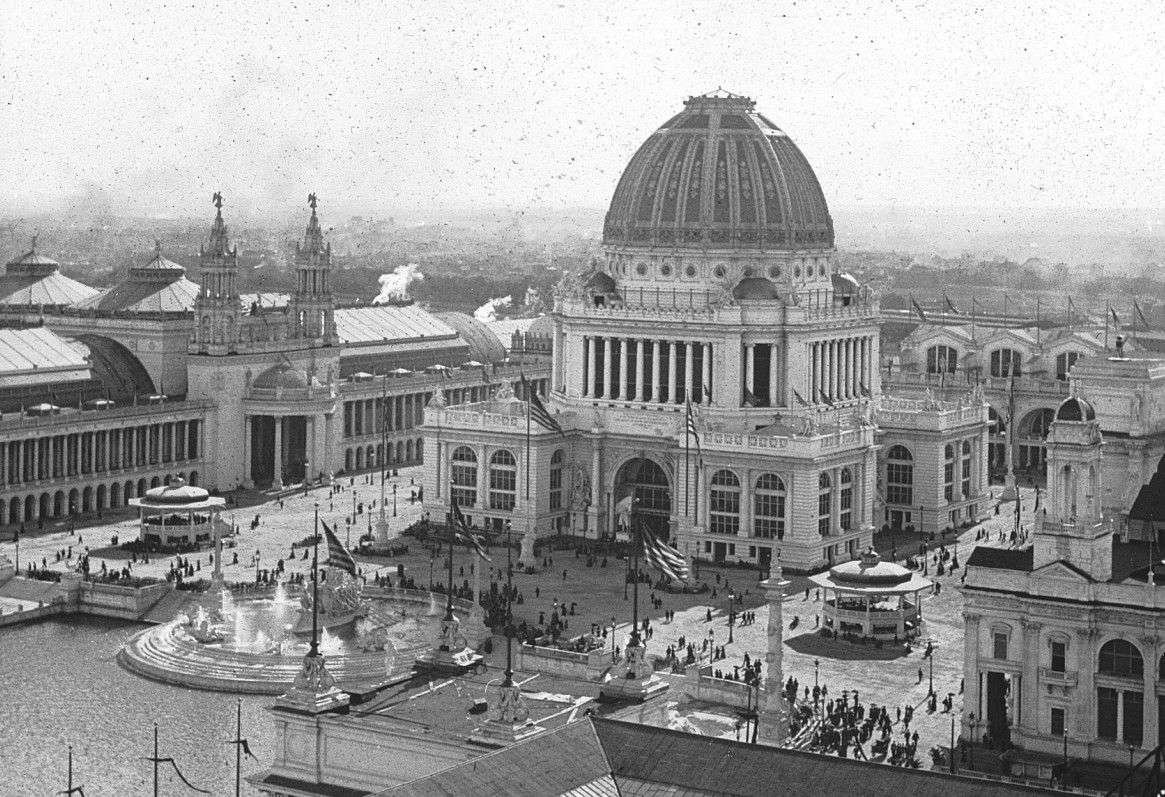
The 1893 Chicago World’s Columbian Exposition was not merely an exhibition of technology and architecture, it was a carefully orchestrated narrative device. World’s Fairs of the 19th century functioned as instruments of cultural alignment, presenting a curated vision of progress, order, and inevitability.
Visitors did not simply observe the “White City”; they experienced a constructed reality. Clean lines, classical symmetry, and glowing electric light conveyed a message: civilisation was advancing under competent stewardship, and the future would be shaped by industrial power and institutional authority.
This is where propaganda operates most effectively—not through coercion, but through immersion. The fairs told people what modernity looked like, and by extension, what to believe about their place within it.


The Narrative Hook
The Tartaria framework emerges as a counter-narrative, built from the same raw material: awe. It reframes the fair’s grandeur as evidence of deception—an inherited civilisation disguised as new construction.
This inversion is psychologically potent. Where the official story says “we built this,” the alternative says “this was taken from you.” Both narratives serve identity formation; one reinforces institutional legitimacy, the other undermines it.
The appeal lies not in evidence, but in emotional coherence.
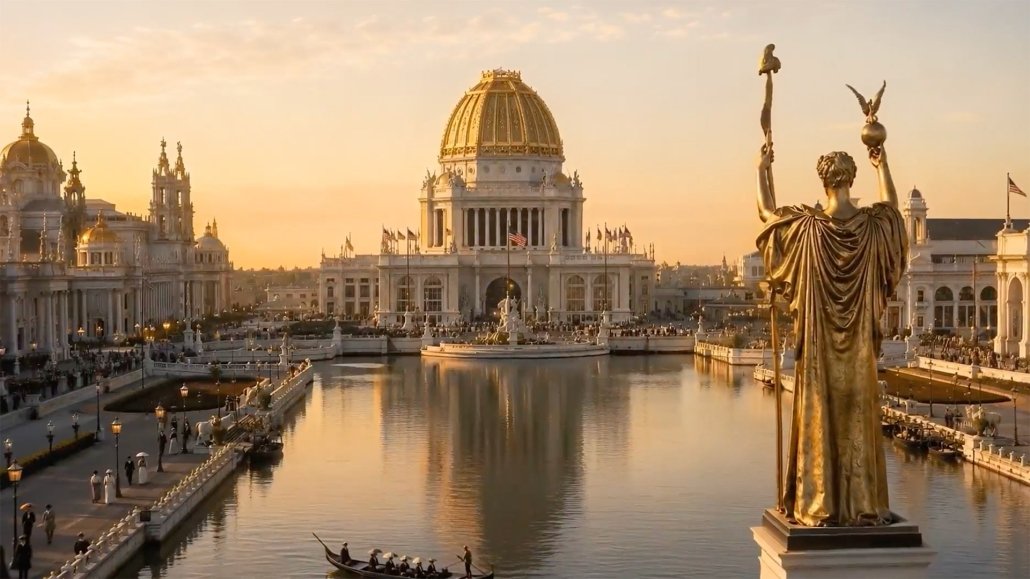
Chicago 1893 (AI Reconstruction) | The Chronicler
The Historical Record
Within modern Tartaria discourse, one of the most prominent and widely circulated voices is author Howdie Mickoski, whose work has helped shape and popularise the narrative for a contemporary audience. His interpretations of the World’s Fairs—particularly the 1893 Chicago Exposition—are often treated as foundational texts within the broader theory, framing the White City as evidence of a lost civilisation and a concealed historical reset, however the documentation surrounding the fair is extensive and detailed:
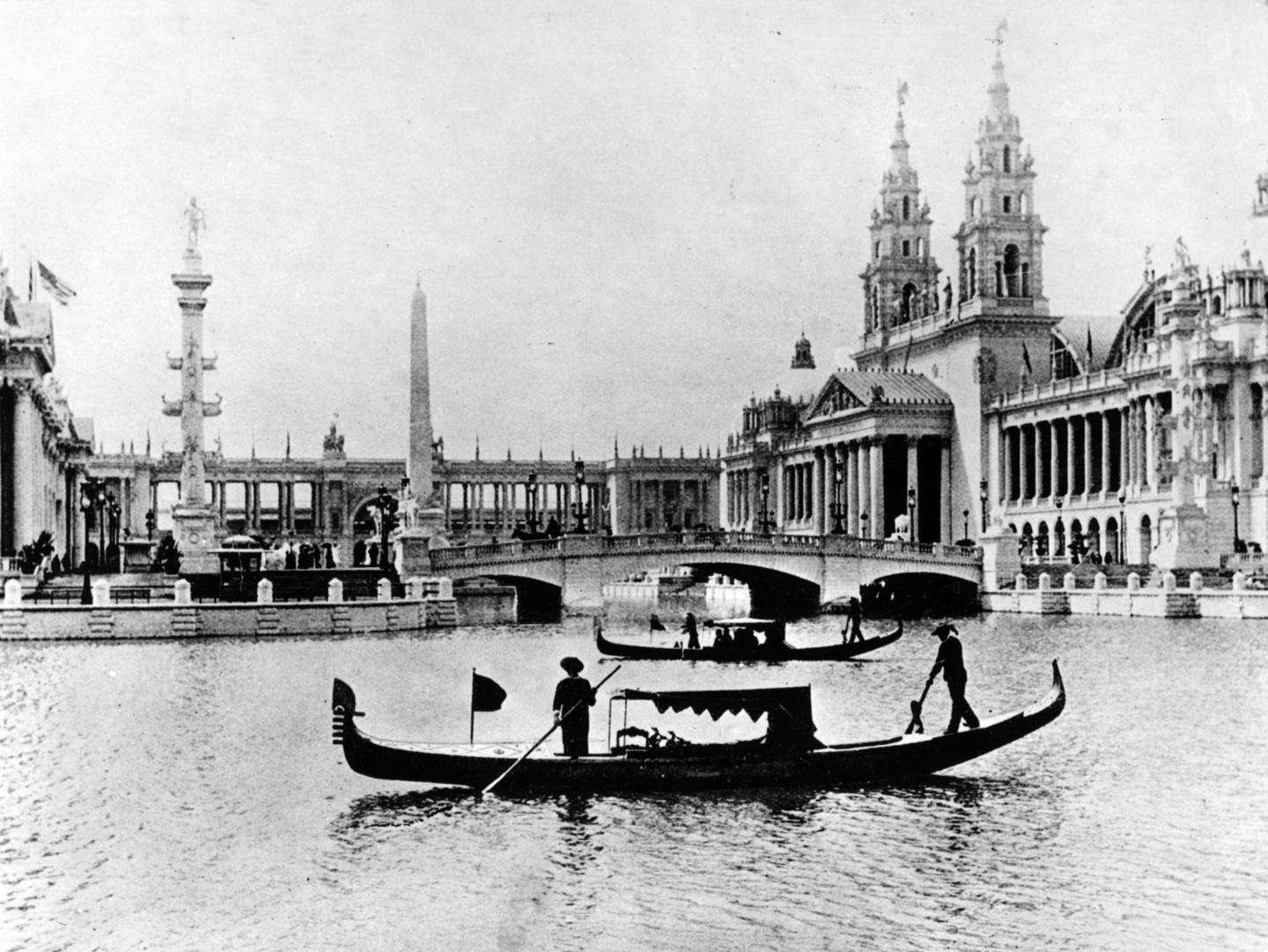
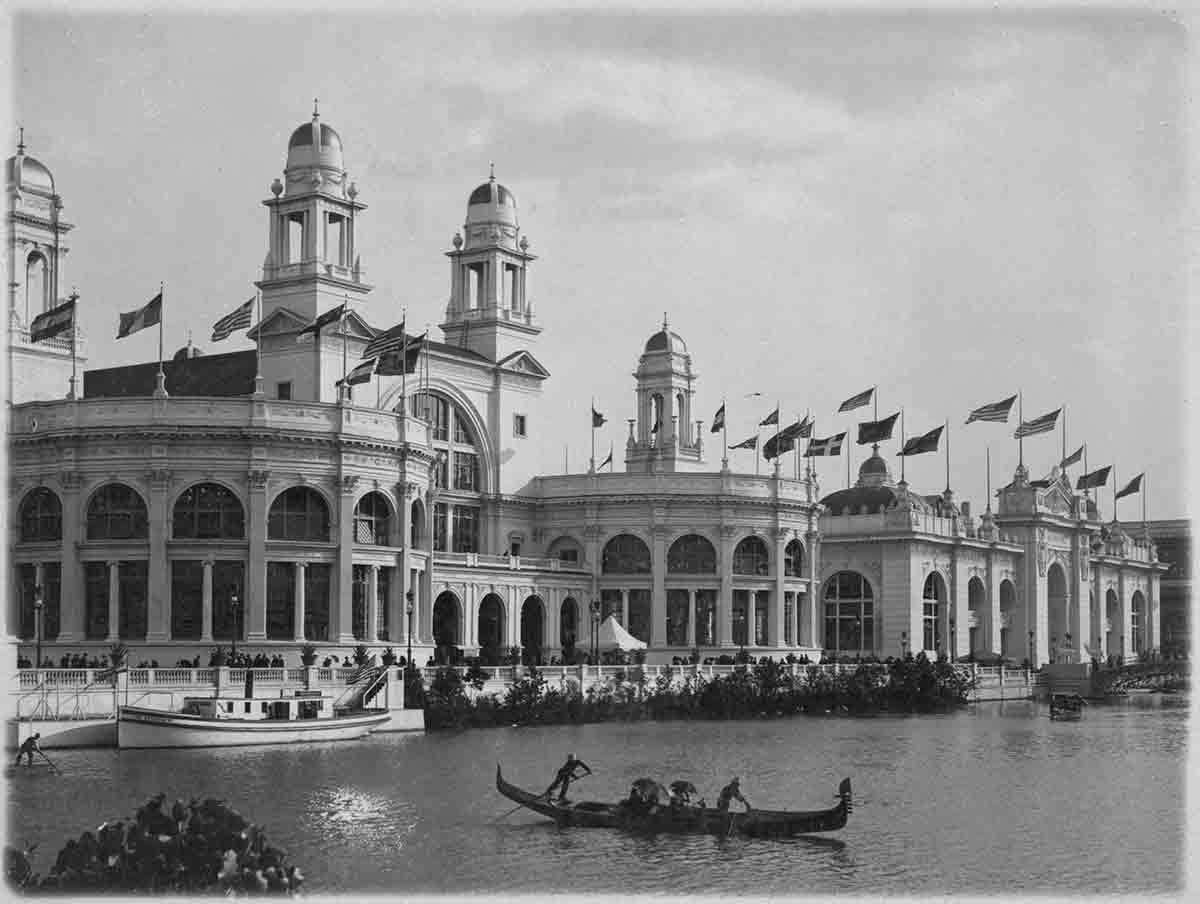
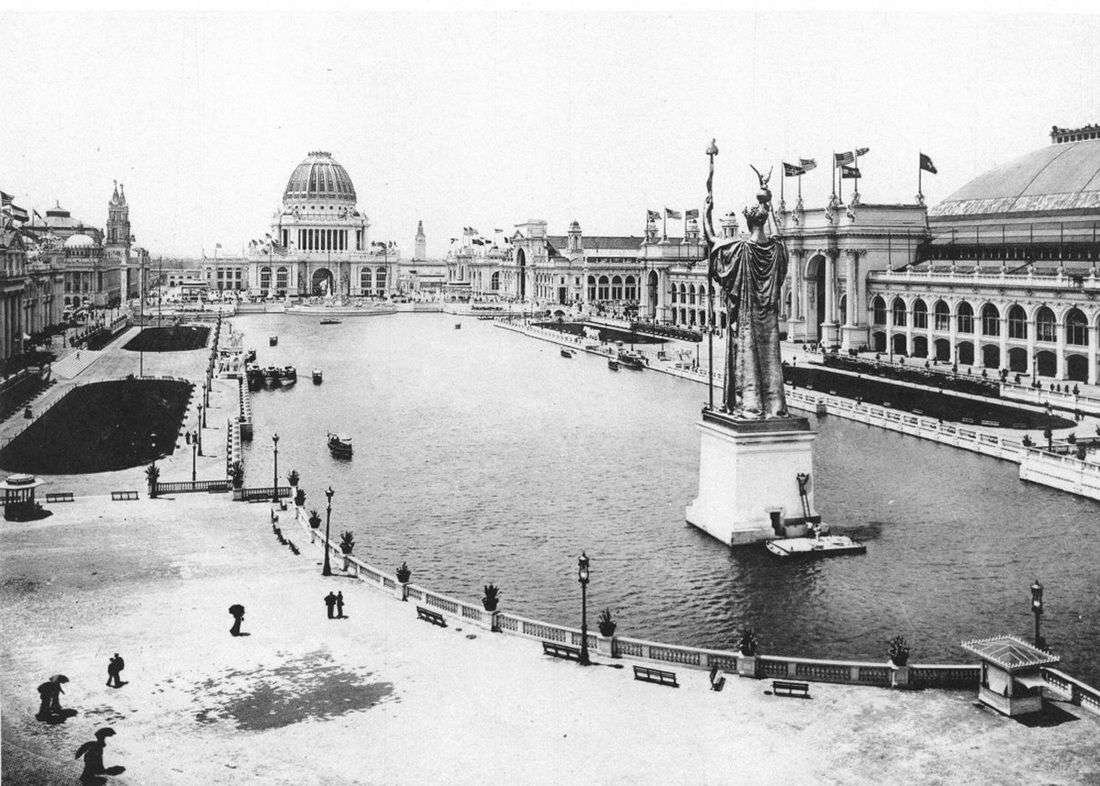
- Roughly 700 photographs by C.D. Arnold document the fair’s construction and completed buildings. Chicago Public Library collection
- Archival and engineering records outline materials, costs, and structural methods used to build the exposition. Art Institute finding aid
- Periodicals and related archival materials tracked the fair’s progress, logistics, and workforce activity. Chicago Public Library archival collections – World’s Fair Chicago 1893 archive page
- Contemporary records and photographs show large, regular material deliveries during construction. Columbia University finding aid – Library of Congress record
The buildings themselves were intentionally temporary. “Staff”—a composite of plaster, fibre, and cement—allowed rapid construction and visual grandeur without permanence.
The illusion was the point.
Propaganda in Plain Sight
The fair’s organisers were not concealing this theatricality; they were deploying it. The White City was designed to project ideological stability during a period of economic inequality and social unrest.
Its classical architecture evoked ancient empires, subtly linking modern industry with timeless authority. Its pristine appearance erased the visible chaos of industrial cities. Its lighting—thousands of electric bulbs—symbolised technological mastery over nature.
In effect, the fair functioned as a physical manifesto: Industry brings order. Institutions bring progress. The existing power structure is both natural and enduring.
This is propaganda at its most sophisticated—aspirational rather than overt, aesthetic rather than argumentative.
1893 World’s Fair Construction Photographs | Jarid Boosters
The Illusion of Impossibility
Claims that the fair could not have been built within 28 months rely on stripping away industrial context. By the late 19th century, the United States had expansive rail networks enabling rapid material transport, large, mobilised labour forces and established practices for temporary exhibition architecture. What appears impossible in isolation becomes routine when viewed within its historical framework.
Modern film production offers a useful parallel. Entire cityscapes are constructed as facades—convincing, detailed, and ultimately superficial. The White City operated on a similar principle, scaled to an urban level.
Information Warfare and Belief Systems
The Tartaria narrative illustrates a familiar pattern in modern information ecosystems. When confronted with contradictory evidence, the claim adapts:
- Photographs become staged artefacts.
- Written records become fabricated.
- Absence of evidence becomes proof of suppression.
This creates a self-sealing belief structure. It cannot be disproven because all disproof is absorbed into the narrative.
Persisting Narratives
It would be simplistic to view one side as pure truth and the other as pure fabrication. The fair itself was a form of narrative engineering—an idealised vision presented as reality. The Tartaria theory, in turn, is an understandable reaction to manipulation, constructing an alternative mythology.
The enduring lesson of the 1893 World’s Fair is not that a hidden civilisation was erased, but that perception can be shaped at scale—whether through architecture, imagery, or storytelling.
The organisers of the fair demonstrated how environment can be used to guide belief. Modern conspiracy frameworks show how quickly those beliefs can be reshaped once trust erodes — and trust has clearly eroded on an industrial scale.
In both cases, the underlying mechanism is the same: control the narrative, and you influence reality as it is experienced.
The White City was never meant to last physically. Its true longevity lies in its psychological impact—both as a symbol of engineered progress and as a canvas onto which alternative histories are projected.
Sources and links
- C.D. Arnold Photographic Digital Collection, Chicago Public Library — official collection documenting the fair from construction in 1891 through its closing in 1893–94. CPL collection
- World’s Columbian Exposition Photographs by C.D. Arnold, Art Institute of Chicago — finding aid for Arnold’s photographic archive, describing the development of the site, building construction, and fair operations. AIC finding aid
- Chicago Public Library: Fairs & Conventions archival collections — overview of exposition-related holdings, including Arnold’s visual record of construction and major buildings. CPL fairs archive
- C. D. Arnold photographic collection, Columbia University — archival description of Arnold’s exposition-related photographs, including construction views. Columbia finding aid
- C.D. Arnold Photographs of the Chicago World’s Fair, Williams College Archives — confirms Arnold documented both the construction and daily operations of the fair. Williams archives
- World’s Columbian Exposition: Photographic Archive, University of Chicago Library — searchable archive of fair-related photographic records. UChicago archive
- World’s Fair Chicago 1893: C. D. Arnold archive page — contextual site noting Arnold’s role as official photographer and the breadth of his documentation. World’s Fair Chicago 1893
- Burnham Plan 100: C.D. Arnold Photographs of the World’s Columbian Exposition — notes that Arnold’s project traces the fair’s development and architectural concept. Burnham Plan 100
Source: Tartaria and the 1893 World’s Fair



Leave a Comment
Want to join the discussion?Feel free to contribute!