

Understanding The Control | Alan Watt
The Plan for Total Control
Understanding The Control – 2010 | Alan Watt
Alan Watt warned that power operates through perception, shaping beliefs, managing dissent, and sustaining an enduring system where control is exercised subtly, persistently, and generationally.
In this video produced by Infowars, geopolitical and psychopolitical researcher and commentator, Alan Watt, discusses the multigenerational ideas, actors, books, foundations, institutions and families of the connected global elite’s plan for total control. Watt warned of the encroaching technocratic takeover for decades.
“When you find out democracy never existed in the first place, you will eventually come to the realisation that you’re up against a system that is very very old. It’s the only truly organised system on the whole planet.”
Alan Watt
Alan’s calm voice and sharp mind is sorely missed.

The Architecture of Control
Psychological Engineering and the Illusion of Choice
For decades, Alan Watt spoke with a clarity that cut through the noise of modern discourse. While others debated surface-level politics, he directed attention toward something far older, far more structured, and far less visible: a system of control embedded across generations, operating through institutions, culture, and psychology rather than overt force.
Watt did not frame power as chaotic or reactive. Instead, he described it as deliberate, patient, and deeply organised. According to his analysis, what most people perceive as political struggle is, in reality, theatre—carefully managed opposition designed to maintain engagement while preserving the underlying framework.
At the centre of his work was a simple but unsettling premise: democracy, as commonly understood, is not the driving force behind societal direction. Rather, it functions as a stabilising narrative. It offers the perception of participation while decisions are shaped elsewhere, within networks that operate beyond electoral cycles.
The Machinery of Perception
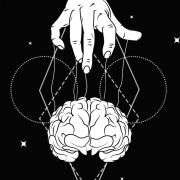
Watt placed heavy emphasis on psychological conditioning as the primary tool of control. He argued that domination in the modern age does not rely on visible coercion, but on shaping perception itself.
Media, education, entertainment, and even language act as delivery systems for behavioural programming. Over time, these influences construct a shared reality—one that feels organic, but is in fact curated. This is what we call The Illusion System: a self-reinforcing environment where individuals unknowingly adopt beliefs and reactions that align with long-term agendas.
In this framework, propaganda is no longer confined to obvious messaging or state broadcasts. It becomes ambient, embedded in narratives, cultural trends, and emotional triggers. The most effective form is the one that is never recognised as such.
Multigenerational Planning
One of Watt’s defining themes was the notion of long-term planning across generations. He pointed to historical texts, private foundations, and interconnected institutions as evidence of continuity in strategic thinking.
Rather than short-term governance, he described a form of stewardship—where influential families, think tanks, and policy groups contribute to a shared trajectory. This trajectory, he suggested, is not random but guided by recurring ideas: population management, behavioural predictability, and technological integration.
From this perspective, technological advancement is not merely innovation for convenience. It is also infrastructure for monitoring, influencing, and standardising human behaviour at scale.
Social Engineering as Governance
Watt’s analysis reframed governance itself. Laws and policies are secondary mechanisms. The primary method of control lies in shaping what people consider normal, acceptable, and inevitable.
Social engineering operates subtly:
- Gradual shifts in values presented as progress
- Manufactured crises used to justify structural changes
- Controlled opposition to absorb dissent
- Cultural narratives that redefine identity and belonging
By the time changes become visible, they are often already internalised. Resistance, if it arises, tends to be fragmented and redirected.
“You’ll only find this kind of fanatical intergenerational devotion to an agenda when there’s some kind of religion involved with it”
Alan Watt
The Enduring System
Central to Watt’s warning was the idea that the system is not new. It is, as he described, “very, very old”—an enduring structure that has adapted to each era while maintaining its core principles.
This longevity is what gives it resilience. Revolutions, elections, and ideological shifts may alter appearances, but the underlying architecture persists. It evolves quietly, incorporating new tools such as digital technology and data systems to refine its reach.
Why His Voice Resonated
Watt’s work resonated not because it offered comfort, but because it challenged assumptions many take for granted. He encouraged listeners to question not only authority, but the frameworks through which authority is perceived.
His delivery—calm, methodical, and unhurried—stood in stark contrast to the urgency and outrage that dominate modern discourse. He did not seek to alarm; he sought to inform.
In an age saturated with information yet starved of context, his emphasis on historical continuity and psychological influence provided a lens through which patterns could be recognised.
Alan Watt leaves behind more than commentary; he leaves a body of work that invites scrutiny of the unseen mechanisms shaping society. Whether one agrees with his conclusions or not, his central challenge remains difficult to dismiss:
If perception can be engineered, then understanding the system requires looking beyond what is presented—and questioning who benefits from the way reality is framed.
Sources and links
Alan’s Website: Cutting Through The Matrix
Podcast: Cutting Through The Matrix
Source: Alan Watt – Understanding The Control (2010)












Leave a Comment
Want to join the discussion?Feel free to contribute!