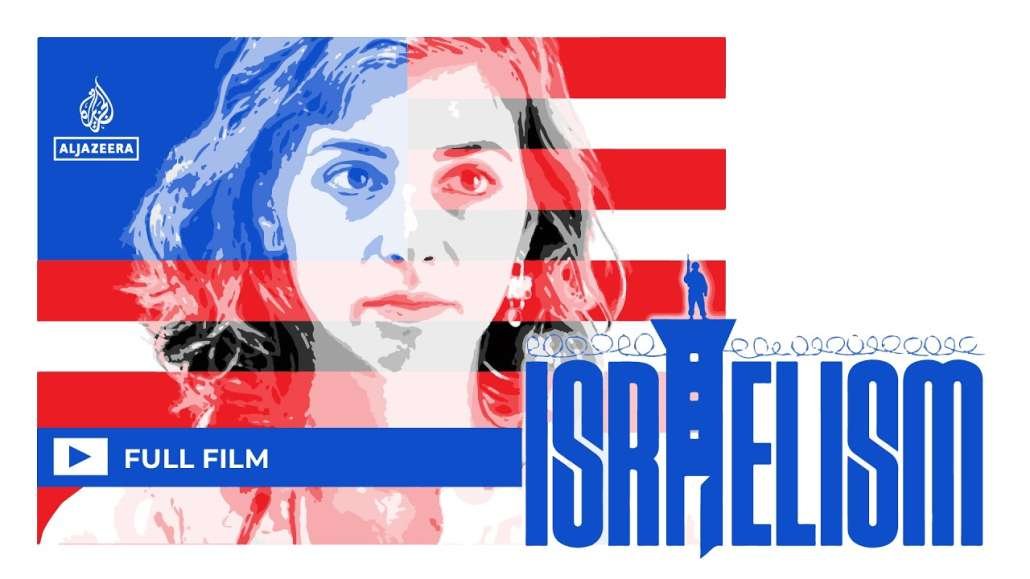
Israelism: The Awakening of Young American Jews | Al Jazeera
Divided Loyalties
Israelism: The Awakening of Young American Jews – 2013 | Al Jazeera
When two young American Jews raised to support Israel unconditionally witness the way Israel treats Palestinians, it changes their lives.
They join a movement of young American Jews campaigning to redefine Judaism‘s relationship with Israel and reveal a deepening generational divide over modern Jewish identity. Israelism sparked huge debate on American campuses even before the events of October 7, 2023.
It follows Simone Zimmerman, who visited Israel as a teenager, and Eitan who joined the Israeli army after graduating from high school as they discover the reality for Palestinians and radically revise their views. It includes interviews with academics and political activists, including Noam Chomsky, Cornel West, Lara Friedman and a former director of the Anti-Defamation League, Abe Foxman.

Contributors suggest the narrative that young American Jews are fed almost entirely erases the existence of the Palestinians through education and advocacy, sometimes involving groups that organise free trips to Israel partially funded by the Israeli government.
This film describes how influential this narrative is in shaping attitudes to Israel, not just in the United States but across the world.
Israelism
A Case Study in Psychological Warfare, Propaganda, and Social Engineering
The 2023 documentary Israelism, directed by Erin Axelman and Sam Eilertsen, has sparked significant controversy and debate across political, cultural, and academic landscapes. The film critiques the portrayal of the Israeli-Palestinian conflict within American Jewish institutions and explores how these narratives shape identity, loyalty, and dissent among young American Jews. Its reception highlights the intersection of psychological warfare, propaganda, and social engineering in shaping public opinion and group identity.
The Narrative:
Unpacking Indoctrination
Israelism focuses on the stories of two young American Jews—Simone Zimmerman, a former pro-Israel activist, and Eitan, a former Israeli Defense Forces (IDF) soldier—who confront the realities of Israel‘s treatment of Palestinians. Through their journeys, the documentary critiques how many American Jewish institutions conflate Judaism with Zionism. This conflation is reinforced through programs like Birthright Israel, which the film portrays as a highly orchestrated effort to instil unwavering support for Israel. Birthright trips are depicted as celebratory yet one-sided experiences that erase Palestinian narratives while fostering a sense of nationalistic pride.
The film employs interviews with prominent figures such as Noam Chomsky, Cornel West, and Jeremy Ben-Ami to challenge dominant narratives about Israel. It also includes testimonies from Palestinians who recount daily hardships under occupation. These perspectives aim to dismantle what the filmmakers argue is a propagandistic framework that erases Palestinian experiences while presenting Israel as a flawless democracy.
Psychological Warfare:
Zionism as Identity
The documentary delves into how Zionism is embedded into Jewish identity through cultural and religious education in the U.S. It argues that this process functions as a form of psychological warfare—indoctrinating young Jews to equate criticism of Israel with betrayal of their heritage. This dynamic discourages critical thinking and fosters emotional loyalty to Israel, even among those who have never visited the country.
One striking example in Israelism is its examination of Eitan’s experience in the IDF. His initial enthusiasm for serving Israel transforms into disillusionment after witnessing systemic violence against Palestinians. This personal transformation emphasises how indoctrination can unravel when confronted with firsthand exposure to conflicting realities.
Propaganda:
Controlling the Narrative
The backlash against Israelism reveals how propaganda operates to suppress dissenting views. Several screenings at universities were canceled following accusations of antisemitism—an allegation often used to delegitimise anti-Zionist perspectives. Critics argue that such cancellations reflect an organised effort to maintain control over the narrative surrounding Israel and Palestine. Organisations opposing the film claim it distorts history by ignoring Hamas’ role in Gaza or oversimplifying complex geopolitical realities.
Proponents of Israelism, however, counter that these accusations are part of a broader strategy to silence criticism of Israeli policies by conflating anti-Zionism with antisemitism. This tactic not only stifles debate but also reinforces existing power structures by delegitimizing alternative viewpoints.
Social Engineering:
Shaping Generational Shifts
The film highlights a growing generational divide within Jewish communities regarding Israel. Younger Jews are increasingly questioning the narratives they were raised with, driven in part by access to alternative sources of information and exposure to Palestinian voices. Israelism positions itself as a catalyst for this shift, encouraging viewers to critically examine how their beliefs have been shaped by institutionalised messaging.
Criticism and Limitations
While Israelism has been praised for its courage and timeliness, it has also faced criticism for perceived biases. Some reviewers argue that it oversimplifies historical complexities or fails to address key issues such as Hamas’ governance in Gaza. Others contend that its focus on individual stories may not fully capture the systemic nature of the conflict.
Despite these criticisms, Israelism succeeds in sparking critical conversations about identity, loyalty, and propaganda. By exposing how narratives are constructed and disseminated, it invites viewers to question not only their own beliefs but also the systems that shape them.
Conclusion
Israelism serves as a powerful case study in how psychological warfare, propaganda, and social engineering intersect within cultural institutions. By challenging dominant narratives about Israel and Palestine, it exposes the mechanisms through which loyalty is manufactured and dissent suppressed. The film underlines the importance of questioning how identities are shaped—and whose interests these identities ultimately serve.
Source: Israelism: The Awakening of Young American Jews