

The NASA Moon and Mars Landing Hoaxes | Eric Dubay
The Space Spectacle
The NASA Moon and Mars Landing Hoaxes – 13 June 2019 | Eric Dubay
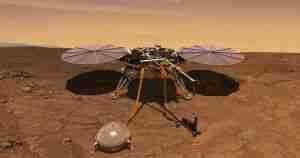
The 1969 Apollo “Moon” landings, the 1976 Viking and other subsequent “Mars” landings have all been Hollywood staged hoaxes done with actornauts, models, green-screens, CGI fakery and real rockets shot into the ocean.
NASA steals 52 million dollars in taxpayer money every single day giving us back nothing but science-fiction movies and bold-faced lies.
Psychological Warfare in the Final Frontier
For more than half a century, the space age has doubled as a theatre of the mind. Apollo, Viking, the Shuttle, the ISS, Mars rovers and glossy CGI depictions of distant worlds are not only about rockets and robotics. They form a carefully curated story-world that shapes how populations feel about authority, technology, and the future itself.

Whether every mission occurred exactly as advertised is almost secondary to the deeper issue: the space programme has always been a psychological operation. It has been used to manufacture consent, redirect awe, and reinforce faith in institutions that otherwise earn little trust.
Space As A Psychological Battlefield
From the outset, space was framed less as a scientific project and more as a prestige contest. During the Cold War, the “space race” narrative functioned as an emotional short-cut: whoever planted flags on extraterrestrial soil first was assumed to be technologically superior, morally superior, and therefore politically justified.
It was psychological warfare aimed at domestic and foreign audiences alike.
- To convince citizens that their state was powerful, benevolent, and destined to lead humanity.
- To intimidate rival governments with implied military superiority.
- To wrap complex geopolitical manoeuvres in a story of exploration and heroism.
The images mattered more than the data. A single photograph of a flag on alien soil could do more to cement belief in the system than a thousand policy speeches. The spectacle was the message.
The Story Machine Behind The Rockets
Every major space mission comes wrapped in a media package: press conferences, emotive soundtracks, glossy animations, school-friendly cartoons, and carefully selected “human interest” profiles of astronauts. This is not accidental; it is narrative engineering.
Whether or not the technical details are authentic, the psychological architecture is unmistakably theatrical.
The Illusion System And Borrowed Awe
The “hidden hand” steering world events does not need every event to be fake; it needs control over meaning. The space spectacle channels one of the most powerful human emotions—cosmic awe—into trust for terrestrial institutions.
Awe becomes a shield for power. The illusion system does not depend on perfect lies; it depends on emotional saturation. Give people a sufficiently grand story and many will police their own doubts.
Budgetary Fog And The Price Of Belief
Vast sums are poured into space agencies and their associated contractors. The official numbers tell only part of the story; cost overruns, subcontracting layers and classified budgets make the true financial flows opaque. The illusion system thus uses the space frontier to legitimise expenditure and conceal less palatable priorities behind a star-spangled curtain.
Controlling Doubt: From “Conspiracy Theory” To Heresy
Any system built on narratives must also manage dissent. People who question aspects of the official story—timelines, footage, budgets, or institutional transparency—are quickly pushed into a pre-labelled category: “conspiracy theorist”.
This serves several functions:
- Boundary enforcement. It draws a line between “reasonable”, system-approved scepticism and “unreasonable” doubt that challenges core myths.
- Social punishment. Those who cross the line are ridiculed, pathologised, or ostracised, regardless of the quality of their questions.
- Self-censorship. Observers who see anomalies learn to keep quiet to avoid the same treatment, even when their doubts are modest and evidence-based.
In this way, the illusion system defends its narrative territory, not just through propaganda but through social and psychological pressure.
Engineering The Future Imaginary
Space narratives are not only about the past and present; they seed a specific vision of the future. Megacities on Mars, asteroid mining, interplanetary civilisation—these visions are repeatedly pushed into the cultural bloodstream. When people internalise this future imaginary, they become more accepting of present-day control measures, because these are recast as steps towards a transcendent goal.
Beyond Belief vs Disbelief
The binary of “it all happened exactly as we were told” versus “it was all a Hollywood hoax” is itself part of the trap. Both positions keep the discussion at the level of surface events and away from structural psychological warfare.
More incisive questions include:
- Who controls the images, narratives and funding streams around these missions?
- How are emotional responses engineered, and to whose benefit?
- What other policies, technologies or agendas piggyback on the prestige and mystique of spaceflight?
- How is doubt managed, marginalised or weaponised?
By shifting focus from literalism to control, one can dissect the illusion system without getting lost in its most divisive decoys.
Reclaiming Perception
The story machine’s primary objective is to maintain the illusion system, therefore the first act of resistance is to reclaim our own perception. That means:
- Recognising spectacle as a tool, regardless of whether specific events are authentic.
- Treating official narratives as starting points, not sacred texts.
- Distinguishing between genuine science and the institutional myth-making that often wraps around it.
- Staying alert to the emotional hooks—awe, fear, pride, shame—that are used to steer public opinion.
Space will always fascinate and the psychological operation wrapped around the story is undeniable. To see it clearly is to step, however modestly, out of the well of manufactured belief.
Links ans sources
Taken from Eric Dubay‘s book, “The Flat Earth Conspiracy” available on Lulu: http://www.lulu.com/spotlight/ericdubay
http://www.AtlanteanConspiracy.com
Source: The NASA Moon and Mars Landing Hoaxes














Leave a Comment
Want to join the discussion?Feel free to contribute!