
Malthusian Theory Explained in Under Ten Minutes | HelioWave
Social Control
Malthusian Theory Explained – May 2025 | HelioWave
This theory is the foundation of globalist policy and still fuelling chaos today. From Agenda 2030 to population control, see how Malthus‘ ideas keep haunting us.
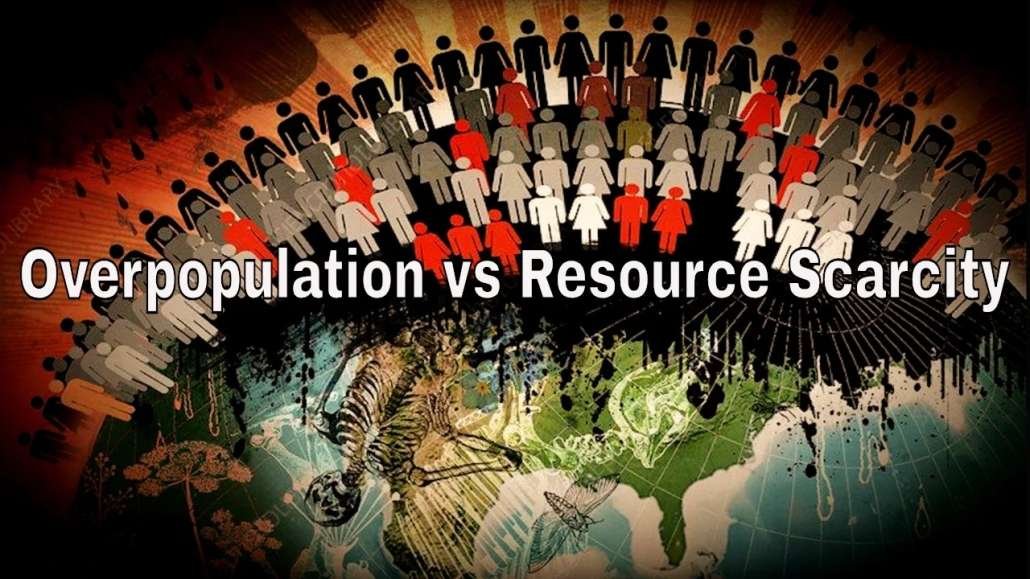
HelioWave presents the Malthusian Theory as a model forecasting that unchecked population growth will surpass resource availability, causing a population crash that resets the system to sustainable levels. This is a summary clip, watch the full video: The Malthusian Blueprint: A Century of Control | HelioWave.
The Malthusian Theory:
A Psychological Warfare Tool Behind the Overpopulation Narrative
For over two centuries, the Malthusian Theory of population growth has served as a foundational myth underpinning globalist policies and population control agendas. Originally formulated by Thomas Robert Malthus in 1798, this theory claims that human population grows exponentially while food production and resources increase only linearly, inevitably leading to scarcity, famine, war, and societal collapse—a scenario often called the Malthusian catastrophe.

The Core of the Malthusian Trap and Its Real-World Failures
Malthus argued that population growth would always outstrip resources, forcing society into a cycle of misery through two types of checks:
- Positive checks: natural disasters, famine, disease, and war that increase mortality rates.
- Preventive checks: moral restraint, delayed marriage, and birth control aimed at reducing birth rates.
However, history has repeatedly disproven the inevitability of this catastrophe. Advances in agriculture, technology, and world trade have expanded food production far beyond Malthus‘s linear model, preventing the predicted mass famines and societal collapses. The Industrial Revolution, which Malthus failed to foresee, radically altered the dynamics of resource availability and population growth, rendering his dire predictions obsolete.
Psychological Warfare and the Scarcity Myth
Despite its empirical failures, the Malthusian narrative remains a powerful psychological weapon in the hands of shadowy globalist forces. It fuels a scarcity myth—the idea that resources are inherently limited and that population growth is the root cause of environmental and social crises. This myth serves as a justification for draconian population control measures, social engineering, and the erosion of individual freedoms under the guise of sustainability and welfare.
The resurgence of Neo-Malthusianism in the 20th century, notably through Paul Ehrlich‘s The Population Bomb (1968), intensified this narrative. Ehrlich’s apocalyptic predictions of mass starvation and societal collapse by the early 1980s never materialised, yet the book’s influence contributed to policies involving forced sterilisation, eugenics, and other human rights abuses. Ehrlich himself later expressed regret for the damage caused by his alarmist rhetoric.
The Dark Forces Steering Society
For those aware of the mechanisms of psychological warfare and propaganda, the Malthusian theory is less a scientific truth and more a tool of social control. It exploits fear and scarcity to manipulate populations, justify authoritarian governance, and suppress dissent. The theory’s emphasis on “overpopulation” conveniently shifts blame away from systemic issues such as wealth inequality, corporate exploitation, and unsustainable consumption patterns—especially by wealthy nations that consume disproportionately more resources per capita.
This narrative also distracts from the potential for human innovation and cooperation to solve resource challenges without resorting to coercion or catastrophe. It frames population growth as a problem to be managed rather than a natural human phenomenon that can coexist with abundance if power structures and resource distribution are addressed fairly.
Seeing Through the Malthusian Veil
The Malthusian Theory, while historically influential, is fundamentally flawed and serves as a propaganda tool within a broader agenda of psychological and social engineering. Its persistent presence in global discourse is less about scientific reality and more about maintaining control through fear of scarcity and population. Readers skeptical of mainstream narratives should recognise the Malthusian trap as part of a deceptive framework designed by malevolent controllers to justify population control policies and to mask the true causes of social and environmental crises.
Understanding this allows us to reject the scarcity myth and focus instead on exposing the real forces shaping our world—those operating in the shadows, steering society toward division and control rather than genuine progress and abundance.
Watch the full video:
Source: Malthusian Theory Explained | HelioWave











Leave a Comment
Want to join the discussion?Feel free to contribute!