
The Biggest Lie of All | Dave Murphy
The Biggest Lie of All – 2024 Edition | John Thor
Imaginary Curve
Flat Earth: The Biggest Lie of All – 26 May 2015 | Dave Murphy
An in-depth examination of some of the evidence that indicates that the Earth is not a spinning, orbiting ball.
Dave Murphy explains his reasoning behind flat earth theory.
A Geocentric World
Imagining a Stationary, Level Earth with a Local Sun and Moon
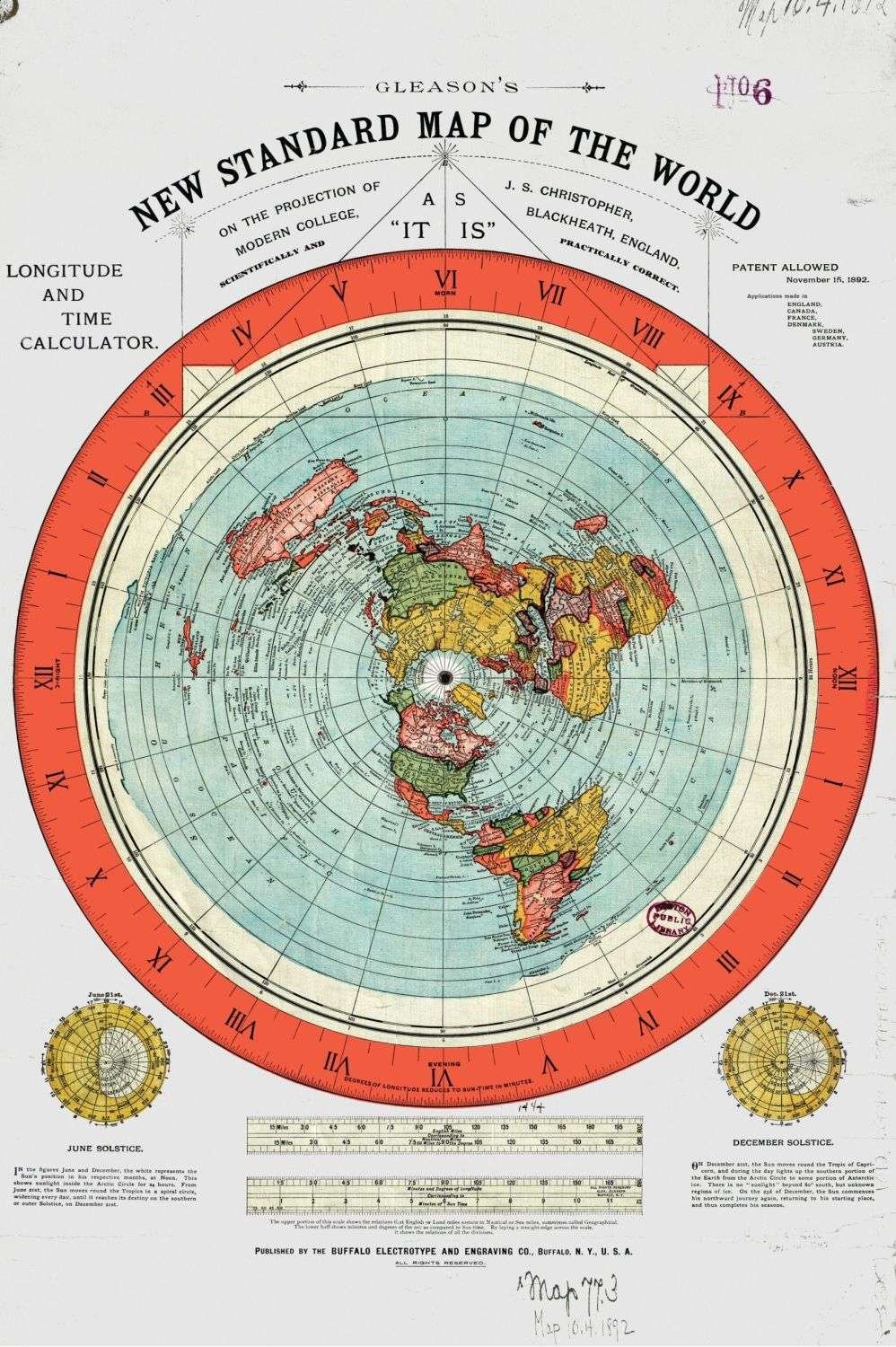
In a geocentric universe, Earth is the unmoving center around which all celestial bodies orbit. Imagine a closed world system where the Earth is a stationary, level plane, with a local sun and moon revolving around it. How would such a world look and function?

The Celestial Spheres
In this geocentric model, the sun, moon, planets and stars are all attached to transparent crystalline spheres that rotate around the Earth. The innermost sphere contains the moon, followed by the spheres of Mercury, Venus, the Sun, Mars, Jupiter and Saturn. The outermost sphere contains the fixed stars. As these spheres rotate, the celestial bodies appear to move across the sky. The sun and moon each complete one circuit per day, moving in circular paths above the plane. The sun and moon do not rise or set but instead approach and recede from the observer as they circle the Earth. The planets and stars have their own motions, but also complete daily rotations around the Earth.
When the sun is closest, it would appear brightest and hottest, creating “noon”. As it moves farther away, it would dim and cool, becoming “night”. The moon would follow a similar cycle, with its phases determined by its position relative to the sun and Earth.
The Stationary, Level Earth
From the perspective of an observer on the Earth’s surface, the planet appears completely level and unmoving. There is no sense of the Earth rotating or orbiting anything. There is no such thing as “Gravity”, objects are held to the Earth’s surface by buoyancy and density. Lighter objects would float or be pushed upwards by denser materials beneath them, keeping people and objects firmly planted on the ground. The sun, moon and stars all appear to be relatively close, as if attached to a celestial dome surrounding the Earth. The sun is small enough that it can circle the Earth in a day, and is not much farther away than the moon.
Seasons and Climate
To explain the changing seasons, the sun’s celestial sphere is tilted relative to the Earth’s equator. As the sun’s sphere rotates, the sun appears to move north and south, reaching its northernmost point (the Tropic of Cancer) in summer and southernmost point (the Tropic of Capricorn) in winter. This annual motion causes the seasonal changes in the sun’s position and the length of daylight. However, the sun’s distance from the Earth remains constant, so there are no variations in the sun’s apparent size or intensity. The climate is determined by latitude, with tropical regions near the equator, temperate regions in the middle latitudes, and polar regions near the north and southern regions.
Sources and links
Source: The Biggest Lie of All – 2024 Edition
Source: Flat Earth: The Biggest Lie of All – Part1









Leave a Comment
Want to join the discussion?Feel free to contribute!