

Wonders of Ancient India | Unchartered Ruins
17 Mar 2024 – ELEPHANTA CAVES
The Elephanta Caves are a complex of Hindu caves, predominantly dedicated to the cult of the god Shiva, located on Elephanta Island, in Mumbai Harbor. A UNESCO World Heritage Site, the caves are believed to have been carved between the 5th and the 6th century CE during the Kalachuri dynasty. There is, however, considerable debate on the age of the caves and the means by which they were hollowed out of the solid basalt rock, with some claiming the caves may be well over 10,000 years old.
28 Mar 2024 – KANHERI CAVES
The Kanheri Caves are a group of over one hundred Buddhist rock-cut monuments dating from the first century CE to the tenth century CE. The caves are located inside the Sanjay Gandhi National Park, to the North of Mumbai, India, on what was formerly the island of Salsette. With an estimated 109 caves, the Kanheri Caves are the largest Buddhist rock-cut monastery in all of India. They include stunning examples of early Indian sculpture and frescoes. Cave n. 3 is one of the largest surviving Buddhist Chaityas (Prayer Halls) from the first centuries of our era, likely built after the model of the Great Chaitya of the Karla Caves.
17 Apr 2024 – KARLA CAVES
Located in the Western Ghats, the rock-cut temples of Karla, Bhaja and Bedse are among the earliest Buddhist cave temples in India. Their construction shortly follows the fragmentation of the Mauryan Empire and of the Indo-Greek kingdoms that arose from Alexander’s conquests, in the 2nd Century BCE. Their architecture and sculptural decoration reflects a mix of Hindu, Persian, and Hellenistic motifs, peaking in the 1st Century CE with the construction of the Great Chaitya of the Karla Caves, the largest in all of India. Carved out of the solid basalt of the Deccan plateau, they are some of the earliest surviving monumental structures in all of India. And yet, their fantastic ornamentation, representing multi-storied, fairy-tale palaces with projecting arches and balconies, suggests the existence of a much earlier architectural tradition in either wood or stone of which there is no trace in the archaeological record.
4 Oct 2024 – ELLORA CAVES
The Ellora Caves are the largest group of Buddhist, Hindu, and Jain rock-cut monuments in all of India.
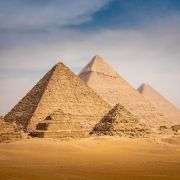
They comprise over 34 caves, ranging from huge pillared halls to massive free standing monuments like the gigantic Kailasha Temple, the largest monolithic structure in the world. It is estimated that between 1 and 6 million tons of basalt had to be removed for the construction of this wonder of ancient engineering, the same as the Great Pyramid of Giza. There are many mysteries surrounding these caves, beginning with the tools and technologies employed for their construction, the true age of the caves, and their exact sequence. Generally dated between the 6th and the 10th century CE, many believe that the caves may be in fact thousands of years older.
9 Nov 2024 – AJANTA CAVES
Located in central Maharashtra, near the city of Aurangabad, the Ajanta Caves are a complex of over 30 Buddhist rock-cut temples dating from the 2nd century BCE to the 6th century CE A UNESCO World Heritage Site, they contain the largest surviving body of ancient Indian paintings, as well as a profusion of sculptures and architectural decorations.
19 Dec 2024 – HAMPI
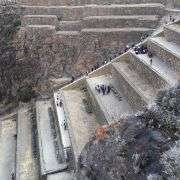
Once one of the largest cities in the world, the ruins of Hampi Vijayanagara, extend over 25 square kilometers of rocky terrain along the banks of the Tungabhadra river, in the southern Indian state of Karnataka. Founded in 1336 over the ruins of a far older megalithic city, in less than two hundred years Hampi rose from a small village to becoming the capital of the greatest medieval Indian empire to ever rule over south India. In 1565, a Muslim army defeated the Vijayanagara king Rama Raya at the battle of Talikota. Abandoned by its king and court, the great city was subject to months of pillaging and looting, from which it never recovered. By the early 19th century, Hampi lay in ruins, its great temples and palaces inhabited only by wild beasts and nearly swallowed by the jungle. Today, Hampi contains the ruins of hundreds of temples in various stages of ruin and decay, only a handful of which have been restored or even excavated. The structures that better than any others appear to have survived the ravages of time are some huge megalithic stone walls and subterranean structures that appear to far predate the medieval architecture at the site. These megalithic structures, which the Vijayanagara kings repurposed and restored, are all but identical to the megalithic monuments of Egypt and Peru, and contain moreover tantalizing evidence of the use of advanced technology for cutting and lifting the enormous stone blocks. Hampi Vijayanagara may be one of the last great megalithic projects of its kind anywhere in the world, after which the techniques and principles of megalithic architecture were seemingly lost in the centuries that followed the Muslim conquest of the Vijayanagara empire.
Extraordinary Wonders
India is home to numerous architectural and cultural wonders that reflect its rich history and advanced civilization. Unchartered Ruins presents some of the most notable ancient wonders.
India‘s ancient heritage is marked by remarkable architectural and artistic achievements that reflect the country’s rich cultural tapestry. Among these, several sites stand out as extraordinary wonders, showcasing the ingenuity and devotion of ancient Indian civilisations. This overview highlights six significant sites: the Elephanta Caves, Kanheri Caves, Karla Caves, Ellora Caves, Ajanta Caves, and Hampi.
Elephanta Caves
Located on Elephanta Island near Mumbai, the Elephanta Caves are a network of sculpted caves dating back to the 5th to 8th centuries CE. The most notable feature is the large rock-cut sculptures dedicated to Lord Shiva, particularly the impressive Trimurti, a 20-foot depiction of a three-headed Shiva. These caves reflect the artistic mastery of their creators and serve as an important site for understanding Hindu iconography and worship practices during that period.

Kanheri Caves
The Kanheri Caves, situated within the Sanjay Gandhi National Park in Mumbai, are a series of rock-cut Buddhist caves dating from the 1st century BCE to the 9th century CE. These caves served as a monastic retreat and include stupas, viharas (monasteries), and chaityas (prayer halls). The intricate carvings and inscriptions found here provide insights into early Buddhist architecture and the spread of Buddhism in Western India.
Karla Caves
The Karla Caves, located near Lonavala in Maharashtra, are among the largest and most well-preserved rock-cut cave complexes in India. Dating back to around the 2nd century BCE to the 5th century CE, these caves are renowned for their chaitya hall with a magnificent vaulted ceiling supported by intricately carved pillars. The Karla Caves exemplify early Buddhist architecture and are significant for their artistic details and historical context.
Ellora Caves
The Ellora Caves, a UNESCO World Heritage Site in Maharashtra, consist of 34 monasteries and temples carved into the rock between the 5th and 10th centuries CE. This site is unique for its representation of three major religions: Hinduism, Buddhism, and Jainism. The Kailasa Temple, an enormous monolithic structure dedicated to Lord Shiva, is particularly noteworthy for its architectural grandeur and intricate sculptures that depict various deities and mythological scenes.
Ajanta Caves
The Ajanta Caves, also a UNESCO World Heritage Site located in Maharashtra, are famous for their stunning frescoes and sculptures that date from the 2nd century BCE to about 480 CE. These rock-cut caves served as monastic quarters for Buddhist monks and feature intricate murals illustrating Jataka tales (stories of the Buddha’s previous lives). The artistic brilliance of Ajanta is celebrated worldwide for its vibrant colors and detailed narratives.
Hampi
Hampi, situated in Karnataka, was once the capital of the Vijayanagara Empire during the 14th to 16th centuries CE. This UNESCO World Heritage Site is renowned for its extensive ruins that cover over 4,000 hectares. Key attractions include the Virupaksha Temple, known for its towering gopuram (gateway), and the Vittala Temple complex with its iconic stone chariot. Hampi‘s landscape is dotted with ancient temples, palaces, and market streets that testify to its historical significance as a center of culture and commerce.These sites collectively illustrate India‘s rich historical narrative through their architectural brilliance and artistic expressions. Each wonder not only serves as a testament to ancient craftsmanship but also reflects the spiritual and cultural ethos of their time.










Leave a Comment
Want to join the discussion?Feel free to contribute!