
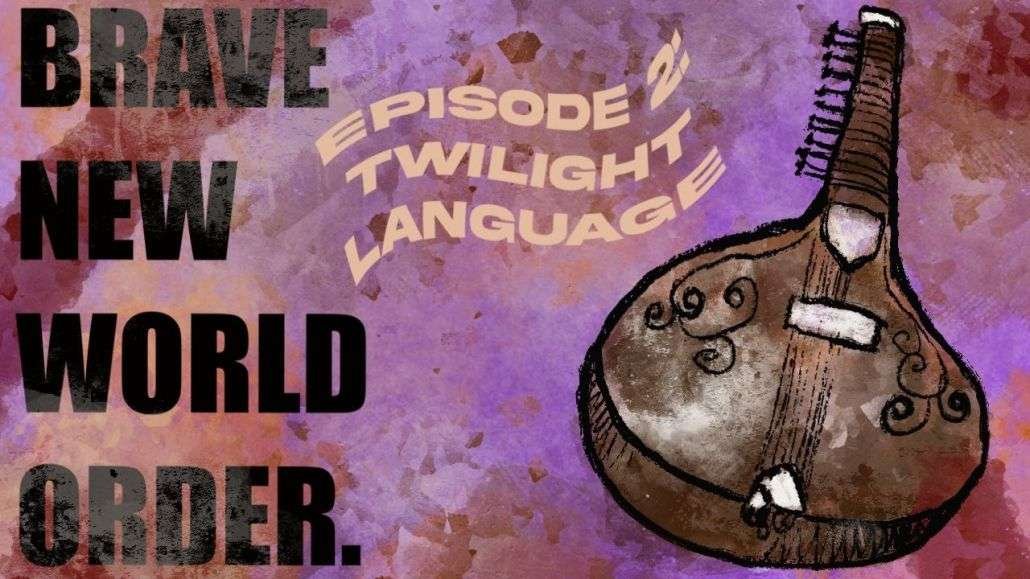
Huxley’s Brave New World Order – Ep 2 Twilight Language | Sheep Farm
Silent Conditioning
[SF120] ‘Huxley’s Brave New World Order‘ Ep2 Twilight Language – May 2023 | Sheep Farm
Brave New World Order: Culture, Conditioning, and the Architecture of Influence
Synchronicities and links to the Huxleys, and population changing events.
In discussions of psychological warfare and social engineering, few names surface as frequently as Aldous Huxley. His novel Brave New World has long been interpreted not merely as fiction, but as a speculative blueprint—one that explores how populations might be guided, pacified, and ultimately reshaped through pleasure, distraction, and subtle conditioning rather than overt force.
The second episode of Sheep Farm‘s “Huxley’s Brave New World Order” revisits this territory, drawing connections between mid-20th century cultural movements, intelligence-linked research programmes, and the evolution of mass media as a behavioural tool. At its core is a provocative question: to what extent can culture itself be engineered to influence perception, identity, and even generational values?
The Huxley Network
Aldous Huxley‘s literary work explored themes of conditioning, pharmacological control, and engineered consent. His brother, Sir Julian Huxley, was a prominent biologist and early advocate of transhumanism—a philosophy concerned with the deliberate evolution of humanity through science and technology.
While their contributions are well documented in academic and literary circles, interpretations diverge sharply when placed in the context of power structures and influence networks. Sheep Farm argue that the Huxleys were not merely observers of societal change, but participants in shaping intellectual frameworks that later informed policy, culture, and scientific experimentation.
Culture as a Delivery System
Episode 2 places particular emphasis on the cultural shifts of the 1960s and 1970s. Music, spirituality, and psychoactive substances are framed not simply as organic movements, but as potential vectors for large-scale behavioural influence.
The rise of transcendental music, the popularisation of Indian spiritual practices, and the widespread experimentation with psychedelics are presented as synchronised developments rather than isolated trends. In this interpretation, popular culture becomes a delivery system—embedding ideas and experiences that alter perception and weaken traditional structures of identity and authority.
This perspective aligns with broader theories of “soft power” and memetic influence, where narratives, symbols, and shared experiences shape public consciousness over time.
Intelligence Research and Behavioural Science
Central to these discussions are figures associated with controversial research programmes such as MK-Ultra. Individuals like Dr Sidney Gottlieb, Dr Donald Ewen Cameron, and Dr Louis Jolyon West were involved in experiments exploring mind control, sensory deprivation, and psychological manipulation.
Documented records confirm that such programmes existed and that they sought methods of influencing human cognition and behaviour. However, the extent to which their findings permeated mainstream culture remains a subject of debate.
The episode suggests an overlap between these research efforts and the cultural sphere—linking artists, filmmakers, and public figures to a broader ecosystem of influence. While definitive evidence for coordinated collaboration is limited, the intersection of intelligence research and media development during this period is historically significant and warrants scrutiny.
The Mechanism of Consent
Huxley himself famously suggested that future systems of control would rely less on coercion and more on engineered satisfaction:
“Most men and women will grow up to love their servitude and will never dream of revolution.”
Aldous Huxley
This concept resonates with modern analyses of propaganda, where overt messaging is often replaced by immersive environments—entertainment, social narratives, and identity frameworks that guide behaviour without appearing directive.
Rather than suppressing dissent, such systems may diffuse it by offering alternative outlets: distraction, consumption, or carefully curated forms of expression.
Interpreting the Pattern
Whether one views these connections as deliberate orchestration or as converging historical forces depends largely on perspective. What remains clear is that culture, science, and power have never operated in isolation.
The interplay between them shapes not only what people think, but how they think—defining the boundaries of acceptable discourse and the range of imaginable futures.
For those examining psychological warfare and social engineering, the enduring relevance of Huxley’s work lies not in confirming a singular narrative, but in prompting deeper questions: who designs the systems we live within, and to what end?
Source: [SF120] ‘Huxley’s Brave New World Order’ Ep2 Twilight Language – YouTube







Leave a Comment
Want to join the discussion?Feel free to contribute!