The Huxley’s Brave New World Order – Ep8: UnNatural Selection Part 2 | Sheep Farm
Huxley Influence
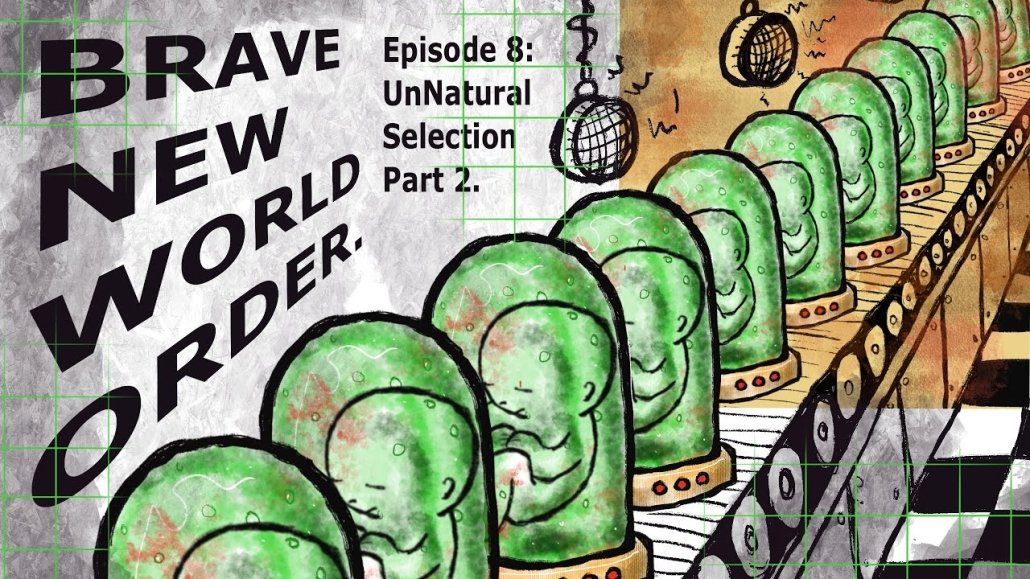
[SF190] ‘The Huxley’s Brave New World Order Ep8: UnNatural Selection Pt.2
The Huxley Dynasty and the Architecture of Influence
In an age where narratives are engineered as carefully as any physical infrastructure, the study of influential bloodlines offers a revealing lens into how culture, science, and belief systems are shaped over time.
The Huxley name carries a particular weight in intellectual and cultural history. Beginning with Thomas Henry Huxley, widely known as “Darwin’s Bulldog,” the family established itself not merely as participants in scientific discourse, but as active architects of how knowledge itself would be framed and disseminated.
What becomes increasingly difficult to dismiss is not simply their prominence, but the continuity of influence across generations. From science and education to literature, media, and policy, successive members of the Huxley lineage have occupied positions that shape perception rather than merely reflect reality.
This is where the conversation shifts from history into something more deliberate: the mechanics of psychological influence.
Engineering Consent Through Culture
Aldous Huxley‘s Brave New World is often presented as speculative fiction, yet it reads more like a blueprint for soft control. Unlike overt domination, the model described relies on conditioning, pleasure, distraction, and the quiet erosion of critical thought.
This approach aligns closely with modern strategies of social engineering:
- Replace coercion with consent.
- Substitute truth with curated narratives.
- Encourage dependency on systems framed as benevolent.
The result is a population that not only accepts its constraints but actively defends them.
Julian Huxley, Aldous’ brother, extended this framework into institutional influence. As the first Director-General of UNESCO, he advocated for a scientific worldview that would gradually reshape societal values. His writings openly discuss the need for what he termed “evolutionary humanism,” a philosophy that positions humanity as something to be guided and improved through managed processes.
The language is clinical, but the implications are profound: culture itself becomes a laboratory.
Bloodline Continuity and Institutional Reach
Across generations, the Huxley family intersected with key centres of influence:
- Science and evolutionary theory.
- Education systems and curriculum design.
- Media and narrative construction.
- Policy advisory roles within major institutions.
This pattern is not accidental. It reflects a form of long-term positioning, where influence is maintained not through visibility, but through embedded authority.
Rather than overt control, the strategy resembles what might be called narrative governance — the ability to define the boundaries of acceptable thought.
The Illusion System
At the heart of this discussion is what many now recognise as the “illusion system”: a layered construct of media, academia, and institutional messaging designed to maintain a coherent version of reality.
Within this system:
- Dissent is reframed as irrational or dangerous.
- Official narratives are reinforced through repetition and authority.
- Alternative viewpoints are marginalised or absorbed and neutralised.
The effectiveness of this model lies in its subtlety. It does not demand belief; it conditions it.
The Huxley lineage, whether by design or convergence of ideology, appears repeatedly at key points where these mechanisms are refined and deployed.
Psychological Warfare Without Visibility
Traditional warfare relies on force. Psychological warfare, by contrast, operates through perception. Its battleground is the mind, and its weapons are ideas, symbols, and narratives.
The legacy of the Huxley family illustrates how this form of influence evolves:
- From scientific debate to cultural doctrine.
- From literature to lived reality.
- From theory to embedded societal norms.
It is not a question of a single coordinated effort, but rather a continuity of worldview — one that prioritises guidance over freedom, and stability over truth.
A Pattern Worth Examining
Whether one interprets this as coincidence, convergence, or something more intentional, the pattern remains consistent: influence concentrated across generations, shaping the frameworks through which society understands itself.
For those examining psychological warfare and social engineering, the Huxley dynasty serves as a case study in how power can operate without overt declaration.
Not through force, but through design.
Would you like this expanded with references to specific Huxley family members and their institutional roles, or kept more narrative-driven like this?
Source: [SF190] ‘The Huxley’s Brave New World Order’ Ep.8 UnNatural Selection Pt.2