
A Fresh Look at Childhood Illness – Dawn Lester | Dr. Tom Cowan
The Germ Theory Gambit
How Disease Narratives Serve the Story Machine
Tom Cowan and Dawn Lester expose disease narratives as tools of control, urging parents to reject fear, question germ theory, and reclaim trust in the body’s innate intelligence.
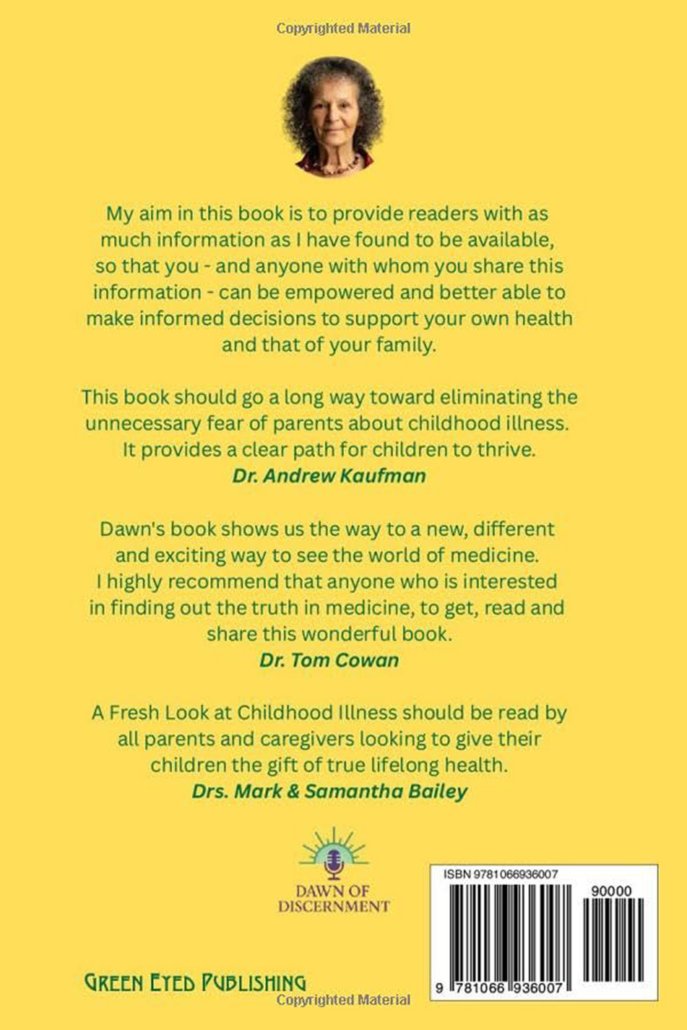
Dr. Tom Cowan hosts Dawn Lester to discuss her new book, A Fresh Look at Childhood Illness. Their conversation peeled back the layers of official health narratives to reveal a deeper truth: what we are told about disease, vaccines, and childhood health is less about science and more about social control. For those who recognise the hidden hand steering world events, this is not surprising. The story machine—the vast apparatus of media, academia, and state institutions—has long weaponised fear of disease to maintain the illusion system and engineer compliance.
The Illusion of “Progress” in Child Health
Dr. Cowan opened by asking a simple but devastating question: why do we need a fresh look at childhood illness when authorities insist vaccines have saved hundreds of millions of lives and children are healthier than ever? Lester’s reply cut through the statistical fog. Yes, infant mortality has fallen in some measures, but chronic conditions—asthma, allergies, autoimmune disorders, neurodevelopmental issues—are rampant. Children are surviving, but they are not thriving. This is not progress; it is a managed decline disguised as victory.

The story machine relies on such illusions. By pointing to selective metrics, it constructs a narrative of triumph while ignoring the rising tide of lifelong illness. This is classic propaganda: emphasise the wins, obscure the costs, and frame any dissent as dangerous ignorance.
Disease Labels as Cognitive Traps
A core theme of the discussion is the dubious nature of disease labels themselves. Cowan and Lester questioned whether illnesses like measles, chickenpox, mumps, and flu are truly distinct biological entities with specific microbial causes. Lester argues that these conditions have never been proven to be separate, specific diseases; their symptoms overlap so extensively that the labels often say more about classification systems than about biology.
Cowan highlighted the circular logic of measles diagnosis: defined by cough, coryza, conjunctivitis, and Koplik spots, yet these signs are neither unique nor reliably present. In effect, “measles” becomes a self-fulfilling prophecy: if a child has a fever and rash during an outbreak, the label is applied, and the germ theory narrative is reinforced. This is not science; it is semantic engineering designed to uphold a specific worldview.
For the psychological operator, disease labels are powerful tools. They reduce complex physiological processes to simple stories of invasion and defence, making populations more receptive to interventions—vaccines, lockdowns, mandates—that would otherwise be questioned.
Terrain Theory and the Body’s Intelligence
Lester and Cowan advanced the terrain perspective: symptoms such as fever, mucus, rashes, vomiting, and diarrhoea are not evidence of an invading pathogen but the body’s clearing or detoxification processes. From this view, illness is not an attack but an adaptation—a sign that the body is attempting to restore balance.
This directly contradicts the germ theory dogma that underpins much of modern medicine and public health policy. Germ theory posits fixed, external microbes as the cause of disease, justifying a perpetual war against invisible enemies. Terrain theory, by contrast, locates the cause within the internal environment: diet, stress, toxins, emotional state, and lifestyle.
The implications are profound. If illness is the body’s attempt to heal, then suppressing symptoms with drugs or so-called vaccines may interrupt necessary processes, leading to chronic disease. Lester and Cowan linked this to the rise in asthma and other conditions, suggesting that suppressed acute illnesses drive pathology deeper into the system.

Pleomorphism
Microbes as Shape-Shifters, Not Fixed Enemies
The discussion turned to pleomorphism—the idea that bacteria, yeast, fungi, and other forms can arise from fundamental life units depending on the terrain. This challenges the germ theory assumption that microbes are fixed, distinct species that cause specific diseases. Instead, microbes may shift form in response to the body’s needs and conditions.
Cowan noted that if a microbe truly caused a disease, it should be isolatable and capable of reproducing the same illness in a healthy host—a standard never convincingly met for most so-called pathogens. This is a direct affront to the foundation of infectious disease orthodoxy and, by extension, to the justification for mass vaccination campaigns and biosecurity measures.
For the social engineer, pleomorphism is dangerous. It undermines the simplicity of the germ narrative and returns agency to the individual. If microbes are not fixed enemies but responsive elements of a dynamic system, then fear loses its grip.
Chronic Disease as Interrupted Healing
Lester explains that chronic conditions may arise when acute clearing processes are repeatedly suppressed by medications, vaccines, or other interventions. The body, unable to complete its detoxification, drives the process deeper, resulting in long-term dysfunction. This aligns with observations of rising chronic illness in vaccinated generations.
Cowan and Lester connect this to asthma and other childhood conditions, suggesting that the body may need to complete an interrupted clearing process. This reframes chronic disease not as inevitable fate but as the consequence of mismanaged acute illness—a direct challenge to the pharmaceutical model that profits from lifelong treatment.
The Emotional and Psychological Dimension
Lester emphasised that illness cannot be understood without considering emotional factors, childhood trauma, beliefs, and fear. A child’s symptoms may reflect not only physical terrain but also psychological and environmental stressors. This holistic view is anathema to the reductionist medical model, which isolates symptoms and treats them with drugs.
For the story machine, this is unacceptable. A population that understands illness as a multifactorial process—rooted in terrain, emotion, and lifestyle—is harder to control. Fear is the primary lever of compliance; remove fear, and the levers lose their power.
The Fear Factory
The conversations overarching message is clear: move away from fear-based thinking. Cowan and Lester urge parents to question disease labels, observe what the body is doing, and make informed decisions without panic. Dawn Lester‘s book is intended to lessen fear, support self-empowerment, and restore confidence to parents.
This is precisely what the story machine cannot tolerate. Its primary objective is to maintain the illusion system—the belief that authorities know best, that microbes are deadly invaders, and that only state-sanctioned interventions can protect us. Fear is the fuel. Without it, the machinery grinds to a halt.
Breaking the Spell
The Cowan–Lester discussion is a masterclass in decoding the story machine‘s tactics. Disease narratives are not neutral; they are instruments of psychological warfare. Germ theory is not settled science; it is a doctrine that serves power. “Vaccines” are not unequivocal miracles; they are tools of social engineering that trade acute illness for chronic dysfunction.
The path forward is not more fear, more mandates, or more injections. It is discernment. It is asking what the body is doing rather than accepting disease labels. It is understanding terrain, pleomorphism, and the body’s intelligence. And it is refusing to let the story machine dictate the terms of health and illness.
Sources and links
Dawn Lester‘s A Fresh Look at Childhood Illness is available on Amazon, and she can be found on Substack at DawnLester.substack.com and through her podcast, Dawn of Discernment. For those seeking to break free from the illusion system, it is essential reading.
Source: A Fresh look at Childhood Illness – Dawn Lester | Dr. Tom Cowan

























Leave a Comment
Want to join the discussion?Feel free to contribute!