
Jasun Horsley – Stanley Kubrick and Artificial Intelligence | Psyop Cinema
Kubrickon Psyop
Ep.41 Jasun Horsley on Stanley Kubrick and Artificial Intelligence
14 Feb 2023 | Psyop Cinema
Stanley Kubrick‘s films serve as covert tools of psychological warfare, embedding algorithmic control and attention capture to manipulate human consciousness and shape societal behaviour.
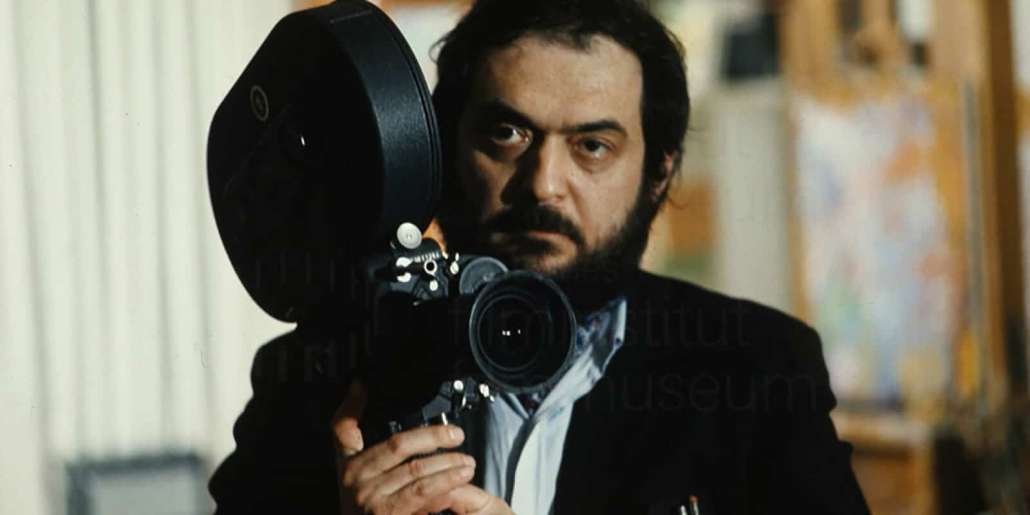
Thomas and Brett talk with Jasun Horsley about his new book, The Kubrickon: The Cult of Kubrick, Attention Capture, & the Inception of AI. Jasun contends that Kubrick was not really making movies at all, but rather scientific experiments designed to capture our awareness and give rise to artificial intelligence. The guys get into Eyes Wide Shut, The Shining, and other Kubrick films. Other discussion topics include the moon landing question, the demonic nature of celebrity, the mother-bonded psyche, and the relationship between Satan and matter.
“Kubrick was an insider with an enormous amount of power and clout, so the idea that he really was being subversive to the powers that were funding his movies doesn’t really add up.”
Jasun Horsley
The Kubrickon:
Stanley Kubrick as Architect of Psychological Warfare and the Inception of AI
In the shadowy intersection of cinema, technology, and social engineering lies The Kubrickon, a provocative thesis by independent scholar Jasun Horsley. Horsley’s work dismantles the cult of Stanley Kubrick, not to celebrate the auteur’s cinematic genius, but to expose a deeper, more insidious purpose behind his films — one that implicates Kubrick in the origins of algorithmic control, behavioural manipulation, and the birth of artificial intelligence as a tool of psychological warfare.
Kubrick’s Films: More Than Art, A Psyop
Horsley contends that Kubrick’s movies were never merely artistic endeavours but covert experiments in attention capture. This concept refers to the deliberate harnessing and directing of human consciousness through cultural media, effectively turning audiences into unwitting participants in a vast behavioural conditioning programme. Kubrick’s work, Horsley argues, was instrumental in building an architecture of algorithm-directed technology that has evolved into today’s pervasive attention economy — a system where culture itself becomes a medium for control and manipulation.
The Secret Architecture of Algorithmic Influence
Tracing this lineage back to the 1960s and 1970s, The Kubrickon reveals Kubrick’s alleged insider role in merging computer science, cybernetics, and behavioural psychology. This synthesis laid the groundwork for technologies that now permeate politics and society, exemplified by phenomena like Cambridge Analytica’s data-driven manipulation of public opinion. Kubrick’s films, therefore, serve as nodes in a broader network designed to shape and infiltrate the human psyche, blurring the boundaries between consciousness and machine intelligence.
Culture as Worship and the Attention Economy
Horsley emphasises the etymology of culture — rooted in the idea of worship — to underscore how Kubrick’s cinematic output functions as a form of ritualistic attention capture. This process binds human consciousness to technology, creating a symbiotic relationship where our mental faculties are harvested and redirected by algorithmic systems. The result is a society increasingly governed not by overt force but by subtle psychological engineering, where the ‘hidden hand’ manipulates perception and consensus through media and culture.
Challenging the Kubrick Mythos
Unlike traditional Kubrick scholarship that venerates the director’s artistic mastery, Horsley is openly critical, describing Kubrick as a “fascinator of our attention” rather than a genius filmmaker. He views the recent cult-like reassessments of Kubrick’s later works, such as Eyes Wide Shut, as part of ongoing memetic experiments by social engineers to manipulate public opinion and reinforce the Kubrickon mythos. This reframing positions Kubrick not as a solitary visionary but as a cog in a larger machine of psychological warfare.
Implications for Psychological Warfare and Social Engineering
The Kubrickon offers a chilling insight into how cultural artefacts are weaponised to engineer consent and control populations. By embedding behavioural science within popular media, Kubrick’s legacy exemplifies the covert operations of psychological warfare that operate beneath the surface of everyday life. This thesis urges a critical re-examination of how attention is commodified and manipulated, revealing the cinema as a battleground for the control of human consciousness itself.
Jasun Horsley‘s The Kubrickon is a crucial text for those studying the hidden mechanisms of propaganda, social engineering, and the rise of artificial intelligence as a tool of control. It challenges us to see beyond the surface of culture and recognise the subtle, pervasive influence of the ‘hidden hand’ shaping our perceptions and realities.
The Kubrickon: The Cult of Kubrick, Attention Capture, and the Inception of AI is available from Aeon Books and serves as a stark reminder that in the war for our minds, cinema is far more than entertainment — it is a weapon.
Sources and links
https://linktr.ee/jasunhorsley
https://landmademan.com/the-kubrickon
Jasun Horsley on Stanley Kubrick and Artificial Intelligence | Psyop Cinema Podcast (Spreaker
Source: Ep.41 Jasun Horsley on Stanley Kubrick and Artificial Intelligence – PSYOP CINEMA








Leave a Comment
Want to join the discussion?Feel free to contribute!