
Obedience to Authority: The Milgram Experiment | Quick Guide
You Will Obey
Stanley Milgrim Experiment – 1962 | Quick Guide
In the famous Yale experiment designed to study human obedience to authority, the psychologist Stanley Milgram tested how willing people are to inflict suffering on other people when a person in authority commands them to do so.
The Milgram experiment(s) on obedience to authority figures was a series of social psychology experiments conducted by Yale University psychologist Stanley Milgram. They measured the willingness of study participants, men from a diverse range of occupations with varying levels of education, to obey an authority figure who instructed them to perform acts conflicting with their personal conscience. Participants were led to believe that they were assisting an unrelated experiment, in which they had to administer electric shocks to a “learner”. These fake electric shocks gradually increased to levels that would have been fatal had they been real.
The experiment found that a very high proportion of subjects would fully obey the instructions, albeit reluctantly. Milgram first described his research in a 1963 article in the Journal of Abnormal and Social Psychology and later discussed his findings in greater depth in his 1974 book, Obedience to Authority: An Experimental View.

“Mind control did not start with MK-Ultra.”
Alan Watt


Obedience to Authority
The Milgram Experiment: a Historical Perspective
The recent response around the world to the “COVID-19” scare provides a stark illustration of obedience to authority figures and the psychological mechanisms that drive compliance. This phenomenon can be understood through the lens of historical events, including instances of tyranny and genocide, where similar dynamics played out on a larger scale.
The Milgram Experiment: Modern Compliance
Stanley Milgram‘s famous experiment in the 1960s demonstrated how ordinary people could commit acts against their conscience when instructed by an authority figure. Participants were willing to administer what they believed were harmful electric shocks to others simply because they were told to do so by an experimenter in a lab coat. This experiment highlighted the unsettling reality that obedience can override moral judgment, a theme echoed during the COVID period.
Conducted at Yale University, the Milgram Experiment involved participants who believed they were part of a study on learning and memory. They were instructed to administer electric shocks to a “learner” (an actor) whenever incorrect answers were given. The shocks increased in intensity with each mistake, culminating in what participants thought were dangerous levels. Despite hearing simulated screams of pain, many participants continued to administer shocks when prompted by the experimenter, demonstrating a shocking level of compliance with authority.
Milgram found that approximately 65% of participants were willing to administer the highest shock level, illustrating a disturbing readiness to follow orders, even when it caused apparent harm to another person. Nearly 80% of teachers that continued to administer shocks after 150 volts—the point at which the learner was heard to scream—continued to the maximum of 450 volts. Teachers displayed a range of negative emotional responses to the experiment even as they continued to obey, sometimes pleading with the experimenters to stop the experiment while still participating in it.

Historical Context: Tyranny and Genocide
Throughout history, numerous tyrants have exploited the principle of obedience to orchestrate mass violence and genocide. Figures like Maximilien Robespierre during the French Revolution justified widespread executions as a means to achieve a “noble” societal ideal. Robespierre famously stated, “We must smother the internal and external enemies of the Republic or perish with them,” illustrating how ideology can rationalise brutality.
Similarly, Leopold II of Belgium was responsible for millions of deaths in the Congo Free State through forced labour and exploitation, driven by a colonial agenda that dehumanised the local population. His regime exemplified how authority can lead individuals to participate in systemic violence under the guise of economic progress.
The Rwandan Genocide of 1994 further emphasises this theme. Over just 100 days, approximately 800,000 people were slaughtered, primarily targeting the Tutsi minority. This genocide was meticulously organised by government officials who incited violence among civilians through propaganda that dehumanised the victims. The chilling efficiency with which ordinary citizens participated in these atrocities echoes Milgram’s findings on obedience.
The Khmer Rouge: A Historical Overview
The Khmer Rouge, led by Pol Pot, seized control of Cambodia on April 17, 1975, establishing a radical communist regime that aimed to transform the country into an agrarian utopia. This regime implemented policies that disregarded human life, resulting in the Cambodian genocide, where an estimated 1.5 to 3 million people—approximately a quarter of the population—perished through starvation, execution, and forced labour.
Obedience Under Tyranny
The Khmer Rouge‘s rise to power illustrates how authority can manipulate individuals into committing atrocities. The regime’s leaders cultivated an environment of fear and obedience, often executing those deemed “impure” or “traitors,” including intellectuals and ethnic minorities. This systematic persecution was justified through propaganda that framed dissent as a threat to national purity.
Milgram’s experiment resonates with these historical events; participants in his study obeyed commands to inflict pain on others when directed by an authority figure. Similarly, many Cambodians complied with the Khmer Rouge‘s brutal policies due to fear of reprisal or indoctrination into the regime’s ideology.
The “COVID-19” Response: A Study in Mass Compliance
During the COVID scare, many people complied with public health measures such as lockdowns and mask mandates. Initially driven by fear, this compliance was also influenced by social dynamics. Research indicates that individuals were more likely to adhere to guidelines when they perceived that others were doing the same. This phenomenon aligns with Milgram’s findings; compliance often stems from a desire for social order rather than respect for authority.

Warning: The Dark Implications of Obedience
The “COVID-19 pandemic” serves as a reminder of how easily populations can be led into compliance under the guise of public safety. The willingness to obey rules often hinges on the perception that everyone else is also complying. This creates a cycle where individuals feel compelled to conform, even when the rationale behind those rules becomes questionable.
The implications of obedience are profound and troubling. They serve as a stark reminder that authority figures—be they political leaders or corporate executives—can manipulate individuals into unethical, and even murderous behaviour, under legitimate-seeming orders.
Vigilance Against Manipulation
As we reflect on both historical atrocities and recent events related to the COVID response, it becomes clear that understanding obedience is crucial for safeguarding against tyranny and manipulation. Individuals must cultivate critical thinking skills and remain vigilant against psychological manipulation tactics employed by those in power. By encouraging an environment where ethical considerations take precedence over blind obedience, society can better navigate future crises without repeating the mistakes of history.
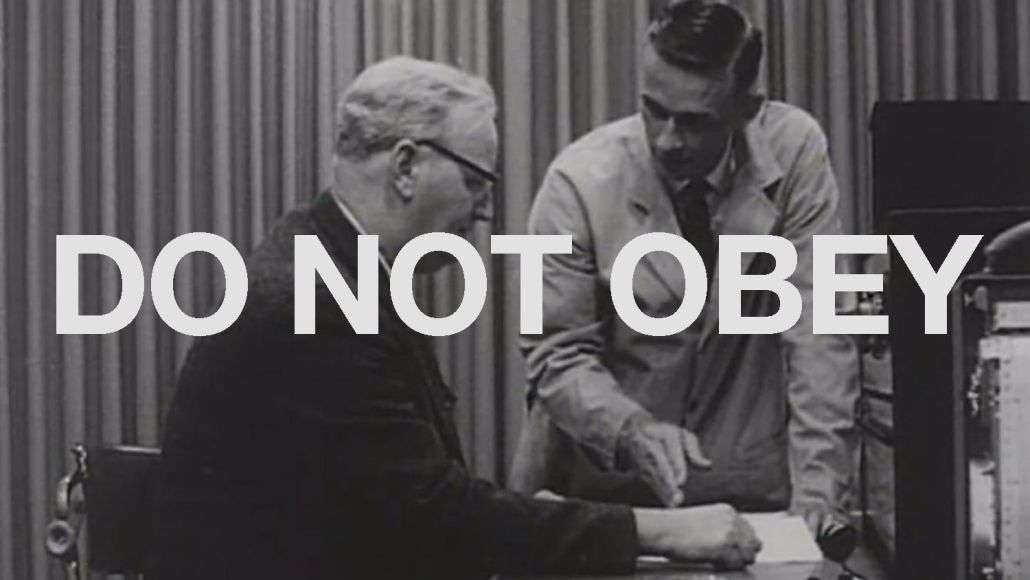
DO NOT OBEY
Sources and links
Milgram experiment – Wikipedia
Milgram experiment | Description, Psychology, Procedure, Findings – Britannica
Collection: Stanley Milgram papers | Archives at Yale
Milgram Shock Experiment | Summary | Results | Ethics – Simply Psychology
Meta-Milgram: An Empirical Synthesis of the Obedience Experiments – PMC
Khmer Rouge History | Cambodia Tribunal Monitor
Cambodian Genocide – USC Shoah Foundation
Khmer Rouge | Facts, Leadership, Genocide, & Death Toll | Britannica
Cambodian genocide – Wikipedia
Origins of the Khmer Rouge – United States Holocaust Memorial Museum
The Rise and Fall of the Khmer Rouge Regime | Asia Pacific Curriculum
Source: Obedience ~ The Milgram Experiment – Documentary
Source: Stanley Milgram – The Obedience Experiment


























Leave a Comment
Want to join the discussion?Feel free to contribute!