

Laura Aboli on Transhumanism and What to do About It | Jerm Warfare
Laura Aboli on Transhumanism and What to do About It – March 2024 | Jerm Warfare
Laura Aboli started her career in 2000 by co-founding World-Check, a risk identification database, and later Wealth-X in 2010, focusing on ultra-wealthy individuals. After leaving both by 2014, she pursued her passion for interior design with her own company. With interests in art and a critical view on metaphysics and psychology, she founded the United Democratic International Movement for Awareness and Freedom (UDIMAF) in May 2020, aiming to address the impacts of the global ‘pandemic‘ on society.
Which is a complicated way of saying that she’s exposing globalist agendas and proposing opposition strategies.

The most significant threat posed by contemporary biotechnology is the possibility that it will alter human nature and thereby move us into a ‘posthuman’ stage of history.
Francis Fukuyama, political scientist
The Island

Hollywood seldom reveals truth, yet The Island (2005) stands out.
I enjoyed this movie and recommend it for its exploration of transhumanism‘s dark (and only) side, depicting a dystopian future where human cloning becomes reality.
The plot uncovers a sinister facility masquerading as a utopia, where inhabitants are duped into believing they’re survivors of a global contamination, aspiring to reach ‘The Island’, the last uncontaminated refuge. However, the grim truth is that they are mere clones, bred for the sole purpose of organ harvesting and surrogacy for the elite.
The story exposes the ethical bankruptcy and moral decay at the heart of transhumanism.
There is no upside, that I can think of, to transhumanism.
The end of human nature… would mean the end of meaningful human freedom.
Bill McKibben, environmentalist
What is transhumanism?
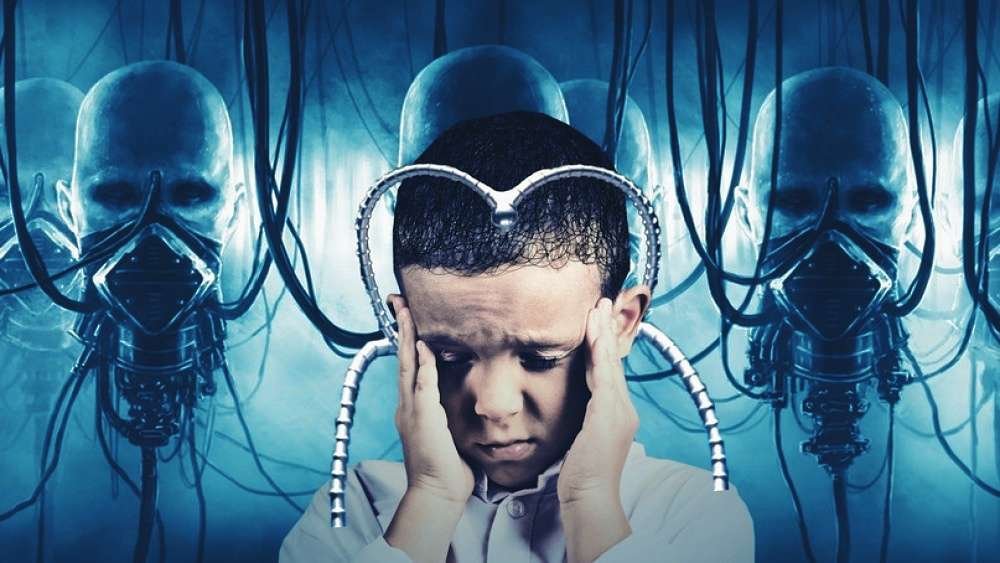
Officially, transhumanism is the belief in using technology to enhance human physical and cognitive abilities, aiming to transcend the current limitations of the human body and mind.
It involves ideas like merging humans with machines, genetic engineering, and life extension technologies.
And, of course, cloning and creating humans in capsules.
It’s a terrible idea for several reasons:
- loss of humanity and human nature,
- the blurring of ethics and morality,
- very unpredicatable consequences,
- playing God won’t end well,
- complete absence of privacy,
- adoption of mass surveillance, and the
- loss of tradition and religion.
Why would any sane person support any of this?
I don’t know.
As it turns out, many do. But such people tend to be sociopaths, technocrats, or individuals with no moral compass.
What about technological aid?
To be clear, using technology as an aid isn’t transhumanism.
Using technology to replace humans, however, is transhumanism.
There isn’t a formula, though.
For example, a pacemaker to help a weak heart is, in my view, a positive medical aid. Meanwhile, entirely replacing a heart with a microchip attached to an app connected to wifi, is probably a step close to being a cyborg.
It’s a blurry line, but the line is there, somewhere.
Here’s another example.
Oscar Pistorius, a South African athlete, found his career as a champion sprinter cut short and ended up in jail for shooting his girlfriend. Known for running on blades instead of legs, he also faced controversy over the alleged speed advantages these blades provided, aside from his criminal charges.

Given this, could Oscar Pistorius be considered transhuman?
I don’t think so, given that the blades are designed merely to aid his disability, not to enhance or replace any metaphysical aspects of his being.
The development of full artificial intelligence could spell the end of the human race.
Stephen Hawking, theoretical physicist
What about transgenderism?
Transgenderism is a vector towards transhumanism.
It is an attempt to tear apart the fabric of society by pushing the ludicrous idea that gender (or sex) is a social construct, completely ignoring biology.
It’s an assault on reality.
Transgenderism is a slippery slope straight to transhumanism, including hacking the human body, mind, and soul with technology, as if we’re mere machines waiting for an upgrade.
At the dawn of the third millennium, humanity wakes up, stretching its limbs and rubbing its eyes. Lo and behold, it discovers that it has the power to hack not just computers, not just the economy, not just the political system, but humans themselves.
Transhumanism, fueled by the same reckless disregard for natural order as transgenderism, dreams of a future where humans are nothing more than programmable entities, stripped of any essence that made them human in the first place.
It’s a world where everything that defines us can be bought, changed, or deleted.

In the year 2024 (or any year, for that matter) we should not be asking ‘what is a woman?‘ and we should not be entertaining the idea that men can be women.
Here’s my conversation with Laura.
Once unfriendly superintelligence exists, it would prevent us from replacing it
Nick Bostrom, philosopher
Source: Laura Aboli on transhumanism and what to do about it – Jerm Warfare








Leave a Comment
Want to join the discussion?Feel free to contribute!