
Inside The Freemasons’ Oldest Grand Lodge | Business Insider
New Order of the Ages
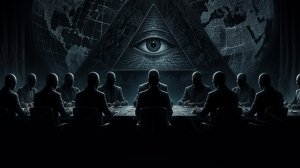
Secrecy, Symbolism, and the Architecture of Influence
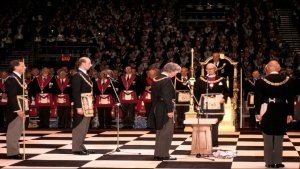
Inside The Freemasons’ Oldest Grand Lodge – 28 Sept 2018 | Business Insider
Freemasonry is the largest worldwide secret society. What’s spoken about in its meetings is shrouded in mystery and only Freemasons can attend their ceremonies.
Few institutions have managed to cultivate an aura of mystery as effectively as Freemasonry. It has evolved into a network that blends ritual, symbolism, and selective membership into a system that is both visible and curiously opaque.
Its buildings stand in plain sight. Its members include judges, politicians, financiers, police officers and public figures. And yet, what occurs within its private ceremonies remains inaccessible to outsiders. This duality—openness in structure, secrecy in practice—raises a more interesting question than simple conspiracy: how does an organisation maintain mystique in an age of constant exposure?

“How is it that Freemasonry can operate so openly and yet keep its secrets so well hidden?”
Dr. John Coleman – ‘The Story of The Committee of 300′
At its core, Freemasonry operates as a system of controlled disclosure. Symbols, allegories, and staged rituals are used not merely as tradition, but as tools of psychological conditioning. Advancement through its ranks is structured, gradual, and dependent on internal recognition. Knowledge is not freely given; it is earned, filtered, and often encoded. This creates an environment where meaning is layered and authority is internalised rather than imposed.
From a psychological perspective, this is highly effective. Humans are wired to value what is scarce and concealed. By limiting access and framing participation as a privilege, the organisation reinforces loyalty and cohesion. The initiate is not simply joining a group; he is entering a narrative in which he plays a progressively significant role.
The power of such systems does not necessarily lie in overt control, but in influence—particularly among networks of individuals who already occupy positions of authority. Shared rituals and symbols create a sense of alignment that transcends professional or political boundaries. Whether this translates into coordinated action is often assumed rather than demonstrated, but the potential for soft influence is undeniable.
Equally significant is the external perception. The mystique surrounding Freemasonry has been amplified over centuries by speculation, literature, and popular media. This has produced a feedback loop: secrecy fuels curiosity, curiosity fuels myth, and myth reinforces the perception of hidden power. In this sense, the organisation benefits from a form of narrative shielding—where ambiguity itself becomes a strategic asset.
The modern information landscape complicates this further. In a world saturated with data, true opacity is rare. Yet Freemasonry‘s approach suggests that complete secrecy is not required. Instead, it relies on selective transparency—revealing enough to appear benign, while preserving the symbolic core that defines its identity.
For observers interested in psychological operations and social structuring, the lesson is not that Freemasonry secretly controls world events. Rather, it demonstrates how institutions shape perception, build internal cohesion, and maintain influence through ritual, exclusivity, and narrative management.
The real mechanism at work is not hidden domination, but something more subtle: the cultivation of belief, both within the organisation and in the public imagination. And in that space—between what is known, what is suggested, and what is assumed—the architecture of influence quietly endures.
Freemasonry in The_Void
Sources and links
The Freemasons here: https://www.ugle.org.uk
Source: Inside The Freemasons’ Oldest Grand Lodge







Leave a Comment
Want to join the discussion?Feel free to contribute!