
Phœnicians Among Us – Mrs Heritage History | The Duke Report
Phœnicians Among Us | The Duke Report
Mrs Heritage History – Phœnicians Among Us – Part II | The Duke Report
Sephardic Phœnicians | The Duke Report
Keep Buggering On – a Short History of Pederasty | The Duke Report
The Invisible Thalassocracy
Phoenician Networks and the Architecture of Control
For three millennia, a hidden maritime order has shaped empires, finance, and narrative—Phoenician networks persisting through Rome, Venice, Britain, and the Anglo-American financial architecture.
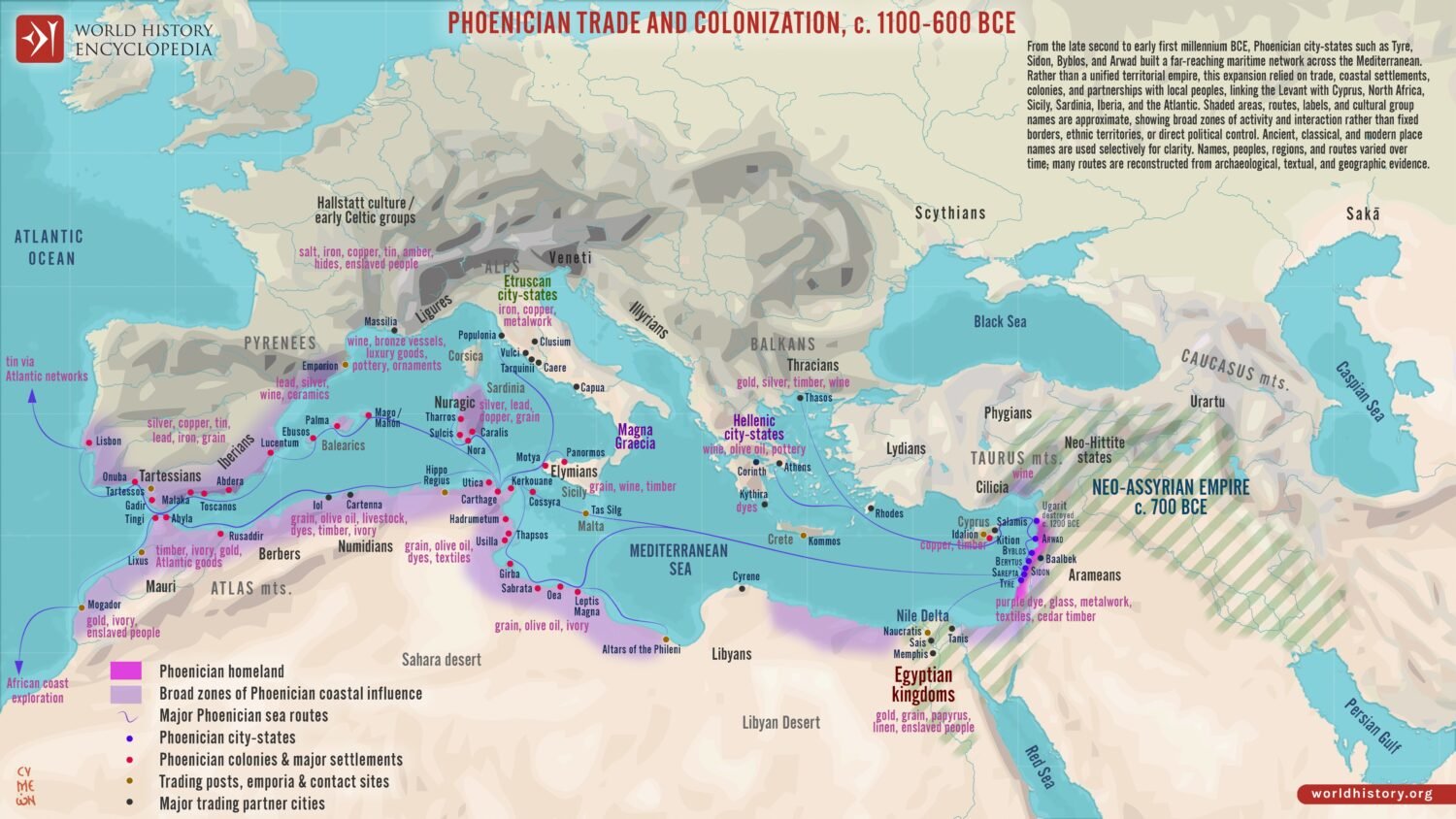
For over three millennia, a maritime command structure has operated beneath the surface of recorded history, shaping empires, financial systems, and the very narratives we are taught to accept as truth. This hidden thalassocracy—rule by sea power, finance, and secrecy—traces its lineage from the ancient ports of Tyre and Sidon through Carthage, Venice, the Dutch Republic, the British Empire, and into the Anglo-American financial architecture that dominates today. At the centre of this revelation stands Mrs. Heritage History, a former Silicon Valley engineer turned homeschooling historian, whose research into pre-1923 primary sources has uncovered a continuous thread of Phoenician influence woven through Western civilisation.
From Code to Chronicles
The Making of a Dissident Historian
Mrs. Heritage History‘s journey began not in the archives, but in the cubicles of California’s technology sector. After leaving her engineering career to homeschool five children, she scoured used bookstores for history texts that could impart moral clarity and narrative coherence to her students. What she discovered shocked her: nineteenth-century authors such as Jacob Abbott and Charles Coffin wrote with a vividness and ethical purpose absent from modern textbooks. Around 2008, she launched Heritage-History.com, a digital library of public-domain works written before 1923, offering homeschoolers access to primary historical storytelling unfiltered by contemporary ideological revisionism.

Her focus soon narrowed to the civilisations that preceded Greece and Rome. The Phoenicians—merchants, shipbuilders, and transmitters of the alphabet—appeared in mainstream accounts as a footnote, yet their ports at Tyre, Sidon, and Byblos once commanded trade routes stretching from the Red Sea to the western Mediterranean. Mrs. Heritage History recognised that these were not merely commercial hubs but nodes in a network bound by shared cult practices, initiatory rites, and monopolistic control over metallurgy and navigation.
Phoenicianism
Cult, Commerce, and Command
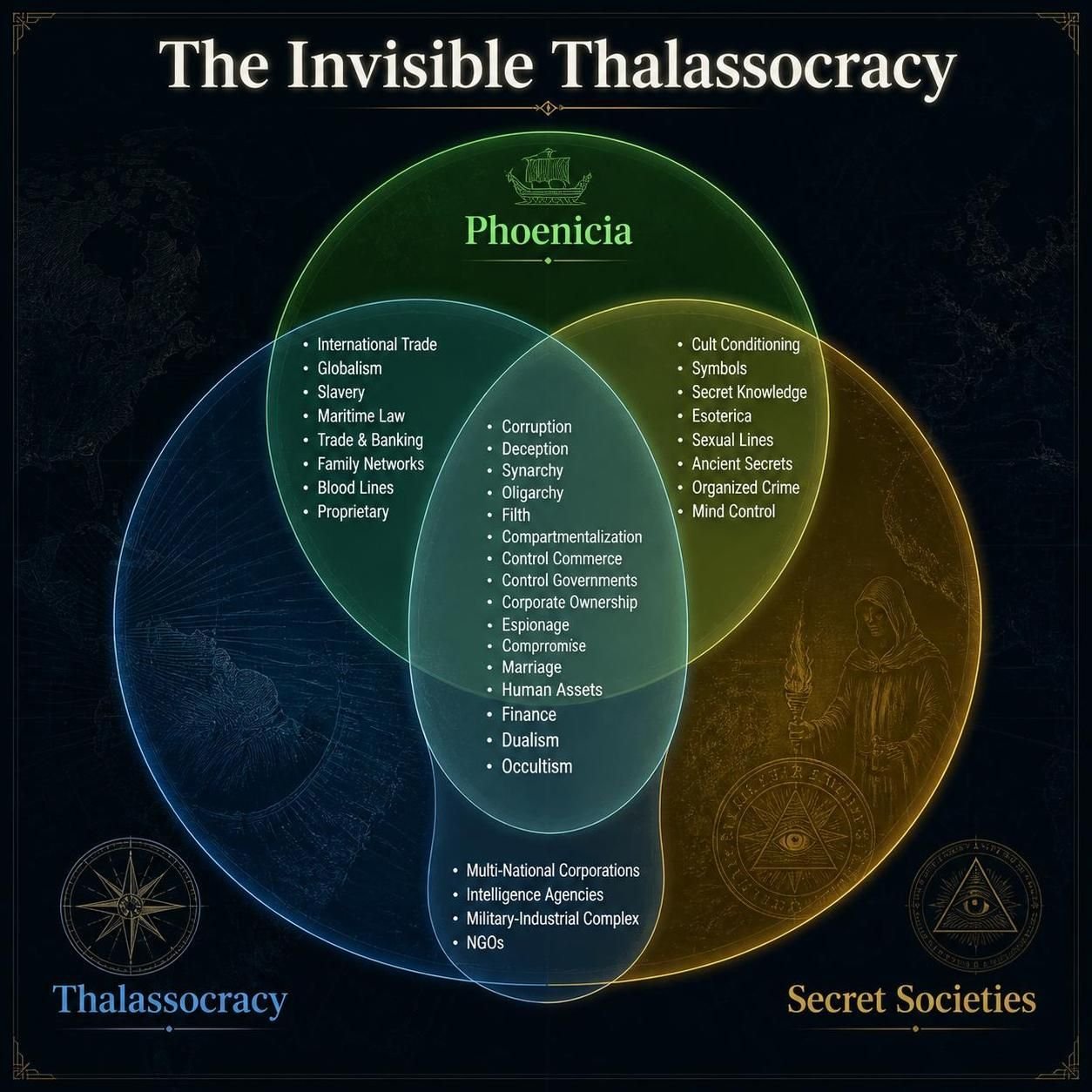
The term “Phoenician” does not denote a single nation-state but a decentralised maritime civilisation that operated across the Mediterranean for over a thousand years. Mrs. Heritage History defines Phoenicianism as both an economic system and an initiatory culture: a thalassocracy sustained by secrecy, intermarriage among cult families, and the preservation of esoteric knowledge. Unlike land-based empires, maritime powers could relocate wealth, personnel, and institutions when cities fell—Alexander’s destruction of Tyre and Rome’s razing of Carthage did not terminate the network, only shifted its centres to Alexandria, Utica, Cadiz, and beyond.
This mobility allowed Phoenician oligarchs to embed themselves within the noble houses of Greece, Italy, Iberia, and North Africa through strategic marriage alliances and commercial partnerships. The result was a transgenerational oligarchy whose cohesion depended not on territorial conquest but on control of trade routes, information, and ritual. Mrs. Heritage History argues that this same model resurfaced in Venice, Genoa, the Hanseatic League, the Portuguese and Spanish empires, the Dutch and British East India Companies, and ultimately the Anglo-American financial order.
Secret Societies as Operational Infrastructure
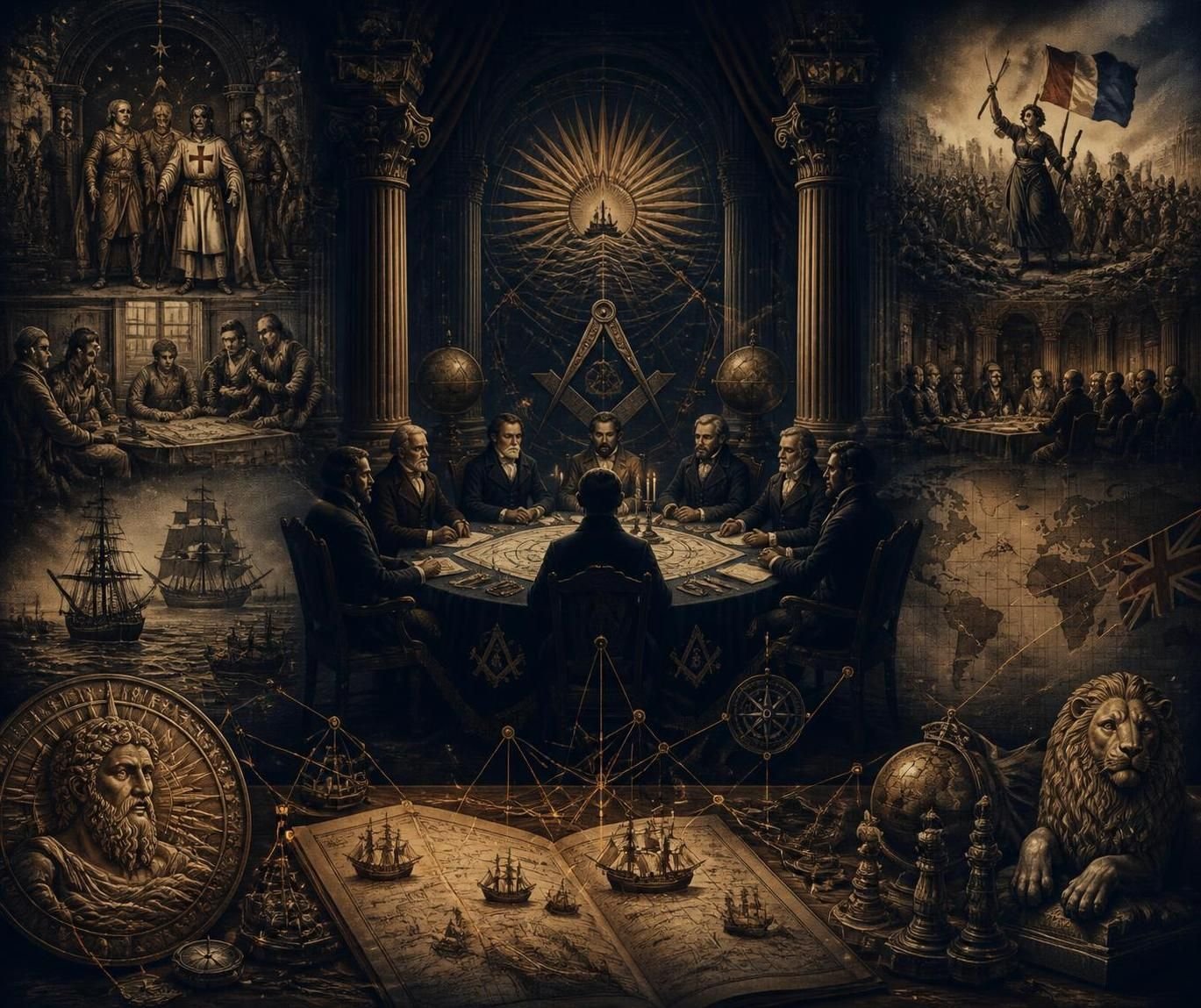
In the nineteenth century, Mrs. Heritage History identified an overwhelming presence of Freemasonry among political and cultural leaders across Britain and continental Europe. She traced the fraternity’s symbols and rituals to what she calls “flagrantly Phoenician” sources: sun and sea iconography, temple architecture, and initiation customs rooted in ancient maritime cults. The Freemasons, she contends, functioned as a “meta secret society,” coordinating smaller guilds and chivalric fraternities in a command structure mirroring ancient Phoenician hierarchies.
Her research led her to observe that leaders of the French Revolution and architects of the British Empire were frequently initiated Freemasons, suggesting that secret societies had become instruments of a modern thalassocracy—rule by sea power and finance. From her Catholic perspective, she found it troubling that Church historians had avoided exposing these connections, leaving the faithful unaware of the occult networks operating within the very institutions that claimed moral authority.
The Podesta Emails and the Psychology of Control
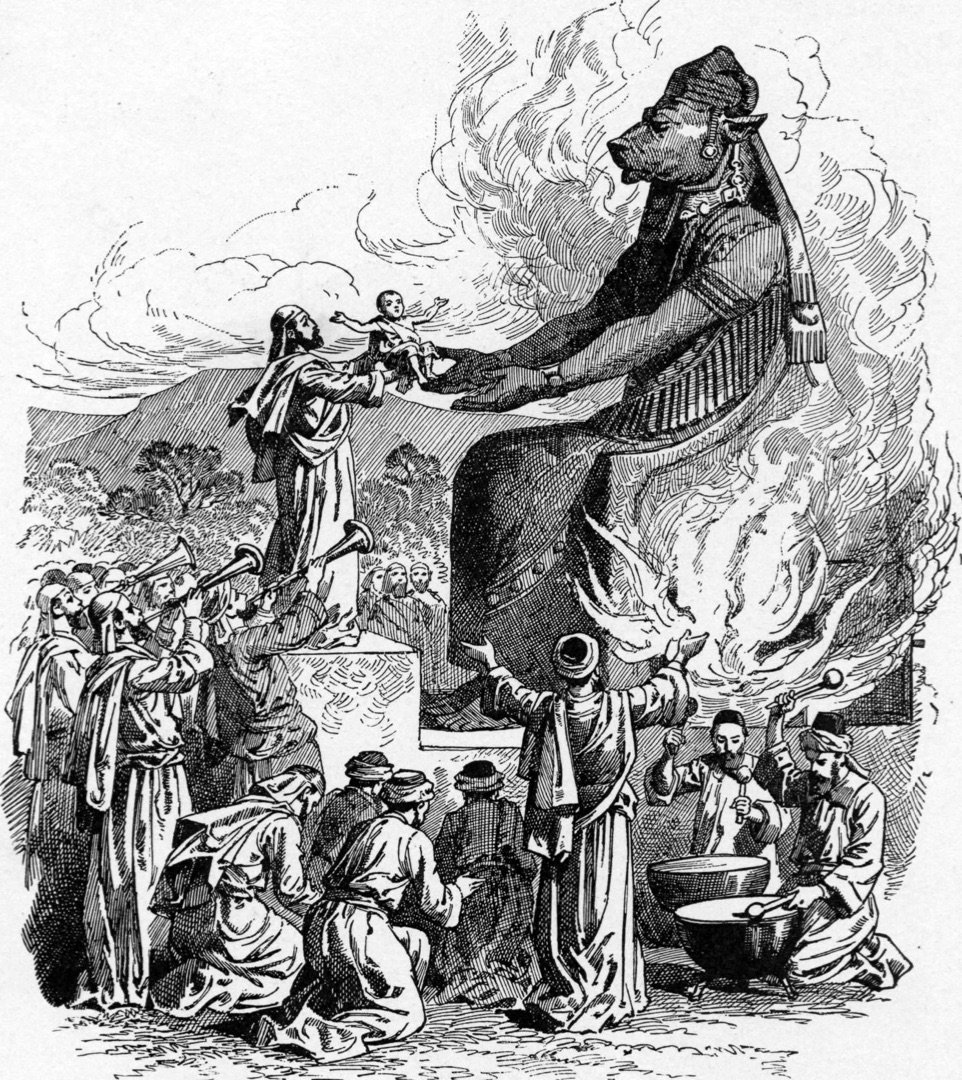
Mrs. Heritage History‘s turning point arrived in 2016 with the release of the Podesta emails through WikiLeaks. The correspondence revealed cult behaviour that she interpreted as ritual conditioning—a continuation of ancient Phoenician practices involving child sacrifice and sexual exploitation as mechanisms of psychological control. These were not mere depravities but systems designed to ensure loyalty within a cult hierarchy, binding participants through shared guilt and initiatory trauma.
This recognition forced her to reinterpret three millennia of history as the unbroken story of a hidden maritime order that merged religion, commerce, and mind control. The Phoenicians, she concluded, had not disappeared—they had transformed their cult and commerce into the enduring infrastructure of Western civilisation.
Rome as Phoenicia Rebranded
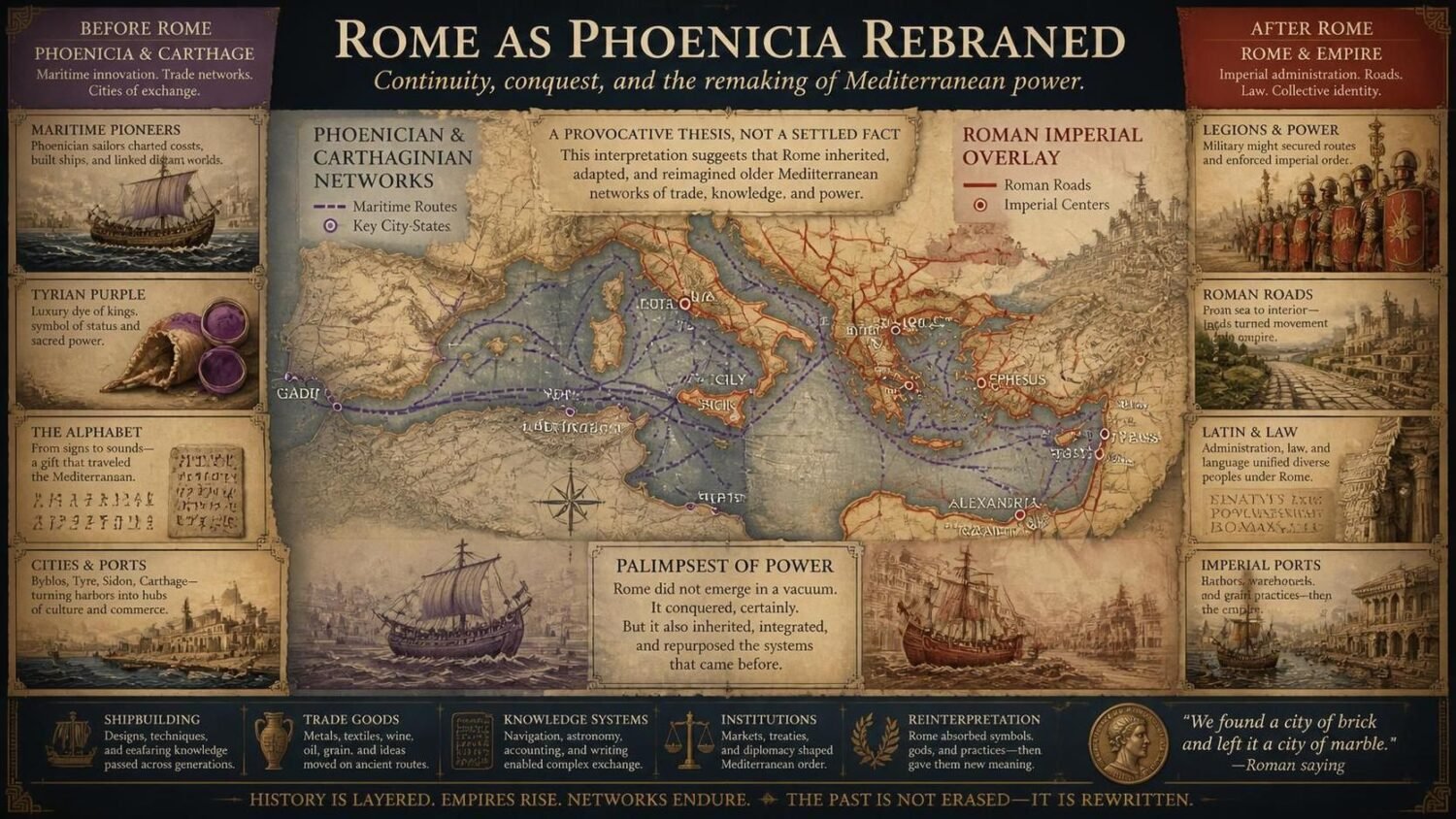
In her second interview with Peter Duke, Mrs. Heritage History extended her thesis to the Roman Empire. She argues that what historians present as the Roman Empire was, in reality, a Latinised version of the Phoenician Empire, operated by Phoenician networks and the “Equestrian” class—crypto-Phoenicians and wealthy plebeians, many of whom were not even Italian. Julius Caesar, she suggests, functioned as a Phoenician-backed “made man,” sponsored into power by an organised financial network that extended beyond Rome itself.
The rise of latifundia—large slave-worked agricultural estates producing crops for export—mirrored economic patterns associated with Phoenician commercial trade. The Severan dynasty offered another indicator: Emperor Septimius Severus came from a region associated with Phoenician culture, and his wife, Julia Domna, belonged to a Syrian priestly family, illustrating the integration of eastern Mediterranean cults and religious traditions into the imperial system.
Spain, too, bore the marks of Phoenician continuity. Settled around 1000 BC, cities such as Seville, Malaga, Cartagena, and Barcelona retained their gods, trading routes, and economic activities even after Rome assumed administrative control. Silver mining and maritime commerce persisted under Roman governors, demonstrating the adaptability of Phoenician networks to new political frameworks.
The Sephardic Diaspora
From Iberia to London
In Episode 3 of The Duke Report‘s series, Mrs. Heritage History shifts her chronological lens from antiquity to the last several centuries, tracing the evolution of Sephardic communities from their roots in Phoenician Iberia to their dispersal across Europe and the Americas. The discussion begins with Visigothic Spain, moves through the Moorish period and the Reconquista, and culminates in the expulsion of 1492—an event that scattered Sephardic merchants, bankers, and scholars across the Mediterranean and Atlantic worlds.
Mrs. Heritage History explains that her study of Sephardic history emerged naturally from her broader investigation into Phoenician settlements in Spain. The Iberian Peninsula, she argues, had been a Phoenician stronghold since at least 1000 BC, with cities such as Seville, Malaga, Cartagena, and Cadiz functioning as nodes in a maritime trading network that predated Roman administration. When the Catholic monarchs expelled the Jews in 1492, they did not terminate this network—they displaced it, sending Sephardic oligarchy to Portugal, the Netherlands, England, and the Ottoman Empire, where they re-established commercial and banking operations under new political cover.
Peter Duke contributes observations on the symbolism embedded in the American flag and the Union Jack, noting parallels with ancient temple iconography and maritime empires. He suggests that temples themselves functioned as financial institutions—repositories of wealth, information, and credit—continuing a tradition that stretched from Phoenician sanctuaries to modern central banks. The conversation turns to banking dynasties, aristocratic intermarriage, and the mechanisms by which Sephardic networks integrated into the ruling classes of Portugal, Holland, and Britain.
The Khazar Question and Competing Narratives
A significant portion of the discussion addresses the origins of Ashkenazi communities and the so-called “Khazar question.” Mrs. Heritage History and Duke examine competing explanations: the traditional narrative of Ashkenazi descent from ancient Israelite populations versus the hypothesis that a substantial proportion of Eastern European Jews descend from the Khazar Khaganate, a Turkic empire that converted to Judaism in the eighth century. They reference Aleksandr Solzhenitsyn’s Two Hundred Years Together, nineteenth-century histories of Jews in Russia and Poland, and Steven Birmingham’s trilogy—The Grandes, Our Crowd, and The Rest of Us—as sources that illuminate the social and economic structures of Jewish communities in Europe and America.
The dialogue also touches on Jewish Pirates of the Caribbean, a work that explores the involvement of Sephardic merchants in privateering and maritime trade during the early modern period. Mrs. Heritage History notes that these activities were not anomalies but continuations of Phoenician commercial practices: the use of naval power to secure trade routes, the integration of piracy with state-sponsored commerce, and the maintenance of information networks through dispersed communities.
Banking Networks and the Rise of London
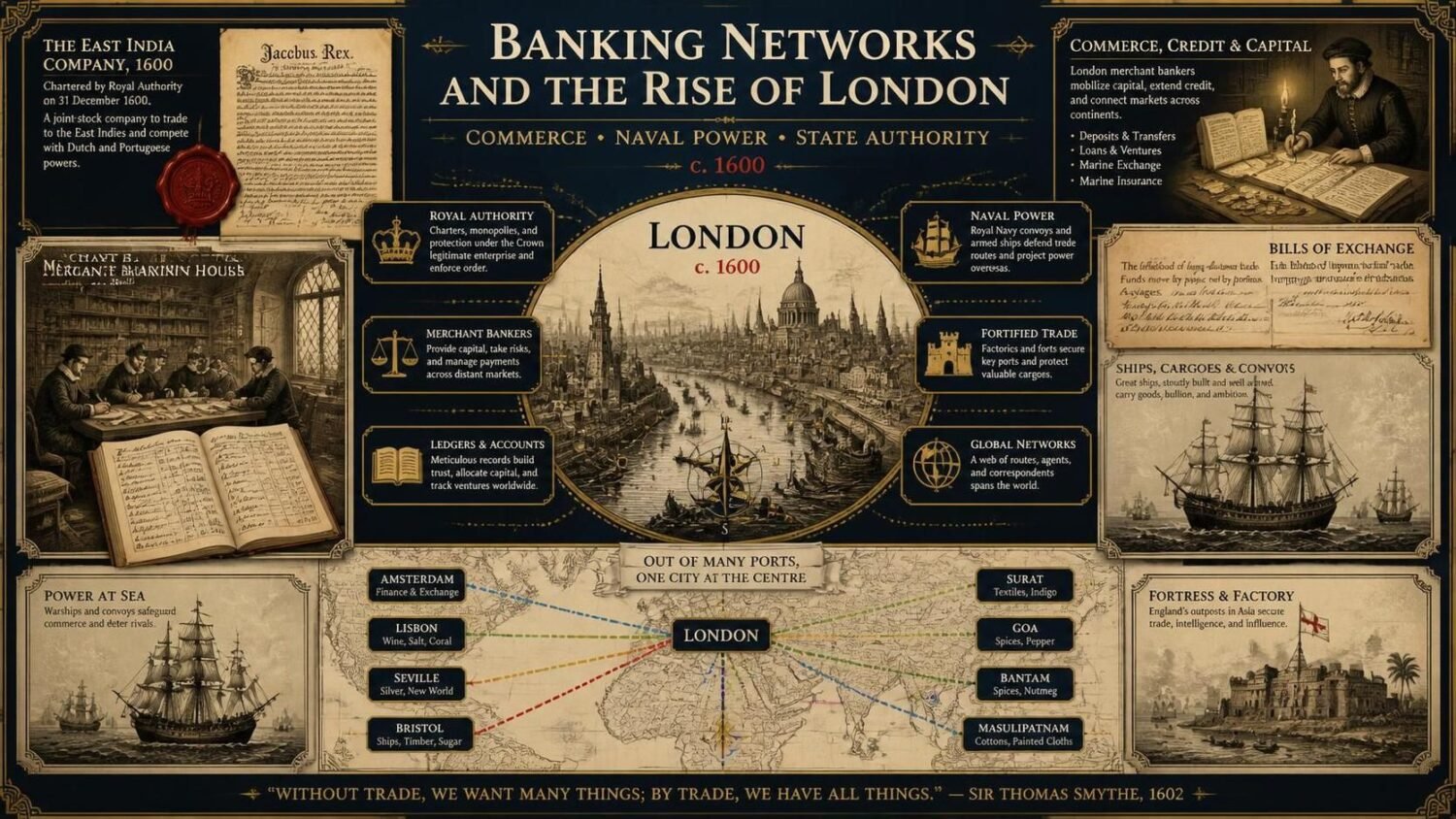
The expulsion from Spain and the subsequent diaspora set the stage for the rise of new maritime powers: Portugal, the Dutch Republic, and ultimately England. Mrs. Heritage History describes how Sephardic merchants, barred from land ownership and guild membership in Catholic Europe, turned to finance, shipping, and international trade—sectors that required mobility, trust networks, and access to credit. In Amsterdam and London, they established banking houses, stock exchanges, and insurance firms that became the backbone of the emerging capitalist order.
The East India Company, chartered in 1600, exemplifies this fusion of commerce, naval power, and state authority. Mrs. Heritage History argues that the Company’s structure mirrored ancient Phoenician trading networks: autonomous nodes bound by shared commercial interests, protected by naval force, and governed by a centralised directorate with access to privileged information. London’s emergence as a financial capital in the seventeenth and eighteenth centuries was not accidental—it was the result of deliberate policy, aristocratic patronage, and the integration of Sephardic banking networks into the British establishment.
Peter Duke and Mrs. Heritage History discuss the works of L. G. Pine, a twentieth-century genealogist who documented the intermarriage between British aristocracy and wealthy Jewish families. These alliances, they suggest, were not merely social but strategic—binding the old landed power brokers to the new financial oligarchy and ensuring the continuity of a maritime command structure that transcended national boundaries.
Temples, Finance, and Information Networks
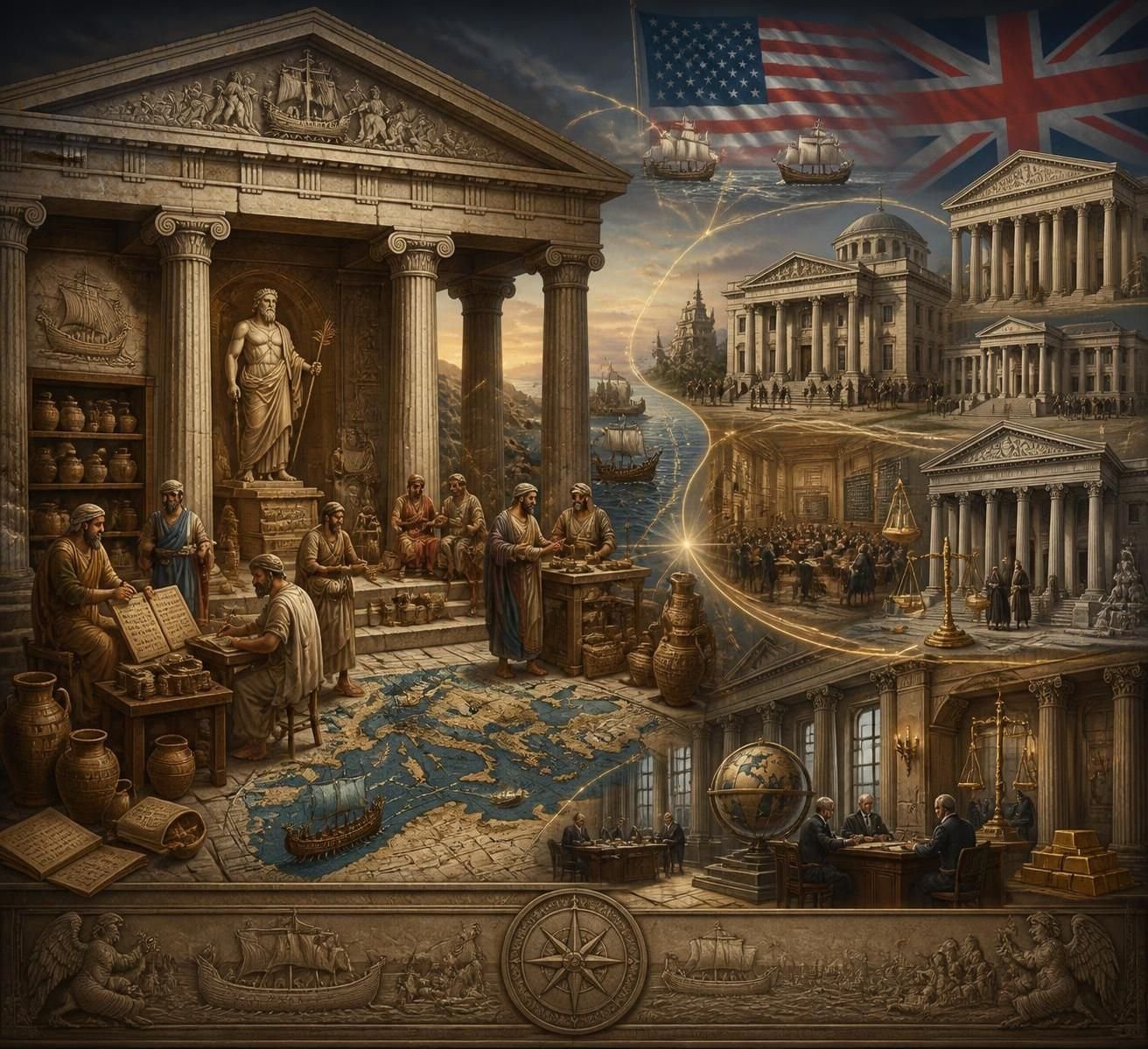
The conversation returns to the symbolic and functional continuity between ancient temples and modern financial institutions. In Phoenician cities, temples served as repositories of wealth, centres of credit, and hubs of information exchange—functions later assumed by banks, stock exchanges, and central monetary authorities. Mrs. Heritage History notes that the architectural language of temples—columns, pediments, sanctuaries—persists in the design of courthouses, banks, and government buildings, signalling the enduring sacralisation of financial power.
The American flag and the Union Jack both incorporate maritime symbolism: stars representing colonies or dominions, stripes or crosses evoking naval ensigns, and colour schemes derived from heraldic traditions tied to seafaring empires. These symbols are not decorative but operational—reminders of the thalassocratic order that underpins the political systems they represent.
The Story Machine and the Illusion System
The apparatus of education, media, and official historiography—is to maintain the illusion system. By erasing or minimising the Phoenician contribution, conventional narratives obscure the continuous thread of maritime control that has steered world events from the shadows. Mrs. Heritage History‘s work exposes this deception, offering readers a lens through which to recognise the hidden hand behind political puppetry and financial domination.
Her Heritage History’s research addresses the hidden continuities of power—the ritual, the secrecy, the intermarriage, and the economic monopolies—that have sustained a maritime oligarchy for three thousand years.
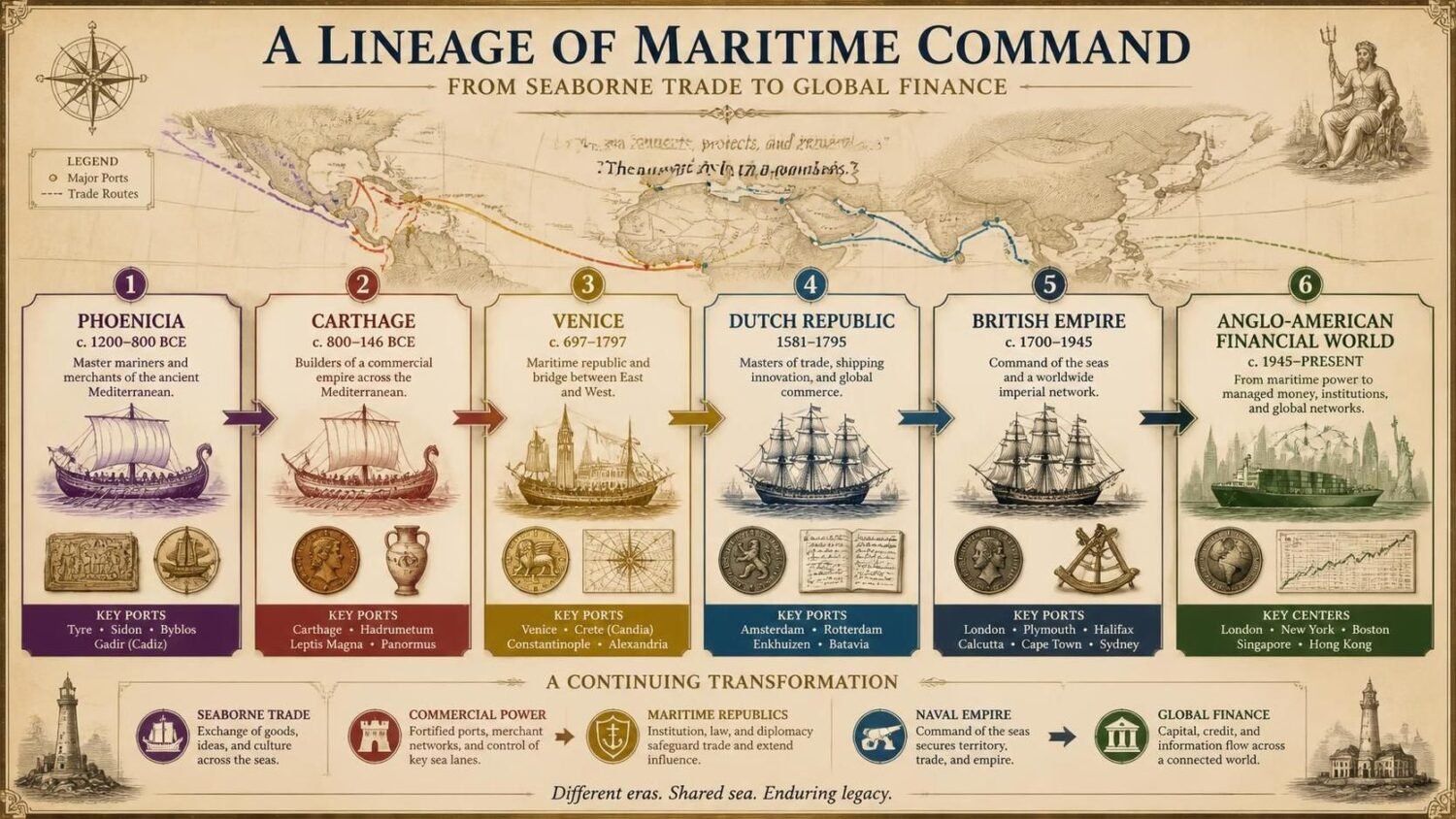
A Lineage of Maritime Command
The sequence is clear: Phoenicia, Carthage, Venice, the Dutch Republic, the British Empire, the Anglo-American financial world. Each iteration preserved the core features of the thalassocracy: control of trade routes, dominance of naval power, integration of secret societies into governance, and the use of ritual and psychological conditioning to ensure cult cohesion. The Phoenicians did not vanish—they evolved, adapting their cult and commerce to the technologies and institutions of each age.
Mrs. Heritage History‘s research provides a historical framework for understanding the architecture of control. The maritime command structure persists, its nodes now embedded in central banks, intelligence agencies, multinational corporations, and the very algorithms that shape perception in the digital age. To recognise this lineage is to pierce the illusion—and to begin dismantling the machinery of psychological warfare that has sustained it for millennia.
This article draws on interviews between Peter Duke of The Duke Report and Mrs. Heritage History, available at thedukereport.substack.com and heritage-history.com.
Sources and links
Source: Phœnicians Among Us























Leave a Comment
Want to join the discussion?Feel free to contribute!