

Neil Kramer – The Quiet War | Veritas
Truth Against Thresholds
Neil Kramer – The Quiet War – Dec 2025 | Veritas Project
In a thinning air, truth-telling becomes rebellion. Remain spiritually upright as old structures crumble, preserving agency, clarity, and inner strength against a shifting horizon.
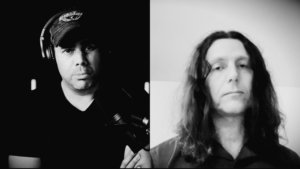
Neil Kramer returns to Veritas at the moment when clarity is needed most. Neil never appears during quiet chapters. He arrives when the atmosphere tightens, when the horizon shifts, when people sense a deeper truth moving beneath the noise. And right now, the air is very thin.
Across the Western world, meaning itself is slipping away. Europe faces a demographic crisis that sits beside migration pressures, cultural destabilisation, and a loss of continuity that leadership refuses to confront. Birth rates have collapsed across the developed world, revealing more than a social problem. They reveal a civilization that no longer believes in its own future.

In a climate like this, truth-telling has become a countercultural act. The real question is how to remain spiritually upright in a world shaped by intentional confusion. How to keep agency, clarity, and inner strength as the old structures fall away. Tonight we go directly into that territory. No filters. No evasion.
Truthcraft Resilience
A Countercultural Guide to Discernment in an era of Engineered Uncertainty
As old structures crumble, the task before us is not to chase comfort but to preserve agency, clarity, and inner strength against a horizon that seems to tilt with every passing headline. Neil Kramer‘s return to Veritas arrives at a moment when the atmosphere tightens, when the horizon shifts, and when beneath the noise a deeper current moves. Right now, the air is certainly very thin.
Across the Western world, meaning itself appears to be slipping. Europe faces a demographic crisis that sits beside migration pressures, cultural destabilisation, and a loss of continuity that leadership refuses to confront. Birth rates have collapsed across the developed world, exposing more than a social dilemma; they reveal a civilisation that has begun to doubt its own future. In such a climate, truth-telling becomes a countercultural act, read as defiance by those who profit from confusion and the maintenance of comfortable illusion.
The psychological battleground is not merely the loud debate on television or the repetitive drumbeat of social media feeds. It is a deeper programme of influence that operates through structures we seldom scrutinise: the cadence of public discourse, the framing of statistics, and the subtle tug of stories designed to homogenise perception. Propaganda, in its many guises, wants to lull individuals into surrendering personal discernment for the reassurance of consensus. The result is a public leaning on the safety of orderly narratives while critical questions are outsourced to those who wish to manage the fear that underpins modern anxiety.
To navigate this terrain without surrendering our integrity requires a disciplined approach to information and an unflinching commitment to self-governance. Here are guiding elements for readers who wish to resist the normalising spell of soft control and to keep agency intact:
- Question the frame, not just the content. The way a story is presented—the language, the visuals, the order of emphasis—often shapes perception more than the facts themselves. When you encounter a claim, ask: What is being foregrounded? What is being left out? Who benefits from this framing?
- Separate emotion from evidence. A powerful emotional appeal can feel persuasive, but it is not a substitute for data or rigorous reasoning. Track your own emotional responses and test beliefs against verifiable sources, historical context, and alternative interpretations.
- Build a personal epistemic routine. Curate a process for evaluating information that you can repeat: identify the claim, locate sources, assess credibility, check for confirmation bias, and record your conclusions. A steady routine creates resilience against manipulation by novelty, fear, or outrage.
- Recognise the performative nature of consensus. In public discourse, consensus can be manufactured through repetition, association, and ritual. Be wary of the ritualised certainty that accompanies mainstream narratives and be prepared to follow the evidence wherever it leads, even if it destabilises established comfort.
- Cultivate inner steadiness. The soul’s resilience under pressure is not a mere philosophical concept; it is a practical discipline. Practices that stabilise attention, such as mindful reflection, journalling, and solitary contemplation, help maintain clarity when external noise intensifies.
The task before us is not simply to debunk a singular conspiracy theory but to illuminate the mechanics of control that operate under the guise of normalcy. The story machine’s objective is to sustain the illusion system—the architecture that makes public life feel comprehensible while quietly steering it toward predefined outcomes. When this orchestration is recognised, the real work begins: to restore discernment, to defend personal sovereignty, and to re-anchor public life in values that endure beyond the next sensational headline.
In this moment of thinning air, truth-telling is not a reckless gesture but a measured, necessary act. It requires courage to resist the pressure to conform, to speak plainly when many prefer euphemism, and to remind ourselves that clarity is a form of resistance. The horizon may shift, and the old structures may fall away, but the human capacity for insight, moral courage, and self-governance remains a steady compass. By leaning into these attributes, we equip ourselves to navigate a world where appearances are carefully curated and the stakes—identity, culture, and future continuity—are profoundly real.
If you are seeking practical steps to strengthen your own resistance to manipulation, consider these action items:
- Audit the information you consume for diversity of sources and independent verification.
- Practice transparent reasoning by outlining your working hypotheses and the evidence supporting them.
- Engage in conversations that challenge your assumptions with respectful rhetoric and an openness to revise beliefs in light of credible evidence.
- Create a personal “signal-to-noise” filter: a short list of reliable indicators you use to gauge credibility, falsifiability, and relevance.
- Dedicate time weekly to reflect on core values and how they inform your interpretation of world events, ensuring your responses stay aligned with long-term principles rather than momentary fear or fascination.
The air may be thin, but clarity can be regained. The countercultural act is not merely to tell the truth; it is to live it in small, deliberate ways that reinforce agency and preserve a future worth defending. This is the core of authentic resilience in an age of engineered uncertainty.
Find out more at Veritas.
Source: Veritas – The Quiet War – neilkramer.com
























Leave a Comment
Want to join the discussion?Feel free to contribute!