
Tom Cowan: Rethinking the Heart Narrative | Sascha Says
Heart Health Stories
Cholesterol, Statins and Assumptions Shaping Heart Medicine
111 – Cholesterol, Statins & Heart Attacks: How We are Getting it all Wrong with Dr. Tom Cowan – Aug 2026 | Sascha Says
Dr. Tom Cowan challenges orthodox assumptions on cholesterol, statins and heart disease, asking whether medical certainty serves health—or sustains a carefully managed illusion.
For decades, the public has been handed a seemingly simple story about cardiovascular disease: cholesterol clogs arteries, blockages trigger heart attacks, the heart acts as a mechanical pump, and pharmaceutical intervention offers the safest route to protection.
It is a powerful story. It is repeated in doctors’ surgeries, public-health campaigns, television advertising, newspapers and medical education. It also happens to support an enormous system of testing, prescriptions, procedures and lifelong patient dependence.

But what happens when the foundational assumptions of that story are challenged?
In this episode of Sascha Says – The Sovereign Collective Podcast, retired alternative physician Dr. Tom Cowan joins Sascha to examine the prevailing cardiovascular model from the ground up. Their conversation ranges from cholesterol and statins to angiograms, arterial disease, heart attacks, autoimmunity and the fundamental question of whether the heart functions as the body’s primary pump at all.
For readers familiar with narrative management, the interview raises a familiar issue: how does a complex, uncertain and contested field become compressed into a single compulsory public story?
The Script we are Given
The official cardiovascular script tends to operate through a simple chain of associations:
- High cholesterol means danger.
- Arterial plaque means an imminent heart attack.
- Statins mean prevention.
- Medical compliance means safety.
- Questioning the model means irresponsibility.
Simple messages are effective because they are easy to remember, easy to broadcast and easy to turn into public policy. They also produce a population primed to outsource interpretation of its own body to approved institutional authorities.
Cowan argues that the real picture is far less straightforward. He questions whether arterial blockages are the direct cause of heart attacks, pointing to autopsy findings and angiographic material which, he says, complicate the familiar account of cardiovascular collapse.
The important point is not that every established conclusion is automatically false. It is that certainty itself can become a tool of control when it shuts down inquiry, suppresses inconvenient data and turns legitimate questioning into a social offence.
Cholesterol
Risk Marker or Manufactured Villain?
Cholesterol has been made into one of the great villains of modern medicine. The word alone now provokes fear in many people, who associate it with blocked arteries, sudden death and personal failure.
Yet cholesterol is not an alien toxin. It is a vital substance involved in cell membranes, hormone production, neurological function and tissue repair. The question is not whether the body should have cholesterol, but how it is being interpreted within a wider metabolic, inflammatory and physiological context.
Cowan’s position challenges the tendency to treat a single laboratory number as a verdict on a person’s health. This reductionist approach is common across modern medicine: identify a measurable marker, establish a target range, prescribe an intervention and call the process prevention.
Such frameworks can encourage what might be called laboratory governance: the management of human beings through isolated metrics, thresholds and risk categories rather than through a fuller understanding of diet, stress, sleep, movement, toxic exposure, social conditions and emotional life.
It is worth noting that major medical bodies continue to support statins for many people at elevated cardiovascular risk, particularly those with established heart disease. However, legitimate debate remains around side effects, informed consent, absolute versus relative benefit, the role of lifestyle measures and whether medication is being prescribed too broadly.
The Statin Economy
Statins are among the most widely prescribed drugs in medicine. Their defenders argue that they reduce cardiovascular events in appropriately selected patients. Critics point to side effects, including muscle symptoms, fatigue, metabolic changes and cognitive decline.
The deeper concern raised by Cowan’s work is not merely whether a particular drug helps or harms a particular patient. It is whether an entire medical system has been built around an oversimplified model of disease.
When an industry earns vast sums from lowering a number, there is an obvious incentive to define that number as the central danger. When professional reputations, guidelines, insurance structures, research funding and public-health messaging are all aligned around the same model, challenging it becomes exceptionally difficult.
This reveals a system of incentives in which the approved explanation becomes self-reinforcing.
The story protects the machinery that tells it.

Is the Heart Really a Pump?
Perhaps the most provocative element of Cowan’s argument concerns the heart itself.
Conventional physiology teaches that the heart is a muscular pump which drives blood through the circulatory system. Cowan, drawing partly on the ideas of philosopher and spiritual scientist Rudolf Steiner, argues that this model may be backwards: rather than forcing blood through the body in the manner of a mechanical pump, the heart may respond to and organise blood movement generated through wider processes in the circulatory system.
This claim stands well outside mainstream cardiology. Yet its value lies in the question it forces into view: are we interpreting living systems too mechanically?
Modern institutions often favour models that make the body appear predictable, modular and manageable. A machine can be fixed. A chemical imbalance can be corrected. A risk score can be lowered. A patient can be made compliant.
But a living human being is not merely a collection of malfunctioning components.
The mechanisation of medicine can make people easier to classify and treat at scale, while obscuring the complexity of the organism, the role of environment and the power of individual agency.
Narrative Discipline and Medical Authority
The most effective propaganda does not always arrive as an obvious lie. Often, it works by narrowing the acceptable range of questions.
In medicine, this happens through institutional consensus, selective research priorities, media simplification, professional penalties and the constant repetition of risk-based messaging. The public is taught not only what to believe, but who is permitted to speak.
The result is a hierarchy of credibility in which pharmaceutical manufacturers, regulatory agencies, corporate media outlets and credentialed institutions are assumed to be neutral guardians of truth, while dissenting researchers and practitioners are often dismissed before their arguments receive serious examination.
Scepticism is not the same as credulity. Genuine independence requires the willingness to scrutinise official narratives and dissident narratives alike.
Reclaiming Responsibility for Health
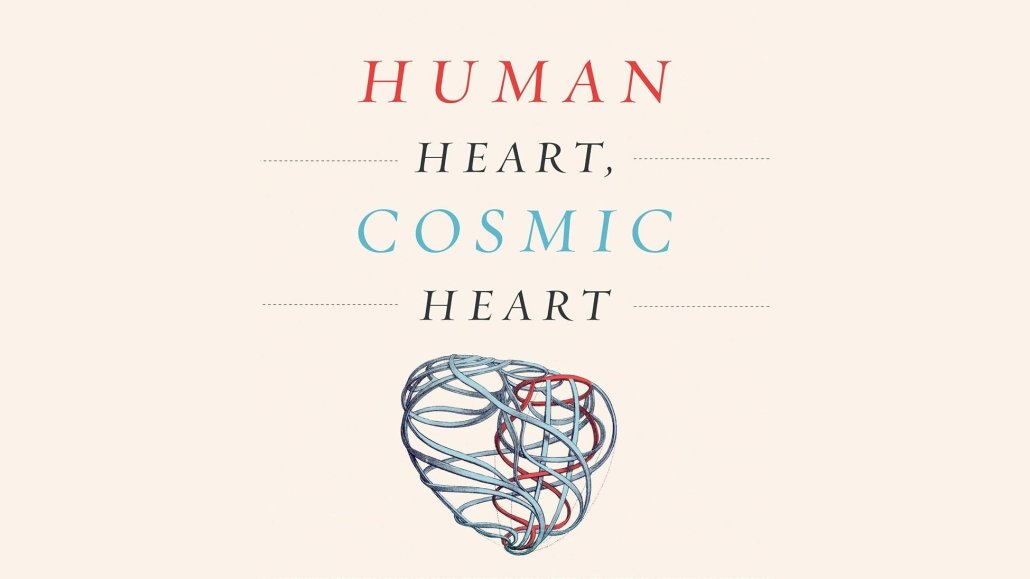
One of the key themes in Human Heart, Cosmic Heart is the call to move beyond fear-based medicine.
Fear is profitable. A frightened population monitors its numbers, buys reassurance, seeks permission and accepts invasive intervention with minimal questioning. It becomes highly responsive to messaging that presents medical management as the only path to safety.
A more empowering approach is refusing to view health solely through the lens of institutional risk management.
It means asking better questions:
- Is this test result meaningful in the context of the whole person?
- What are the likely benefits and harms of this treatment for me?
- Have lifestyle, nutrition, sleep, stress, toxins and social conditions been properly considered?
- Who funded the research behind this recommendation?
- Are dissenting views being fairly represented?
- Am I being informed, or conditioned?
Cowan’s challenge is ultimately larger than cholesterol or statins. It concerns the way modern systems translate human biology into a set of managed fears, marketable solutions and authorised beliefs.
The heart may be biological, but the story told about it is political.
Before making decisions about statins, cholesterol or symptoms such as chest pain, readers should consult a suitably qualified clinician and seek urgent medical help for possible signs of a heart attack. The value of questioning a narrative lies not in rejecting care, but in demanding honest evidence, meaningful consent and a fuller understanding of health.
Source: Cholesterol, Statins & Heart Attacks



























Leave a Comment
Want to join the discussion?Feel free to contribute!