

Secret Societies and Psychological Warfare I Bill Cooper
Broadcast #986 part one of the Secret Societies & Psychological Warfare series which aired on Nov 4, 1996.
Milton William “Bill” Cooper (1943–2001) was a prominent conspiracy researcher known for his influential work in the field of alternative history and his controversial views on secret societies and psychological warfare. His most notable book, Behold a Pale Horse, published in 1991, is often cited as a seminal text in conspiracy literature, blending themes of New World Order (NWO) conspiracies with UFO phenomena and other esoteric beliefs.
Early Life and Background
Cooper was born in Arizona and served in the U.S. Navy during the Vietnam War. He claimed to have worked in Naval Intelligence, where he alleged to have encountered classified documents that he later described in his writing.

Major Works and Research
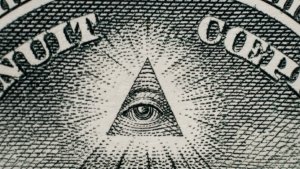
Cooper’s Behold a Pale Horse gained a cult following and introduced many readers to conspiracy research involving secret societies like the Freemasons and the Illuminati. He argued that these groups orchestrated world events to maintain control over the populace, a theme that resonated with many who felt disillusioned by mainstream narratives. Cooper popularised terms such as “sheeple” to describe people who blindly follow authority without questioning.
In his radio show and writings, Cooper discussed various conspiracy research, including the idea that UFOs were part of a broader NWO agenda, and he linked historical events, such as the JFK assassination, to a secret cabal.
Secret Societies and Psychological Warfare
Cooper’s focus on secret societies aligns with the themes explored in Michael A. Hoffman II’s Secret Societies and Psychological Warfare. Hoffman’s work investigates how these organisations manipulate public perception through psychological tactics. He argues that the occult symbolism and rituals employed by such societies serve to control and disorient the masses, a concept that resonates with Cooper’s assertions about the power dynamics at play in society.
Hoffman describes the “Revelation of the Method,” where the unveiling of dark truths about these societies is used as a means of psychological manipulation, creating a sense of helplessness among the public. This aligns with Cooper’s belief that awareness of these conspiracies is often met with apathy, allowing the conspirators to operate unchallenged.
Legacy and Death
Cooper’s life ended in a violent confrontation with police in 2001, following a long history of legal troubles. His death solidified his status as a martyr within certain conspiracy research circles, where he is remembered for his outspoken criticism of government and elite power structures. His work continues to influence contemporary conspiracy researchers and remains a point of reference in discussions about secret societies and psychological warfare.
Source: William Cooper ~ Secret Societies and Psychological Warfare I – YouTube




















Leave a Comment
Want to join the discussion?Feel free to contribute!