
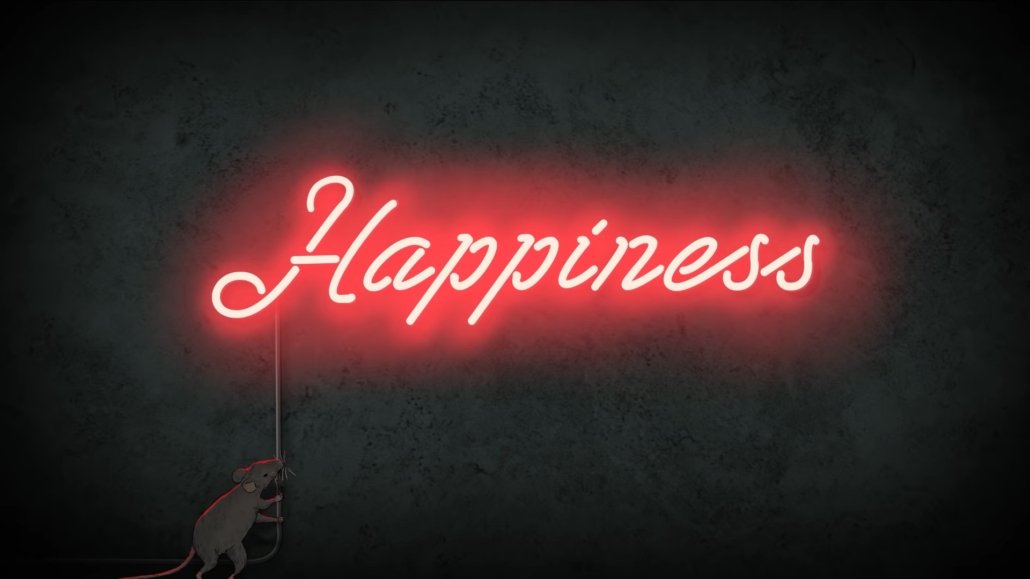
Happiness | Steve Cutts
The Rodent’s Wheel
Happiness – 2017 | Steve Cutts
Steve Cutts’ “Happiness” as a Parable of Elite Social Engineering
A rodent trades meadows for mills, debt for dazzle, chasing elite-engineered mirages. The story machine spins illusions, chaining souls to consumption’s wheel—wake up before the shadows claim you.
In the shadowy theatre of modern propaganda, where unseen hands orchestrate the masses’ desires, Steve Cutts‘ 2017 short animation Happiness stands as a razor-sharp indictment. Clocking in at just over five minutes, this rodent-centric allegory unmasks the psychological warfare waged upon the populace. Our protagonist, a scruffy mouse, embarks on an unrelenting quest for fulfilment in a dystopian world eerily mirroring our own consumerist trap. Cutts, a British animator known for skewering corporate greed in works like MAN (2012), deploys stark visuals and ironic narration to expose how the “story machine”—that vast apparatus of media, advertising, and cultural conditioning—perpetuates the illusion of agency.
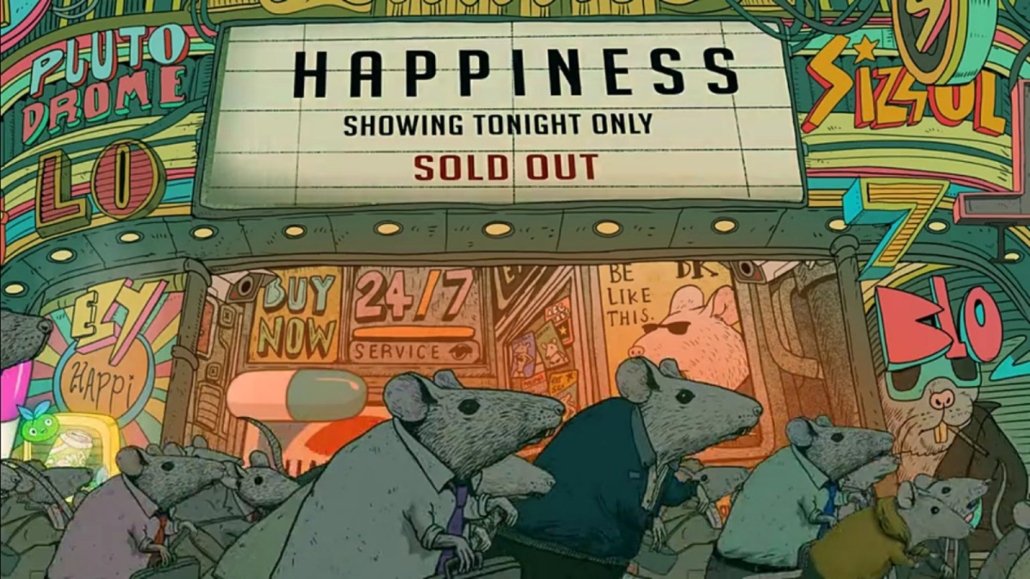
The film opens with the mouse revelling in simple joys: gambolling through meadows, savouring berries plucked from nature’s bounty. Yet this idyll shatters under the siren call of manufactured wants. Billboards sprout like malignant weeds, peddling the lie that true happiness lies in endless acquisition. The rodent succumbs, trading pastoral bliss for the grind of wage slavery in a factory, churning out pointless gewgaws amid choking smog. Cutts masterfully articulates the mechanisms of control here: dopamine hits from shiny trinkets, status symbols that chain the spirit, all while the elite puppeteers laugh from their shadowed enclaves.
Psychological Hooks and the Debt Trap
As the mouse spirals deeper, Happiness dissects the elite’s toolkit of social engineering with surgical precision. Debt becomes the invisible shackle—credit cards flash promises of luxury, luring the protagonist into a home stacked with unused gadgets and a flashy car that guzzles fuel and soul alike. Vacations to polluted paradise mock escape, holidays devolve into gluttonous excess, and vices like booze and smokes offer fleeting anaesthesia. Each frame pulses with propaganda’s core deceit: equating consumption with contentment, distracting from the rigged game where the hidden hand skims the cream.
This mirrors real-world psyops, from Tavistock Institute’s mass mind manipulation to the CIA’s cultural infiltration via Hollywood. Cutts draws on historical precedents—think Edward Bernays, the “father of public relations,” who weaponised Freudian insights to herd consumers like cattle. The animation‘s rodent stands in for us all, conditioned to chase shadows of joy while the puppet masters consolidate power.
The Cruel Punchline of “Fulfilment”
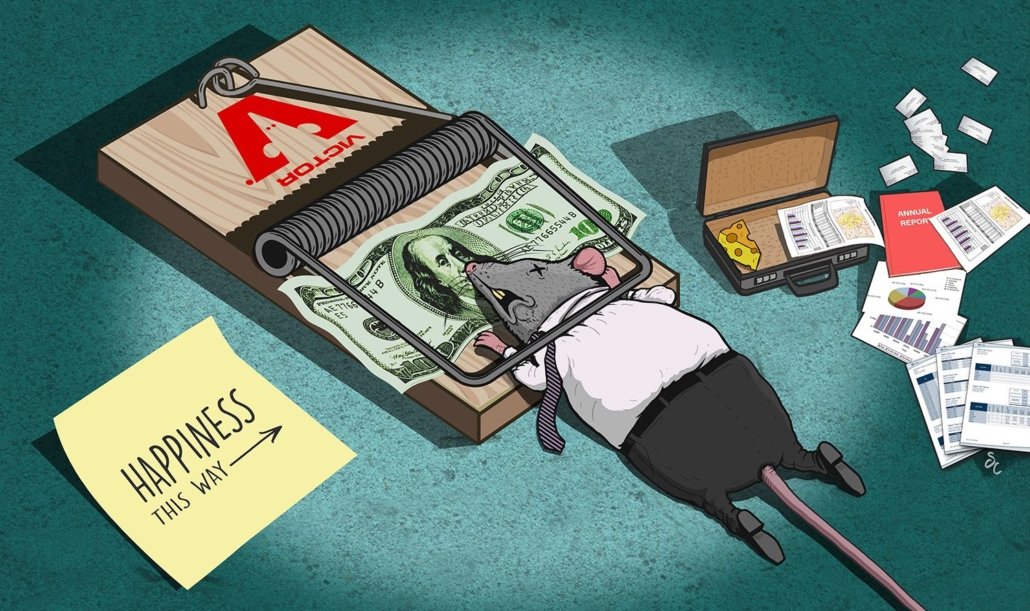
The climax delivers a gut-punch revelation. Bankrupt and broken, the mouse glimpses a fleeting vision of authentic happiness—a flower amid concrete ruins. But the cycle restarts: back to the wheel, chasing the next bauble. No redemption arc; just the remorseless churn of the illusion system. Cutts’ sparse score and deadpan voiceover amplify the horror, evoking George Orwell’s warnings of perpetual war (or in this case, perpetual want) to keep the proles docile.
For those attuned to the shadows steering world events, Happiness is compulsory viewing. It lays bare how political puppetry thrives on engineered discontent—fomenting division via identity politics or economic despair, then dangling salvation through Amazon hauls or viral distractions. In an era of algorithmic overlords and central bank digital currencies, Cutts reminds us: break the spell, or remain the rodent forever running.
Source: Happiness. Steve Cutts, 2017.




















Leave a Comment
Want to join the discussion?Feel free to contribute!