

Fabrication in BBC Panorama Saving Syria’s Children | Robert Stuart
UK State Atrocity Propaganda
Fabrication in BBC Panorama Saving Syria‘s Children: Robert Stuart | Media on Trial
Did BBC personnel collude in the fabrication of an atrocity with the aim of influencing public opinion in favour of war against Syria?
Robert Stuart‘s presentation at Media on Trial on October 19, 2017, in London focused on allegations surrounding the BBC‘s coverage of the Syrian conflict, particularly regarding the White Helmets, a purported volunteer organisation known for its rescue efforts in war-torn areas. Stuart accused the BBC of colluding in the fabrication of atrocities to influence public opinion in favour of military intervention in Syria.
Key Points from Robert Stuart‘s Presentation
Allegations Against the BBC: Stuart claimed that the BBC‘s reporting on the White Helmets was biased and presented as factual evidence of atrocities committed by the Syrian government. He suggested that this coverage served to justify Western military actions in Syria, framing it as a deliberate manipulation of public perception.

The Role of the White Helmets: The White Helmets have been a contentious subject, critics, including Stuart, argue that they have been used as a propaganda tool. Stuart contends that the organisation was involved in staging events that were then broadcast to garner international sympathy and support for intervention against the Assad regime.
Claims of Fabrication: During his presentation, Stuart referenced various instances where he believed evidence was manipulated or fabricated. He suggests that videos and reports disseminated by the White Helmets were not genuine rescues but rather staged performances designed to elicit outrage and action from Western governments.
Media Influence on Public Opinion: Stuart emphasised the significant impact that media narratives can have on public opinion and policy decisions. He argued that the portrayal of events in Syria by major news outlets like the BBC contributed to a skewed understanding of the conflict, which ultimately influenced governmental decisions regarding military intervention.
Broader Context: The presentation occurred within a larger discourse about media responsibility and integrity in conflict reporting. Stuart’s assertions echoed sentiments from various critics who believe that mainstream media often aligns with governmental narratives, particularly in matters of foreign policy and military engagement.
Stuart’s presentation at Media on Trial highlighted ongoing debates about media ethics, representation in conflict zones, and the potential consequences of perceived bias in reporting on humanitarian crises.



The Sorcery of Atrocity
Atrocity propaganda has long been a potent tool in the arsenal of psychological manipulation, used to sway public opinion and create compelling narratives that justify military action. This form of propaganda exaggerates or fabricates crimes committed by an enemy, aiming to dehumanise them and galvanise support for war. The historical context of atrocity propaganda reveals its significance in shaping perceptions during conflicts.
Background on Atrocity Propaganda
Atrocity propaganda emerged prominently during World War I, where it played a crucial role in demonising the enemy and justifying military intervention. Both the Allies and Central Powers utilised this tactic to portray their opponents as barbaric and inhumane. For instance, British propaganda depicted German soldiers as “Huns,” engaging in horrific acts against civilians, such as rape and murder. This narrative was bolstered by sensational stories and graphic imagery that aimed to evoke outrage and rally public support for the war effort.
The British Library notes that atrocity propaganda involves spreading information about enemy crimes, often through deliberate fabrications or exaggerations, making it a form of psychological warfare. Reports like the Bryce Report detailed alleged German atrocities in Belgium, contributing to a self-reinforcing environment where sensational narratives became accepted truths. Such reports were often presented with an air of objectivity but were strategically crafted to elicit strong emotional responses from the public.
Mechanisms of Psychological Manipulation
Atrocity propaganda operates through several psychological mechanisms:
Demonisation: By portraying the enemy as evil or monstrous, propaganda promotes hatred and fear. This “othering” process creates a stark moral divide, making it easier for citizens to support military actions against a perceived threat.
Emotional Appeal: Graphic depictions of violence and suffering are designed to elicit strong emotional reactions. Images and stories of atrocities can provoke outrage, guilt, or fear, compelling individuals to take action or support government policies.
Repetition and Reinforcement: The continual exposure to atrocity narratives reinforces their validity. As these stories circulate through media channels, they become ingrained in public consciousness, shaping perceptions of the enemy and justifying ongoing conflict.
Case Study: World War I
During World War I, atrocity propaganda was particularly effective in garnering support from neutral countries, such as the United States. Events like the sinking of the Lusitania and the execution of nurse Edith Cavell were exploited to highlight German brutality and mobilise public sentiment against them. The cumulative effect of these narratives created a powerful justification for military intervention.
The legacy of World War I atrocity propaganda continues to influence modern conflicts. Similar tactics have been observed in subsequent wars, where governments employ exaggerated claims of enemy atrocities to justify military actions. The manipulation of public perception through such narratives underscores the enduring power of atrocity propaganda in shaping international relations and domestic policies.
Conclusion
Atrocity propaganda remains a critical area of study within the fields of psychology, media studies, and political science. Understanding its mechanisms allows for a more nuanced view of how narratives are constructed during conflicts and how they influence public opinion. As history shows, the power of these stories can be both profound and dangerous, shaping not only perceptions but also policies that lead nations into war. The challenge lies in discerning fact from fabrication and recognising the emotional appeals that often accompany such narratives.
Read The_Void’s ‘The Sorcery of Atrocity’:
Sources and links
Atrocity propaganda – ProleWiki
Atrocity propaganda vs. the testimony of atrocity – Mondoweiss
Atrocity propaganda – Wikipedia
Why ‘murder of babies’ is the pinnacle of war propaganda in WWI and now – The Business Standard
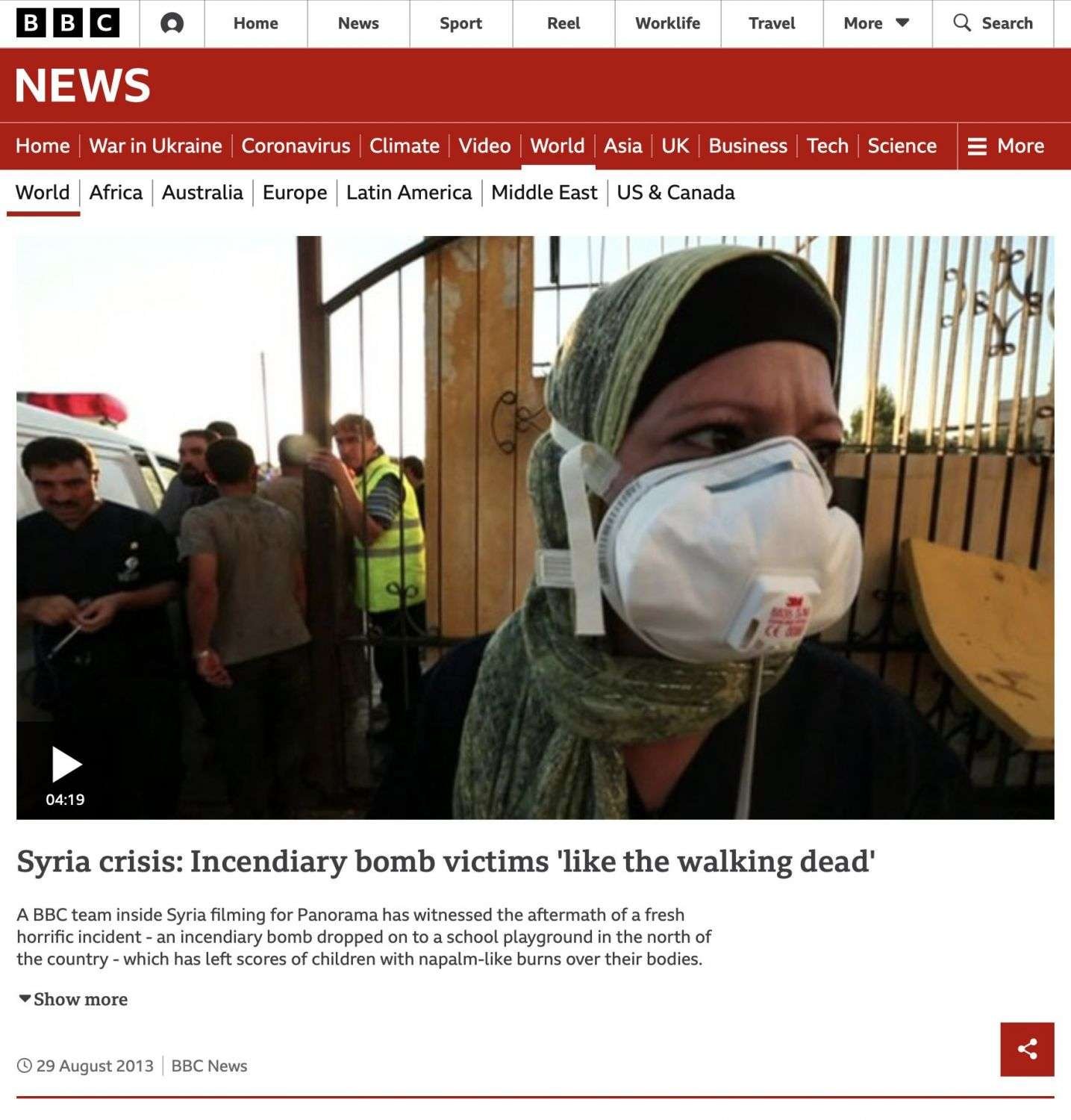
Source: Syria crisis: Incendiary bomb victims ‘like the walking dead’
Robert Stuart‘s Blog: Fabrication in BBC Panorama ‘Saving Syria’s Children’
Source: ROBERT STUART – ‘FABRICATION IN BBC PANORAMA’S ‘SAVING SYRIA’S CHILDREN’
Source: Syria and War Propaganda: Robert Stuart vs the BBC
Source: Fabrication in BBC Panorama Saving Syria’s Children: Robert Stuart, Media on Trial, 19 October 2017























Leave a Comment
Want to join the discussion?Feel free to contribute!