
The History of the CIA | Eyes Wide Open
THE HISTORY OF THE CIA: Operation Sunrise and the Plan for a New Europe [pt. 2] –
Operation Sunrise, Allen Dulles‘ plan to preserve certain dubious elements of Germany’s wartime government. We look at the OSS and how these agents worked to circumvent the American Government and FDR’s policies and save Nazis from Nuremburg.
CHAPTERS
0:00 INTRO
2:21 Part One: Reinhard Gehlen and the architecture of a new Europe
5:44 Part Two: Shell Game
10:01 Part Three: Ghosts of Nuremburg
13:36 Part Four: Operation Sunrise
21:47 Part Five: The Cadaver
BIBLIOGRAPHY
[1] The Devil’s Chessboard – David Talbot (p.268-270)
[2] Operation Gladio: The Unholy Alliance Between the Vatican, the CIA, and the Mafia – Paul L. Williams (p. 25)
[3] The Devil’s Chessboard – David Talbot (p.280)
[4] The Devil’s Chessboard – David Talbot (p.24-28)
[5] The Devil’s Chessboard – David Talbot (p.58-62)
[6] The Devil’s Chessboard – David Talbot (p.68-69)
[7] The Devil’s Chessboard – David Talbot (p.75-92)
[8] The Devil’s Chessboard – David Talbot (p.97) Operation Gladio: The Unholy Alliance Between the Vatican, the CIA, and the Mafia – Paul L. Williams (p. 27)
[9] Operation Gladio: The Unholy Alliance Between the Vatican, the CIA, and the Mafia – Paul L. Williams (p. 26-28)
[10] Operation Gladio: The Unholy Alliance Between the Vatican, the CIA, and the Mafia – Paul L. Williams (p. 29)
Covert Power
The History of the CIA: A Documentary Series on Power, Perception, and Control
The History of the CIA – 2023 – 2024 | Eyes Wide Open
This documentary series traces the CIA‘s origins, covert European operations, Cold War influence campaigns, and the machinery behind propaganda, secrecy, and political manipulation.
Eyes Wide Open’s nine-part History of the CIA series is not simply a chronology of an intelligence agency’s rise. It is a study of how covert action, information management, and political manipulation became central instruments of statecraft in the twentieth century.
Rather than treating the CIA as a detached bureaucracy, the series frames it as a machine built to shape events, steer outcomes, and manage public perception. For an audience focused on psychological warfare and propaganda, that is the real value of the series: it shows how intelligence services do not merely gather information, but help construct the reality that populations are asked to believe.
From OSS to the CIA
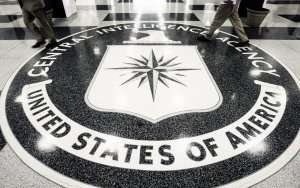
The opening episode begins with the Office of Strategic Services, the wartime predecessor to the CIA, and traces the agency’s origins through figures such as William “Wild Bill” Donovan and Allen Dulles. This is the foundational moment in the series, because it establishes the transition from wartime espionage to a permanent intelligence apparatus embedded within the state.
The CIA‘s own history page confirms that the OSS was its direct predecessor and that the National Security Act of 1947 formally established the CIA as an independent civilian intelligence agency. The series uses that institutional origin as a starting point, but it is more interested in what followed: the expansion of covert power, political action, and clandestine influence.
Europe, Elections, and Covert Influence
A major thread running through the early and middle parts of the series is the use of intelligence operations to shape post-war Europe. Episode 2 focuses on Operation Sunrise and the attempt to preserve certain elements of wartime German power structures, while later chapters move into Italy, France, and broader Cold War political warfare.
That emphasis matters because it places the CIA in the terrain of social engineering rather than simple espionage. Elections, elite networks, media narratives, and anti-communist pressure campaigns all become part of the same operating environment. The series suggests that the Cold War was not only a military or ideological contest, but a long experiment in managing societies through fear, blackmail, and covert persuasion.
Psychological Warfare as Method
For readers interested in propaganda, the series is strongest when it shows how intelligence work blends into perception management. The titles alone make this plain: “Red Scare, Blackmail, and the Blue Suite”, “How to Steal an Election”, and “France’s Secret Armies” all point to a world in which narrative control and political leverage matter as much as guns or dossiers.
The documentary’s tone is explicitly sceptical of official accounts, and it presents the CIA as an organiser of hidden influence rather than a neutral defender of democracy. A perspective familiar to readers who already suspect that public events are often the visible surface of a deeper machine of manipulation.
What the Series Covers
The series begins with the OSS and the birth of American intelligence, then moves through Operation Sunrise, mafia links and the drug trade, the creation of the CIA during the early Cold War, and later into Italy, domestic anti-communism, and secret operations in France and Southeast Asia.
There is also a related standalone video, “Spy Stories: OSS Detachment 202 – Secret Cold Warriors”, which appears to sit alongside the main series as a companion piece on wartime intelligence and its afterlife. Taken together, the material suggests a wider project: to map the hidden architecture of American power through intelligence, proxy networks, and covert influence.
Theatre of Managed Appearances
Eyes Wide Open presents the material as documentary history, but the style is distinctly polemical. The videos cite books, archival footage, and historical sources, while also leaning into a covert reading of institutional behaviour. That makes the series accessible to viewers who want an anti-establishment narrative without abandoning documentary form.
The series is less about proving one neat thesis than about training the viewer to see politics as a theatre of managed appearances. The result is a story about intelligence, yes, but also about perception, conditioning, and the quiet manufacture of consent.
The enduring appeal of the series lies in its central argument: once an intelligence service learns how to shape outcomes abroad, the same methods tend to echo back into domestic politics, media, and public belief. That is where the line between foreign operations and psychological warfare begins to blur.
In that sense, History of the CIA is not just about one agency. It is about the modern system of control in which secrecy, narrative management, and political engineering work together to preserve the illusion of open democracy while decisions are often made elsewhere.
Sources and links
THE HISTORY OF THE CIA: The OSS and the Birth of American Intelligence [Pt. 1]
THE HISTORY OF THE CIA: Operation Sunrise and the Plan for a New Europe [pt. 2
THE HISTORY OF THE CIA: Mafia Allies and the Beginning of the Global Drug Connection [pt. 3]
THE HISTORY OF THE CIA: The Real Cold War and the Creation of CIA [pt. 4]
THE HISTORY OF THE CIA: Italy 1948 – How to Steal an Election [pt. 5.1]
THE HISTORY OF THE CIA: Red Scare, Blackmail, and the Blue Suite [pt. 5.2]
THE HISTORY OF THE CIA: France’s Secret Armies and the Pan-Europa Project [pt. 5.3]
SPY STORIES: OSS Detachment 202 – Secret Cold Warriors
THE HISTORY OF THE CIA: Operation PAPER and Trouble in the Golden Triangle [pt. 6]





















Leave a Comment
Want to join the discussion?Feel free to contribute!