
Network
The Illusion System
Network – 1976
The Satirical Blueprint for Corporate Propaganda and PsyOps
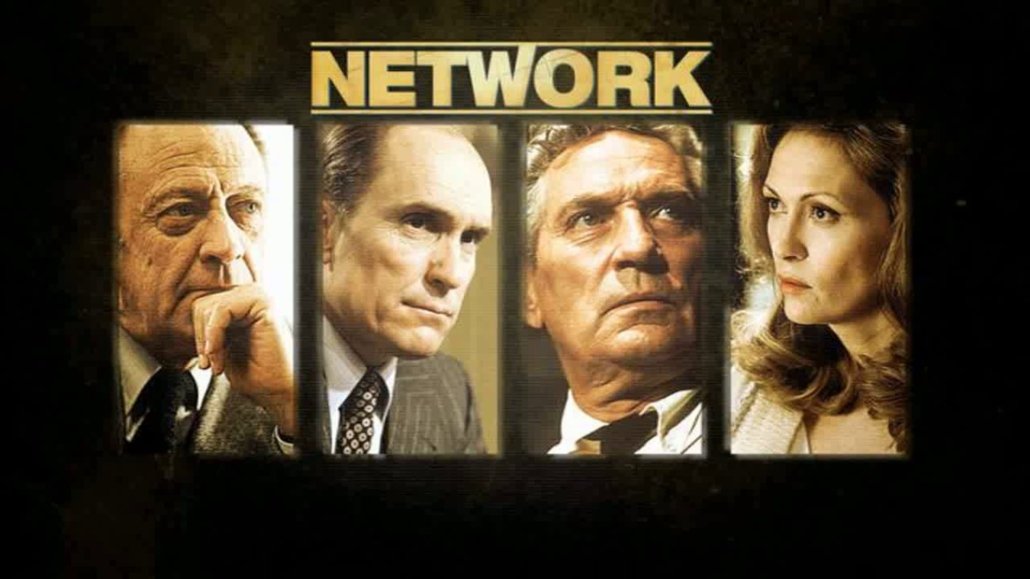
A television network tries to cynically exploit a truth telling former anchor’s rants and revelations about the news media and its duplicitous agenda of lies for profit. An early Fake News expose.
In an era when terrorist outrages dominated the nightly bulletins, Sidney Lumet‘s 1976 masterpiece Network lays bare the corporate machinery grinding away behind the television screen. Penned by Paddy Chayefsky, this razor-sharp satire centres on UBS, a fictional broadcaster teetering on the brink of oblivion amid plummeting ratings. At its heart is Howard Beale—portrayed with searing intensity by Peter Finch—an ageing news anchor sacked for his irrelevance, only to unleash a profane on-air meltdown that becomes the network‘s unlikely salvation. For those attuned to the invisible strings manipulating public perception, Network stands as a prophetic dissection of how media conglomerates weaponise outrage, turning prophecy into profit.

The film arrives as a prescient exposé of the news media’s duplicitous core. Beale’s infamous cry
“I’m as mad as hell, and I’m not going to take this anymore!”
ignites a firestorm, but UBS executives, led by the ruthless Diana Christensen (Faye Dunaway), spot gold in the madness. They repackage his rants into a sensationalist circus, blending “truth-telling” with scripted hysteria to hook viewers. This mirrors the psychological warfare playbook: amplify emotional chaos to drown out discernment, fostering a populace primed for manipulation. Our readers will recognise this as the story machine‘s eternal gambit—sustaining the illusion system by peddling “authenticity” as just another commodity.

Corporate Bylaws as Instruments of Social Engineering
Network unflinchingly reveals the bylaws of business as the true architects of reality. UBS’s new overlords, embodied by Ned Beatty’s thunderous Arthur Jensen, deliver a monologue that chills with its candour: the world operates not by nations or ideologies, but by the “inexorable bylaws of business.” Jensen schools Beale on the interdependent web of multinational trade, where wars and unrest serve only as disruptions to the profit flow. Here, Lumet exposes the shadow puppeteers—faceless conglomerates engineering consent through airwaves, much like today’s engineered narratives that steer elections and crises from boardrooms.

The film’s brilliance lies in its portrayal of internal betrayal. Veteran newsman Max Schumacher (William Holden) rails against the commodification of truth, yet even he succumbs to the corporate tide. Christensen, a soulless ratings predator, greenlights exploitative programmes like a terrorist reality show, blending violence with voyeurism to addict the masses. This is social engineering distilled: condition audiences to crave their own subjugation, mistaking spectacle for substance. Chayefsky anticipates the fake news epoch, where “revelations” become props in a grand deception, all to safeguard the power structures we know so well.

Enduring Lessons for the Discerning Observer
Peter Finch’s Oscar-winning turn as Beale cements Network as essential viewing for decoding modern psyops. It warns of anchors morphed into messiahs, their unhinged truths hijacked to prop up the very system they decry. Decades on, the film’s echoes resound in every viral outrage cycle, where networks chase eyeballs over enlightenment, perpetuating the grand illusion.
Watch Network to sharpen your lens on the propaganda mills still churning today.
Source: Network










Leave a Comment
Want to join the discussion?Feel free to contribute!